"How much will Samsung Electronics and SK hynix rise?" Stocks rebound for a third straight session as foreign investors pile in
- Input
- 2026-08-14 05:00:00
- Updated
- 2026-08-14 05:00:00
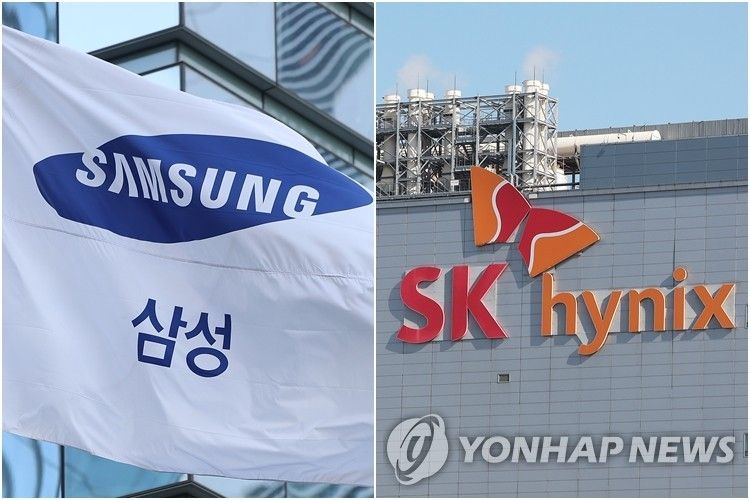
[Financial News] Samsung Electronics and SK hynix extended their rebound for a third straight trading day after a sharp selloff, raising hopes for a recovery in semiconductor stocks. Analysts in the securities industry said the sector remains on a positive footing, citing long-term supply contracts, demand for high-bandwidth memory (HBM), and the potential for large-scale shareholder returns.
According to the Korea Exchange on the 13th, Samsung Electronics closed at 268,000 won, up 4.89% from the previous session. SK hynix also ended trading at 1,593,000 won, up 5.92%. Both stocks have risen for three consecutive sessions since the 11th.
Compared with the close on the 10th, Samsung Electronics had gained 16.52%, while SK hynix had risen 12.18%. The KOSPI also advanced for four straight sessions this week, showing that investor sentiment, which had weakened after the sharp decline, is gradually recovering.
Foreign trading patterns have also shifted. Data from the Korea Exchange showed that foreign investors net sold 1.2985 trillion won worth of Samsung Electronics and 3.5078 trillion won worth of SK hynix last week. But through the 13th this week, they net bought 2.5982 trillion won of Samsung Electronics and 1.1984 trillion won of SK hynix.
Overseas investment banks also highlighted the appeal of lower valuations after the correction. In its Asia technology report, "Memory - Small Bumps," released on the 6th, Morgan Stanley said the sharp correction in memory chip stocks was largely over and that current share prices offered a tactical re-entry opportunity. The bank had warned last month of a short-term correction, citing slower DRAM price gains and crowded investor positioning. But after the stock prices fell more than expected, it revised its view, saying valuation pressure had eased.
Morgan Stanley also warned of the possibility of a cooling in industry conditions. It said that if memory price increases narrow from the fourth quarter and inventories and supply rise, room for further earnings estimate cuts could shrink. The bank also changed its top pick among Asian technology stocks from Samsung Electronics to Samsung Electro-Mechanics, reflecting a greater focus on the possibility that AI investment benefits could spread to component makers such as MLCCs and semiconductor substrates.
Domestic securities firms also examined both post-selloff valuations and earnings durability. Their view is that even if memory price gains slow, it is too early to conclude that the industry has already peaked. They noted that share prices have fallen to levels that look cheap relative to next year’s earnings, while the expansion of long-term supply contracts has improved earnings stability.
Against this backdrop, KB Securities estimated that Samsung Electronics and SK hynix will post a combined operating profit of 96.4 trillion won next year. It projected 57.5 trillion won for Samsung Electronics and 38.9 trillion won for SK hynix. Based on the closing prices on the 12th, the estimated price-to-earnings ratio for next year was 3.7 times for Samsung Electronics and 3.2 times for SK hynix.
SK Securities said the expansion of five-year long-term supply contracts is improving demand visibility and earnings predictability for memory chip makers. As earnings become more stable, there is also more room to strengthen shareholder returns. With Samsung Electronics and SK hynix expected to unveil additional shareholder return measures as early as this month, some in the industry say the two companies’ combined annual shareholder returns could reach as much as 300 trillion won.
Daishin Securities said domestic semiconductor stocks fell more sharply than global peers because of weaker profitability from bonus provisions, uncertainty over shareholder return policies, and concerns that new graphics processing units (GPUs) could require downgraded HBM specifications. Still, it forecast that early shareholder returns and broader long-term supply contracts would ease these burdens and drive a recovery in share prices.
[email protected] Han Seung-gon Reporter