[Editorial] Unemployment Benefits Have Become an 'Unemployment Bonus'; The Threshold for Repeated Claims Must Be Raised
- Input
- 2026-08-13 18:26:15
- Updated
- 2026-08-13 18:26:15
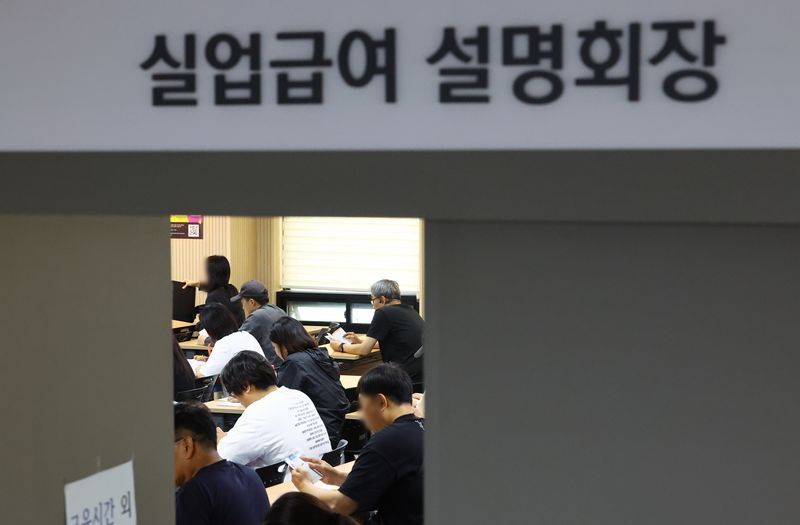
The fact that the number of recipients fell while payments and repeat claims increased raises many questions in terms of fiscal stability and job quality. Unemployment Benefits are a social safety net designed to help workers who have lost their jobs maintain a minimum standard of living while supporting their return to work. But if the system is used like an 'unemployment bonus' for people who cycle between employment and unemployment, its original purpose as a safety net for reemployment will inevitably be undermined.
Under the current job-seeking allowance system, workers are generally eligible if they have worked at least 180 days during the 18 months before leaving a job, lost their job involuntarily, and are actively preparing to reenter the workforce. The basic benefit is 60% of average wages before separation, and depending on contribution period and age, it can be paid for up to 270 days. Even after receiving benefits once, recipients can qualify again if they meet the requirements, including the reason for separation. However, the current rules do not include any mechanism to raise the eligibility threshold for repeat claims or reduce benefits based on the number of times they are received.
Of course, it would be unfair to view all 500,000 repeat recipients as abusing the system. Construction workers, seasonal workers, and fixed-term workers often have no choice but to go through repeated contract expirations and reemployment. The problem is when a pattern continues in which someone works long enough to meet the eligibility requirements, receives Unemployment Benefits, and then moves into another short-term job. If both employers who hire workers briefly and workers themselves have little incentive to change this employment practice, Unemployment Benefits may end up reinforcing job insecurity rather than serving as a safety net.
Fraudulent claims must also be screened out more strictly. Hiding the fact that one has found a job or falsely reporting the reason for leaving a job is a clear illegal act, entirely different from repeat claims. Employers and workers who deliberately manipulate separation reasons or conceal work records should be subject to constant detection through data linkage. Legitimate repeat claims should not be lumped together with fraud, but false reporting must face much stricter recovery measures and penalties.
The overall benefit system also needs to be revised. This year, the daily upper limit for job-seeking allowance is 68,100 won, while the lower limit for an eight-hour worker is 66,048 won, a difference of just 2,052 won. As the lower limit keeps rising in line with 80% of the minimum wage, the gap between the upper and lower limits has nearly disappeared. The financial capacity of EI must also be taken into account. Employment Insurance is the last line of defense that must hold up when a recession or mass unemployment hits. If repeat claims, fraudulent claims, and an unreasonable benefit structure are left unchecked in normal times and drain the fund, it will not be able to adequately protect those who need it most in a crisis. The government’s plan to improve EI, due in the second half of the year, must include effective measures to correct these problems.