"The real estate problem is a ticking time bomb... We will mobilize all efforts to boost supply, even if laws and systems must be revised"
- Input
- 2026-08-13 18:24:24
- Updated
- 2026-08-13 18:24:24
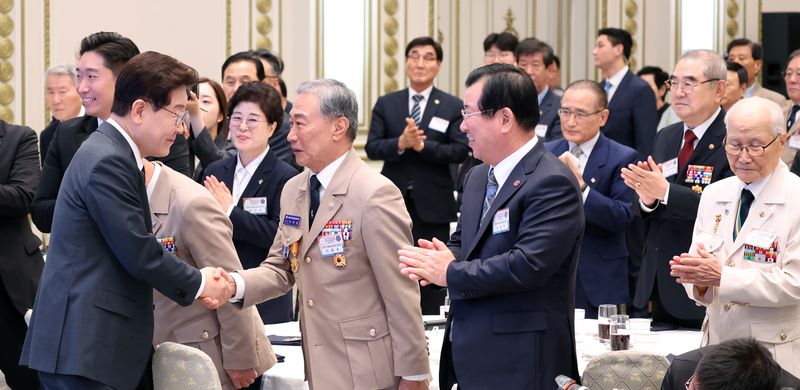
At a senior aides meeting he chaired at Cheong Wa Dae after the government announced its Aug. 13 measures, Lee said, "Real estate is a core issue for South Korea that has a profound impact on almost every part of our society."
Lee criticized the long-term concentration of social resources in real estate, saying it has deepened polarization and inequality. He also warned that the real estate bubble has reached a point where it can no longer be ignored. "As all of our people know, housing prices in South Korea are extremely high by global standards," he said. "If this situation continues, we could face what some countries have experienced as a so-called 'lost 20 years' or 'lost 30 years.'"
Lee said the government should first shorten various permitting procedures and pursue bold supply measures that are not bound by existing regulations in order to expand housing supply. "A combination of bold and fast supply, a fair and reasonable tax system, and a detailed and robust financial policy is absolutely essential," he said. He added, however, that supply policy is now especially problematic. "As you know, there has been a supply cliff from 2022 until now," he said. "Permits have been sharply reduced, and starts have also fallen significantly, so an unavoidable supply cliff has emerged. Extraordinary efforts are needed to fill that gap." He also said, "Supply policy faces many practical constraints, and it takes a long time. That is why we need a special resolve and an all-out push on every front. We must shorten all kinds of permitting procedures as much as possible, and when necessary, secure land in a bold way by revising laws and systems rather than being bound by existing regulations."
Lee also called for the government to actively gather opinions from the public, experts and the political community even after policy announcements, and to improve the measures accordingly. "Public officials and civil servants cannot be 100 percent perfect," he said. "We should do our best to prepare policy proposals, present them to the public or to the political sphere, and if good suggestions or revisions are offered, review them rationally, discuss them transparently, and incorporate them to create better and more complete policies." He added, "Some people may say this kind of process turns a policy into a patchwork, but we should not be overly constrained by that. I hope we can boldly gather opinions from the public, experts, the opposition and the broader political community."
Meanwhile, Seoul Metropolitan Government Mayor Oh Se-hoon said on Facebook that "some of the regulatory improvements for redevelopment projects proposed by Seoul were reflected in this measure, but key items demanded on the ground, such as easing restrictions on the transfer of membership rights, relaxing floor area ratio regulations for private redevelopment projects, and easing the required share of rental housing in redevelopment, were not included." Oh also reiterated his opposition to the inclusion of green belt lifting in the measures, saying, "Lifting the green belt is within the government's authority, but my view that damage to green space should be a last resort remains unchanged."
[email protected] Choi Jong-geun, Seong Seok-woo Reporter