Middle Eastern oil producers blocked by the Strait of Hormuz begin building pipelines worth tens of trillions of won
- Input
- 2026-08-13 18:22:50
- Updated
- 2026-08-13 18:22:50
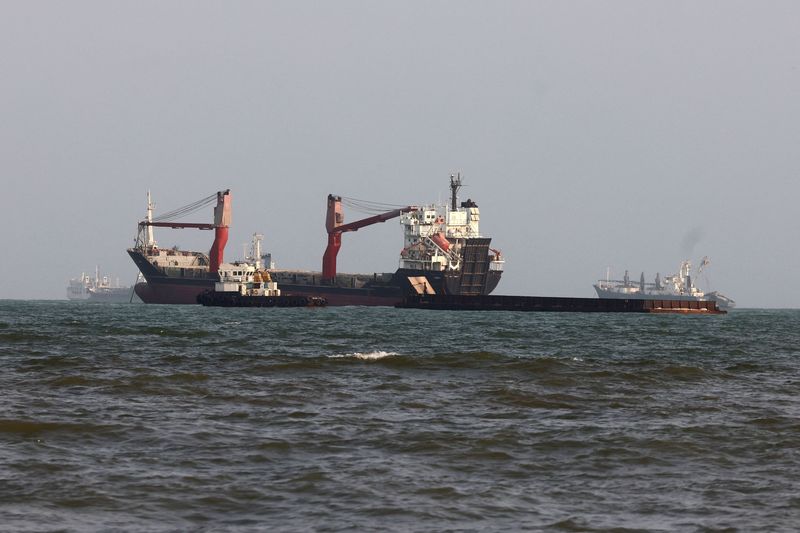
6%, shipped through the Strait of Hormuz. In February, shortly after the war with Iran began, Saudi Arabia focused on a 1,201-kilometer pipeline that runs east to west across the country from the Abqaiq oil field area to the Red Sea port of Yanbu. Saudi Arabia has raised pipeline utilization to the maximum level of 7 million barrels per day. NYT said the country is working to add another 1 million to 2 million barrels per day of transport capacity and is considering building a small auxiliary pipeline alongside the existing route.
The UAE also has a pipeline that carries oil from onshore fields near Abu Dhabi to the port of Fujairah, which lies outside the Strait of Hormuz. The country is now building a second pipeline next to the existing one. 6 million barrels per day, allowing most output from onshore fields to be exported without passing through the Strait of Hormuz. 6 trillion won, in expanding its natural gas business while also building new liquefied natural gas (LNG) export facilities on the eastern coast to avoid the Strait of Hormuz.
Kuwait is also discussing pipeline construction to the Red Sea in cooperation with Saudi Arabia and other Arab states. Iraq has restarted a project with Jordan to link a pipeline to the Jordanian port of Aqaba at the northern end of the Red Sea instead of the Persian Gulf, with the goal of transporting 1 million barrels of crude oil per day. In addition, the Iraqi government announced on the 1st that it had reached a one-year agreement with Türkiye to send Iraqi crude through an overland pipeline to the port of Ceyhan. Before the war, 20% to 25% of global maritime oil shipments passed through the Strait of Hormuz.
It briefly reopened in April after a U. S. -Iran ceasefire, but was closed again when fighting resumed in June and July. As of the 11th, only 14 vessels had passed through the Strait of Hormuz, The Wall Street Journal (WSJ) reported, calling the figure negligible compared with the prewar average of 130 ships per day.
7 million barrels now. However, Deutsche Welle (DW) cited experts on the 12th as saying that Qatar, Kuwait and Bahrain cannot feel secure even if they build overland pipelines, because their coastlines are limited to the Persian Gulf. NYT also noted that the Iran-backed Houthi rebels have recently attacked ships in the Red Sea and the Bab-el-Mandeb Strait, making detour exports via the Red Sea risky as well. NYT analyzed that Middle Eastern oil producers are sharply expanding oil storage facilities in South Korea, Japan and India, a strategy aimed at stockpiling inventory near consumers in advance in case major export routes are blocked.
Park Jong-won, fnnews