Rain to Sweep Across the Country in the Latter Half of the National Liberation Day Holiday... A Welcome Relief for the South's Drought, but the Heat Will Return on the 18th [FN Weather]
- Input
- 2026-08-13 15:58:18
- Updated
- 2026-08-13 15:58:18
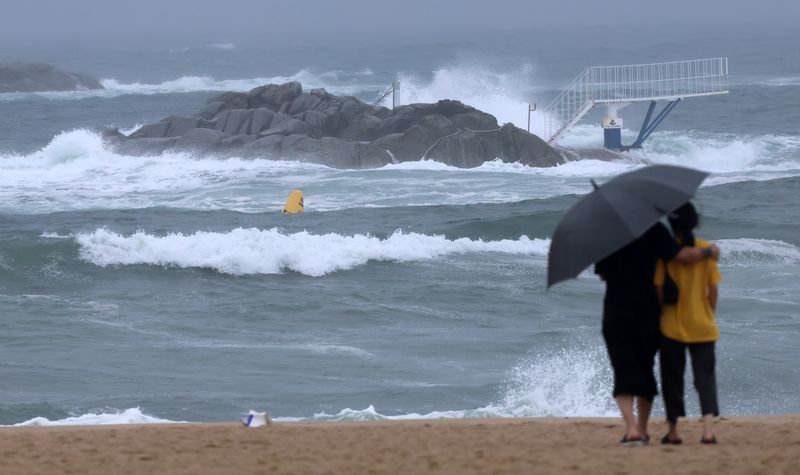
[Financial News] Rain will fall across the country in the latter half of the National Liberation Day of Korea holiday. The rain, which is expected to begin on the 16th, will spread nationwide and continue through the 17th. It should bring much-needed relief to the drought-stricken southern regions, including South Gyeongsang Province. Once the rain ends on the 18th, daytime temperatures will rise again to as high as 34 degrees Celsius, and the heat will continue.
On the 13th, the Korea Meteorological Administration (KMA) said at its regular briefing that showers would fall mainly over inland areas through the 15th, National Liberation Day of Korea, and that rain would spread nationwide on the 16th and 17th.
Expected rainfall on the 13th is 5 to 20 mm inland, and 5 to 40 mm in parts of the Gyeongsang region. On the 14th, showers will expand to most inland areas nationwide, and 5 to 50 mm of rain is forecast for the 15th. Jeju Island is expected to see 5 to 40 mm of rain starting late on the 14th.
The showers could become stronger toward the 15th. Cold air aloft and warm, humid air flowing in from the south near the surface are increasing atmospheric instability. In areas where showers develop, gusty winds, thunder and lightning may occur.
The main rain event will begin on the 16th. After Typhoon Dolphin weakens, a low-pressure circulation left over in inland southern China is expected to redevelop and move eastward near Shanghai, affecting Korea. Strong southerly winds between this low-pressure system and a high-pressure system to Korea's east will draw warm, humid air into the Korean Peninsula. Rain will begin early on the 16th in Jeju Island and western regions, then gradually spread. By the afternoon, it is expected to cover most of the country and continue through the 17th.
However, the areas that will receive the heaviest rain and the total rainfall remain highly uncertain. That is because the pressure pattern around the Korean Peninsula is complex, and numerical weather models differ on the low-pressure system's location and strength. For now, heavy rain is more likely along the South Coast and around Jirisan. Warm, humid winds from the south could collide with the mountains and intensify rain clouds.
A KMA official urged caution, saying, "If heavy rain falls over a short period, water in valleys or streams can rise suddenly, so people visiting mountains or valleys during the National Liberation Day of Korea holiday should be careful."
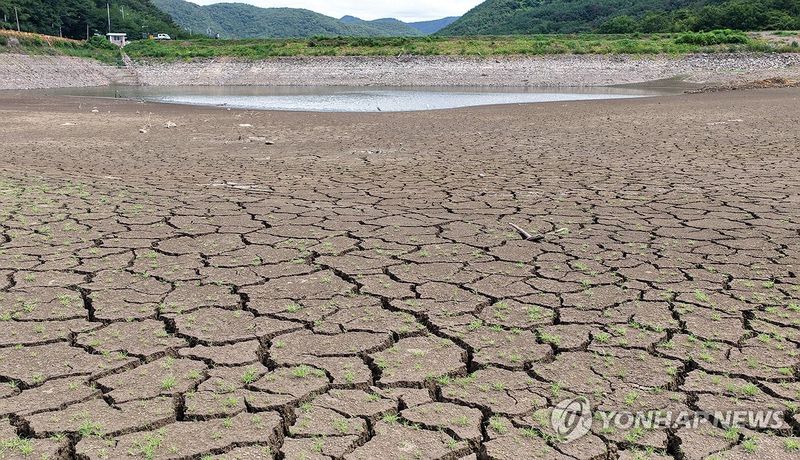
Attention is also focused on whether this rain will help the southern regions, where the drought remains severe. Over the month from July 12 to August 11, rainfall in the southern regions totaled 58.5 mm, only about one-quarter of the normal 241.9 mm for the same period. It was the second-lowest amount for that period since 1973. In particular, Busan, Ulsan Metropolitan City and South Gyeongsang Province received just 16.6 mm over the past month, only 6.1% of the normal 267.5 mm, marking the lowest level for the period since 1973. Jeju Island also recorded just 5.1 mm, or 3.1% of the normal 192.8 mm, the lowest on record. The rainfall shortage has led to falling reservoir levels. According to the Rural Water Comprehensive Information System, the average reservoir level at 569 reservoirs in South Gyeongsang Province stood at 32.3% as of the 13th, far below the seasonal average of 70.8%. Reservoir levels at 10 reservoirs in Jeju also stood at 37.9%, below the seasonal average of 58.4%.
The rain is expected to ease the drought to some extent, but it remains unclear whether it will fully resolve the situation. KMA forecaster Woo Jin-gyu explained, "We need to look not only at meteorological drought, which is measured by rainfall, but also at hydrological drought, which shows how much of the rain actually collects in reservoirs and other water sources." In other words, what matters is not just how much rain falls, but whether it falls enough in the hardest-hit areas and actually flows into reservoirs.
Temperatures will temporarily ease while the rain falls. Morning temperatures on the 17th are expected to range from 23 to 26 degrees Celsius, with daytime highs of 29 to 31 degrees.
But once the rain ends, the heat will return. On the 18th and 19th, most of the country will be mostly clear, with morning temperatures of 23 to 26 degrees Celsius and daytime highs of 31 to 34 degrees, above seasonal norms. Daytime temperatures are then expected to remain around 29 to 33 degrees. The KMA said the heat index will rise above 33 degrees Celsius in most parts of the country, raising the possibility that heat waves and tropical nights will return.
[email protected] Lee Bo-mi Reporter