Why Has North Korea Been Firing Ballistic Missiles Repeatedly? Protest Against ROK-US Exercises and Japan's Tomahawk Deployment
- Input
- 2026-08-13 07:26:55
- Updated
- 2026-08-13 07:26:55
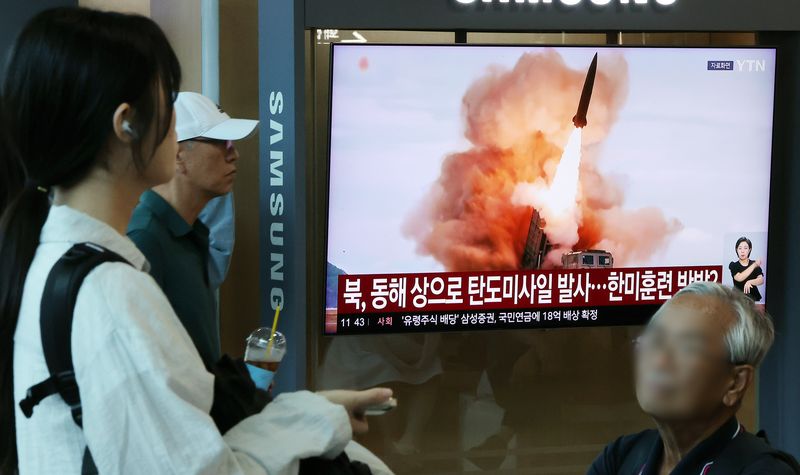
Analysts say the consecutive launches on the 6th and 12th were meant to achieve multiple goals by targeting South Korea, the United States and Japan. They also suggest the moves reflect a mix of opposition to this month's ROK-US Combined Military Exercise and Japan's military actions. Some say the launches may have been a countermeasure aimed in particular at Japan's move to deploy Tomahawk cruise missiles in operational use.
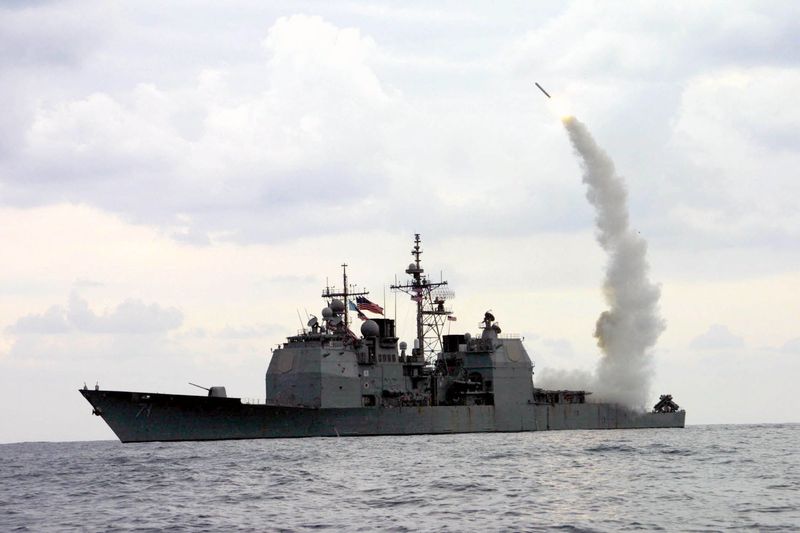
Hong Min, a senior research fellow at the Korea Institute for National Unification (KINU), said on the 13th that the missile's flight distance of about 690 to 700 km is virtually identical to the straight-line distance from the Wonsan area, where it was launched, to Sasebo Port in Japan. Sasebo Port is the home port of the Japan Maritime Self-Defense Force (JMSDF) Aegis destroyer JS Chōkai, which recently conducted a live-fire Tomahawk test. The Tomahawk is a cruise missile launched from ships that flies long distances at low altitude, evades radar while maneuvering, and can strike key targets such as command centers and nuclear and missile facilities.
Japan has recently seen growing public discussion of nuclear sharing with the United States. If that happens, Japan could shift from a rear-support role for U.S. forces to a country capable of directly striking North Korea's command centers and nuclear and missile facilities.
Feeling threatened, North Korea has been lashing out at Japan. Kim Yo-jong, the head of the Organization and Guidance Department of the Workers' Party of Korea and the younger sister of Workers' Party of Korea General Secretary Kim Jong Un, said on the 5th that Japan's Tomahawk missile test launch was "a grave threat to the security of the republic" and warned that it would "set additional military options."
After firing the ballistic missile into the East Sea, North Korea has not yet reported on the launch. Normally, the country has used state media from early the next morning after a ballistic missile launch to widely tout its purpose and achievements. The ballistic missile launched on the 6th has also gone unmentioned in state media for a full week.
Earlier, the Joint Chiefs of Staff (JCS) announced that it had detected one ballistic missile fired from the Wonsan area into the East Sea around 6 a.m. on the 12th.
The JCS said the missile flew more than 700 km. Missiles with a range of 300 to 1,000 km are usually classified as short-range ballistic missiles, but the JCS did not specifically label this one as an SRBM. That left open the possibility that North Korea had fired a medium-range ballistic missile (MRBM) at a reduced range.
On the 6th as well, the JCS detected and announced that one short-range ballistic missile (SRBM) had been launched from the Wonsan area around 5 p.m. At the time, the military did not disclose the missile's flight distance, raising speculation that the launch pattern may have differed from the norm. Including the two launches over the past six days, North Korea has fired ballistic missiles 11 times this year.
[email protected] Kim Kyung-soo Reporter