International Oil Prices Edge Higher Amid Dispute Over Control of the Strait of Hormuz
- Input
- 2026-08-13 04:57:21
- Updated
- 2026-08-13 04:57:21
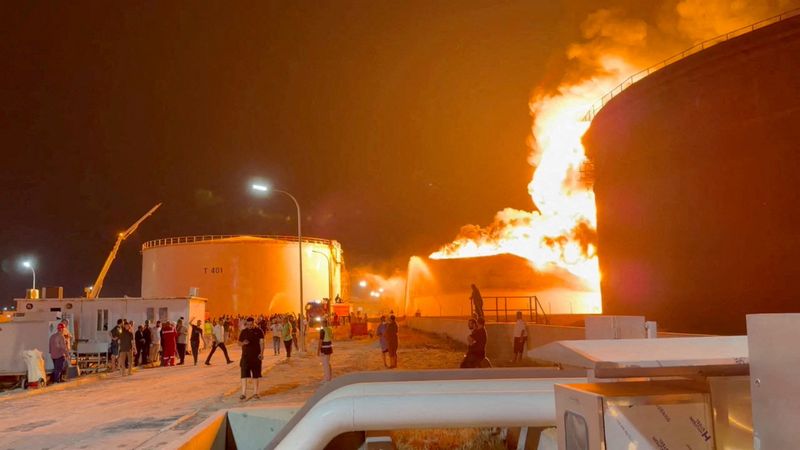
International oil prices edged up slightly on the 12th local time.
Although ships were attacked in the Red Sea and the Gulf of Oman the previous day, there was no major market reaction. As confusion deepened over conflicting claims — with U.S. President Donald Trump repeatedly saying the United States has complete control over the Strait of Hormuz, while private maritime intelligence data showed traffic through the strait had fallen to about 10% of prewar levels — the market is taking a wait-and-see approach for now.
October Brent Crude Oil, the global benchmark, rose $0.07, or 0.08%, from the previous session to $88.98 per barrel on the Intercontinental Exchange (ICE).
September WTI, the U.S. benchmark, also gained $0.07, or 0.08%, on the New York Mercantile Exchange (NYMEX) to close at $83.27 per barrel.
The Houthi rebels in Yemen, backed by Iran, attacked a cargo ship in the Bab-el-Mandeb Strait, the gateway to the Red Sea, the previous day, killing six people. It was the first fatality from a ship attack in the Red Sea in more than a year.
Hours later, the U.S. military announced that it had fired two Hellfire missiles at a cargo ship in the Gulf of Oman, saying the vessel had violated the maritime blockade against Iran.
Against this backdrop, the market is facing confusion as the Trump administration says it has full control of the Strait of Hormuz and that oil shipments are not a problem, while private maritime intelligence firms report that traffic has fallen to 10% of prewar levels.
U.S. Secretary of Energy Chris Wright said on the 12th that ships passing through the strait covertly are not included in private tallies. He added that total oil exports from the Gulf region, including pipeline shipments, average 15 million barrels per day. He also emphasized that 9 million barrels of crude are exported daily through the Strait of Hormuz.
By contrast, maritime intelligence firm Kpler said only 14 vessels passed through Hormuz on the 11th, and the average daily traffic over the past five days was just 13 ships. That is the lowest level in three months, since May.
Compared with the pre-Iran War average of 120 to 130 ships per day on February 28, traffic has plunged by roughly 90%.
[email protected] Song Kyung-jae Reporter