"The success of Korean companies is the success of Bac Ninh Province... I want to build a complete semiconductor cluster" [Relay Interview with Vietnamese Provincial People's Committee Chairmen]
- Input
- 2026-08-25 16:36:04
- Updated
- 2026-08-25 16:36:04
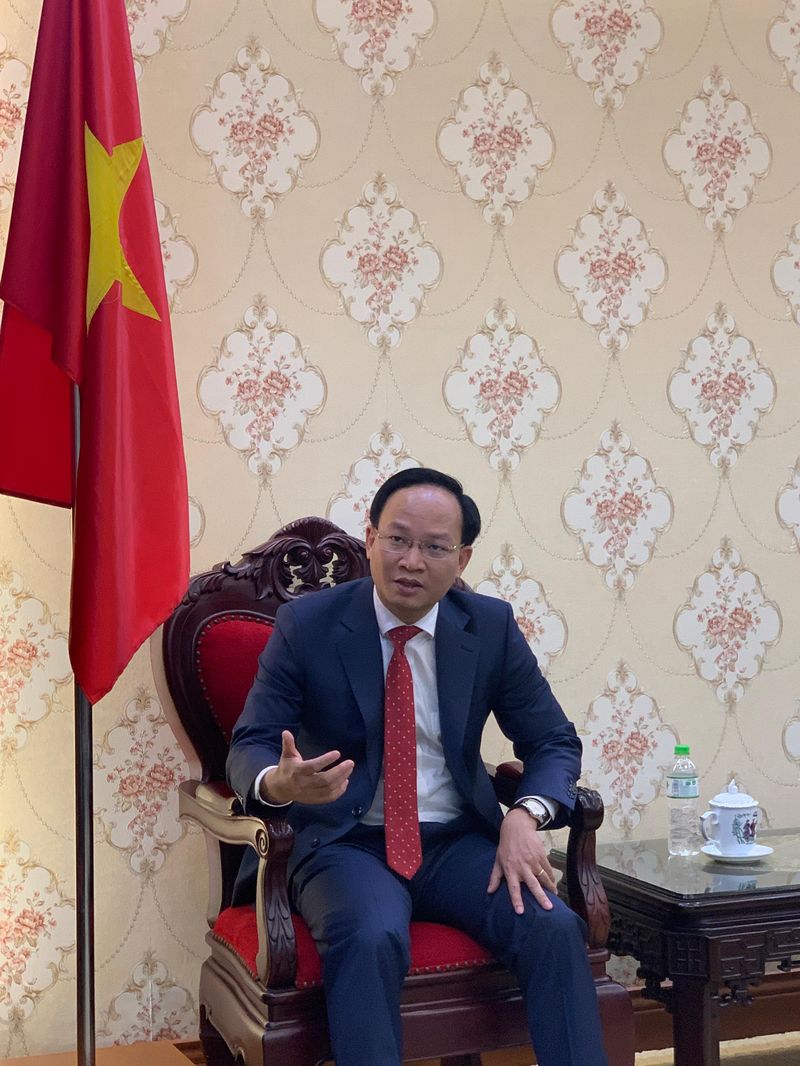
Through this expansion of investment, Bac Ninh Province has expressed its ambition to leap forward as a key production hub in the global semiconductor supply chain. Korea is the largest investor in Bac Ninh Province. 36 billion.
Bac Ninh Province defines Korean companies as "strategic and long-term partners" and looks forward to expanding the scope of cooperation beyond new investments and expansions to include collaboration with local companies, technology transfer, and talent development. The following is a Q&A with Tin Bu, Vice Chairperson of the People's Committee. ―What is Bac Ninh Province's competitiveness in attracting FDI? ▲ Bac Ninh Province's key competitiveness lies in its excellent geographical location, various infrastructures, a clear institutional foundation, and continuous administrative reform.
With projects in the high-tech electronics and technology sectors concentrated around global companies such as Samsung, Foxconn, and Luxshare, Bac Ninh Province has established itself as the industrial hub of the northern region. Recently, we have been selectively attracting investments in high-tech, clean technology, and environmentally friendly sectors that generate high added value. We are focusing not only on electronics and semiconductors but also on green industries and the development of eco-industrial parks.
Furthermore, we are pursuing a "2-Low" policy of minimizing land use and labor, and a "3-High" strategy of increasing investment efficiency, economic effects, and fiscal contribution. FDI currently accounts for more than 60% of Bac Ninh Province's GDP. 36 billion.
This ranks first in terms of investment amount and second in terms of the number of projects among the 42 countries that have invested in Bac Ninh Province. 7 billion in the Yen Phong Industrial Park. 3 million across eight projects, seven of which are currently operational, creating 11,000 jobs.
Investments by Korean companies are expanding Bac Ninh Province's industrial base, extending beyond electronics, high-tech, and semiconductors to include supporting industries and urban infrastructure. ―What do you see as the main reason Korean companies are seeking out Bac Ninh Province? ▲ Bac Ninh Province has formed an ecosystem where thousands of FDI projects are concentrated around the electronics and high-tech sectors, connecting production, assembly, and parts industries. This means it is an environment where Korean companies can easily connect supply chains, optimize costs, and expand additional investments.
We are also securing sites for large-scale industrial parks and new or expansion projects. We are continuously improving transportation networks that connect Hanoi with major ports and economic zones. In particular, the development of Gia Vinh International Airport will become a new strategic axis that enhances logistics capabilities and international connectivity.
―In which sectors do you expect investment in the future? ▲ Electronics and semiconductors will continue to be core industrial groups. We aim to build an ecosystem that encompasses the entire semiconductor value chain, ranging from manufacturing and assembly to integrated circuit (IC) design, testing, packaging, and workforce training.
We also plan to strengthen supporting industries such as components, materials, and consumables. We are also focusing on fostering the IT, smart device, AI, and digital transformation sectors.
New investment areas include green and clean industries—such as renewable energy, eco-friendly new materials, and low-carbon production—as well as digital infrastructure, smart cities, R&D in high-tech and semiconductor fields, and the training of highly skilled personnel. ―What is Bac Ninh Province's mid-to-long-term development strategy? ▲ We are restructuring the economic structure around high-tech industries, green industries, supporting industries, and the digital economy.
We are promoting technological innovation in strategic industries such as electronics and semiconductors, as well as the advancement of the industrial ecosystem, with the goal of being elevated to the status of a centrally administered city before 2030. We plan to drive technological innovation in the fields of electronics, semiconductors, industrial support, logistics, and advanced agriculture, and establish an R&D hub by 2035.
We are also concentrating our efforts on expanding wide-area transportation networks, such as the Dja Vinh International Airport, the Hanoi connecting road, and the Fourth Ring Road, as well as industrial parks, urban infrastructure, and digital infrastructure. Ultimately, the goal is to transform into an industrial hub combining high-value-added advanced technology manufacturing and services by building a 'mega industrial city' that integrates modern industrial parks, smart cities, and service functions.
―How are you addressing the difficulties faced by investing companies? ▲ We are operating annual FDI dialogue meetings, investment promotion consultations, and inter-ministerial cooperation task forces. At the Dialogue Conference with FDI Companies, the provincial leadership meets directly with companies to listen to their difficulties and find solutions.
On-site issues, such as land acquisition, power supply, and administrative procedures, are resolved through rapid response teams and corporate support task forces. Investment-related information is also provided through the official provincial government portal and the websites of various ministries.
9 million. 9%.
Bac Ninh Province is the first provincial government in Vietnam to implement a policy supporting the education and training of high-skilled personnel for the digital and semiconductor industries from 2024 to 2030. In December 2025, policies to foster the workforce for the semiconductor, AI, and digital technology industries and support vocational education were also officially announced.
Currently, 83 social housing projects are underway, with plans to supply approximately 118,000 housing units. Of these, about 24,000 units have been completed.
In Bac Ninh Province, over 26,000 companies employ approximately 820,000 people, and a demand for about 230,000 new hires is expected in 2026 alone. ―What message would you like to convey to Korean companies? ▲ Bac Ninh Province regards Korean companies as long-term partners forming the core of its development.
Moving forward, we look forward to companies not only expanding the scale of investment but also broadening their scope of activity into high-value-added fields such as R&D, design, and innovation, thereby participating more deeply in the global value chain within Bac Ninh. Bac Ninh Province is improving administrative procedures to be more rapid and transparent, and is expanding industrial parks as well as logistics and digital infrastructure.
We will also focus on supplying a highly skilled workforce. We hope that Korean companies will also join in cooperating with local businesses, developing supporting industries, transferring technology, and building a sustainable production and innovation ecosystem.
Interview by Kim Kwan-woong, Head of Southeast Asia Bureau Compiled by Correspondent Kim Jun-seok
[email protected] Kim Jun-seok Reporter