[Editorial] The Yellow Envelope Act confusion calls for swift corrective legislation
- Input
- 2026-08-12 18:17:32
- Updated
- 2026-08-12 18:17:32
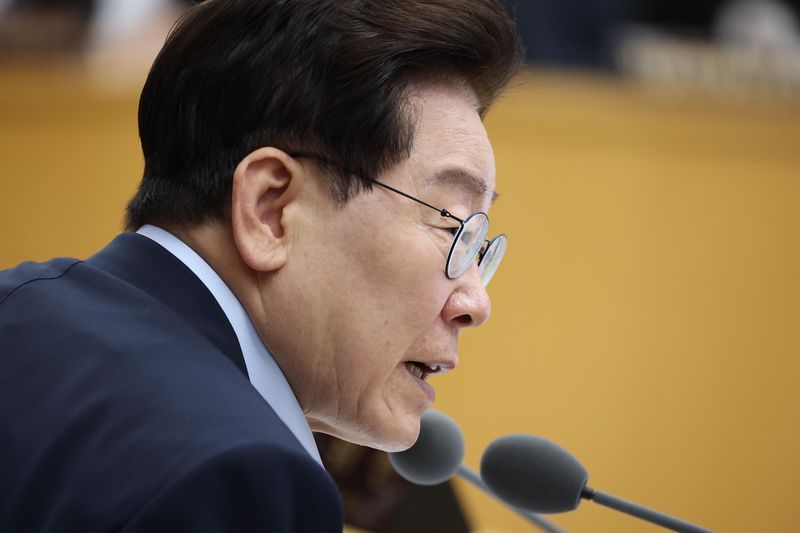
At the State Council meeting on the 11th, President Lee told Labor Minister Kim Young-hoon, "There are calls to specify the obvious things regarding the scope of labor disputes, and that is a fairly reasonable argument," and instructed him to make the standards clear. Earlier, on the 21st of last month, when the Samsung Group supra-enterprise labor union, Samsung Electronics branch said it would place the construction of a semiconductor plant in Honam on next year’s labor-management bargaining agenda, citing a provision in the Yellow Envelope Act that recognizes 'management decisions affecting business operations' as a basis for union action, Lee criticized the move as "absurd" and issued a similar instruction.
The current Yellow Envelope Act adds 'management decisions affecting working conditions' to the scope of labor disputes. Even at the time of the revision, critics warned that the standards were vague and could lead to conflicting interpretations. After Lee's instruction, MOEL has been working not on new enforcement decrees or enforcement rules, but on strengthening the existing 'interpretive guidelines.' That is because the parent law, the Yellow Envelope Act, contains no separate delegation clause.
Lee, however, said on the day that simply reinforcing the guidelines would not be enough, and ordered supplementary measures through administrative legislation such as enforcement decrees. When Minister Kim expressed a negative view, saying there was no delegation clause in the parent law, Lee stressed, "It can be done within the scope that does not conflict with the law."
Lee's remarks are seen as a strong expression of the top state leader's determination to resolve uncertainty in the field. But if lower-level regulations are used to set new standards or narrow the scope of disputes without explicit legal delegation, that could create yet another legal controversy. If the scope of labor disputes guaranteed by law is narrowed through subordinate rules, enforcement decrees could end up restricting rights granted by statute.
The issue has also been raised in political circles and by labor groups. The opposition has argued that setting standards through subordinate regulations without specific legal delegation could spark constitutional concerns. The Korean Confederation of Trade Unions (KCTU) also protested, saying, "There is no delegation clause anywhere in the labor law that allows this to be set by enforcement decree," and calling it "a move to side with business interests and an abuse of authority."
Stable labor-management relations are essential for large-scale investment in advanced facilities, including semiconductors and Artificial Intelligence (AI), which are key future growth engines for the country. If the risk of strikes rises because the scope of disputes remains unclear, it could disrupt industrial sites, weaken companies' appetite for investment, and even undermine national competitiveness. If administrative guidelines or enforcement decrees change every time a new administration takes office, the predictability of labor-management relations could also suffer.
MOEL says it is "reviewing various options, including enforcement decrees and enforcement rules." But the fundamental solution for clarifying the standards for disputes while avoiding controversy is corrective legislation. At the very least, there must be a legal basis for delegating the standards to subordinate regulations. The National Assembly should move quickly to discuss amendments and supplementary legislation to the Yellow Envelope Act so that confusion at industrial sites is resolved and major advanced-industry investments, including the country's three major mega-projects, do not face setbacks.