The long bear market may finally be ending... "But a explosive rally will be hard to repeat"
- Input
- 2026-08-13 06:00:00
- Updated
- 2026-08-13 06:00:00
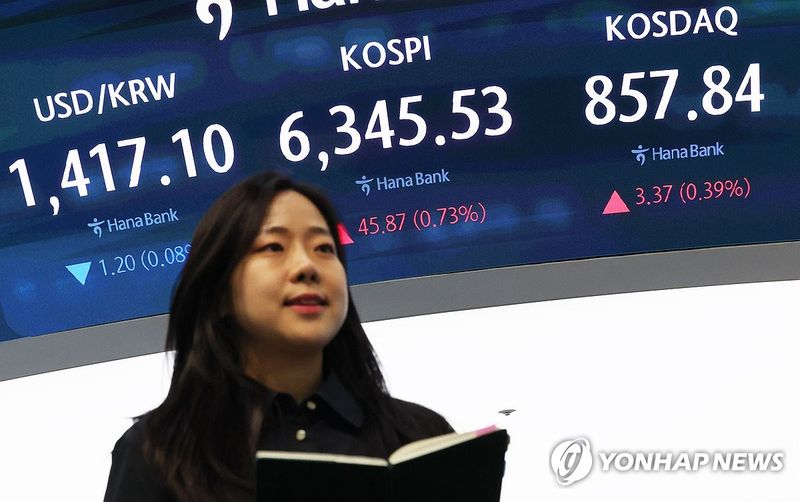
[Financial News] Brokerage analysts said signs of a rebound are emerging in the domestic stock market as leveraged unwinding appears to be entering its final stage after the July correction. However, they expect a rotation-led market rather than a repeat of the explosive rally seen in the first half, with large-cap stocks likely to move sideways while gains spread to KOSDAQ and industrial stocks.
Lee Sang-heon, a researcher at iM Securities, said on the 13th that the reduction in leverage accumulated in the first half had bottomed out during the July selloff, but that a similarly explosive uptrend is unlikely to return.
Samsung Electronics and SK hynix, which had been falling for some time, closed the previous day, the 12th, up 6.68 percent and 5.54 percent, respectively, from the prior session. The KOSPI surged 3.68 percent, triggering a program-buying sidecar for the first time in five trading days.
To understand the price trend of major semiconductor stocks, one must go back to April this year. From early April to early June, the KOSPI jumped 73.94 percent. Global semiconductor stocks rose together, and the Philadelphia Semiconductor Index also climbed sharply, lifting Korean chip stocks as well.
What drove the unprecedented pace of gains, however, was leveraged positioning built around major semiconductor stocks. As futures and options positions piled into Samsung Electronics and SK hynix, whose earnings and valuation appeal were strong, the upside expanded further.
In particular, the launch of single-stock leveraged products on May 27 in Korea became a decisive catalyst for the sharp acceleration in gains. Lee explained that afterward, the concentration on Samsung Electronics and SK hynix intensified, and the rise gathered pace as leveraged investing such as margin financing also increased. He added that this created a side effect in which stocks that had been neglected for a while saw relatively larger corrections.
The problem emerged after July. Analysts say the rapid buildup of leveraged positions over a short period, combined with Samsung Electronics' earnings release in early July, prompted position reductions. The issue was not weak earnings themselves, but rather growing concern that the pace of future profit growth could slow, which in turn weighed on valuations.
Lee said Samsung Electronics had seen operating profit rise rapidly in previous quarters thanks to higher prices for legacy DRAM and NAND flash memory, but that slower expected gains in memory prices increased the likelihood of a deceleration in earnings growth. He noted that it was not the earnings level that worsened, but the slowdown in earnings growth that became a factor in valuation declines.
He also pointed to interest-rate pressure stemming from expanded investment in Artificial Intelligence (AI) data centers as another factor weighing on semiconductor valuations. Hyperscalers had previously expanded data center investment using their own cash flow, but as investment sizes have surged recently, reliance on borrowing such as bond issuance has increased.
As corporate bond issuance rises, the yields demanded by bond investors also increase, which can push up credit spreads and financing costs. In particular, since hardware purchases such as xPU and CPU now account for a larger share of data center investment costs, a heavier borrowing burden could also affect the pace of investment growth.
Still, he said the mood has changed recently. Much of the leveraged positioning accumulated during the July correction has been unwound, and signs since last week suggest that the deleveraging process is nearing completion. After a sharp rebound in the KOSDAQ market earlier this month, Samsung Electronics and SK hynix also rebounded strongly this week, confirming a shift in fund flows.
Lee said, "If leverage keeps being reduced, you eventually reach a point where there is nothing left to cut." He added, "Last week, that signal appeared first in the KOSDAQ, and this week we have also seen signs in the futures and options market that leveraged positions have bottomed out."
He interpreted the previous day's sharp gains in Samsung Electronics and SK hynix as an extension of that shift in supply and demand. Foreign investors bought futures and call options, which in turn encouraged spot buying, and buying quickly flowed into Samsung Electronics and SK hynix.
He drew a clear line, however, saying this rebound should not be seen as the start of another explosive rally like the one in the first half. From April to June, leveraged positions expanded rapidly across global markets, and in Korea, single-stock leveraged products added further momentum. But he said the current environment makes it difficult for leverage to build up on the same scale again.
Lee said, "This does not mean Samsung Electronics and SK hynix will fall sharply again." He added, "After a strong rebound lasting two to three trading days, they are likely to return to normal price movement within a trading range." He also said, "It will be difficult to expect a market that rises 50 to 60 percent in a single month, as it did in the first half."
Instead, he highlighted the possibility that liquidity concentrated in major semiconductor stocks could spread to other sectors and to KOSDAQ names. Even if Samsung Electronics and SK hynix enter a trading range, he said, abundant market-side funds could still support rotation into industrial stocks and KOSDAQ shares.
Lee forecast that, with customer deposits still around 100 trillion won and foreign flows remaining neutral, the chance of another wave of heavy selling is low. He said the index's upward trend could continue at least through October.
He added that while the KOSDAQ rebound so far has largely reflected a technical bounce after steep declines, stocks with genuine earnings momentum are more likely to move selectively going forward. He said investors should focus more on industrial stocks and KOSDAQ names with solid earnings support than on Samsung Electronics and SK hynix.
[email protected] Park Ji-yeon Reporter