[Editorial] Apple’s Cooperation with China’s Semiconductor Industry Calls for a Response Through Superior Technology
- Input
- 2026-08-11 18:26:43
- Updated
- 2026-08-11 18:26:43
This is not the first time Apple has taken such a step. It has previously helped Chinese display makers gain ground in an effort to counter South Korean companies. A prime example is BOE Technology, China’s largest display manufacturer. Despite setbacks, including being caught making unauthorized specification changes without Apple’s approval, BOE grew rapidly by joining Apple’s supply chain and benefiting from domestic subsidies. Market research firm Omdia projected that BOE’s share of Apple MacBook panels last year would surpass LG Display for the first time and rank No. 1.
During the development of electric vehicles, Apple also held supply talks with CATL and BYD, the world’s No. 1 and No. 2 battery makers. Although the two sides did not reach a final agreement because conditions such as building a dedicated plant in the United States were not met, behind-the-scenes discussions over cost reduction continued. For nearly 20 years, Apple has pursued a 'dual sourcing' strategy, assigning high-end specifications to South Korea and Taiwan, and mass-market products to China. In the process, it has also helped accelerate China’s technological catch-up.
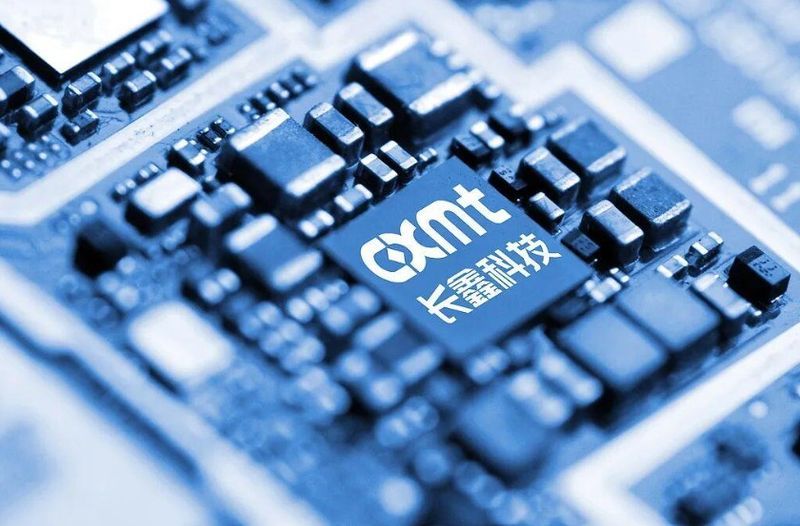
Industry observers say CXMT could also build a track record of quality validation through Apple orders and gain global credibility. If that happens, the company may eventually challenge Micron and seek to join Samsung Electronics and SK hynix as one of the top three players in memory semiconductors. However, because CXMT is on the United States Department of Defense’s sanctions list, the U.S. government could step in and block the move. Foreign media also report that price and supply capacity remain major obstacles, leaving the deal’s prospects uncertain.
Of course, South Korean companies still retain strong competitiveness in high-spec displays such as OLED panels used in premium iPhones, and in memory semiconductors, South Korea’s technological edge is likely to remain especially strong in high-performance chips. But the problem is that if the mass market is eroded first, the position of South Korea’s industries could gradually weaken. As Chinese firms that have passed Apple’s quality checks expand their market share with cost competitiveness, concerns are growing that the technology gap between South Korea and China will narrow. A swift response is urgently needed.
To withstand Apple’s push for supplier diversification and the advance of Chinese companies, South Korean firms have little choice but to maintain an irreplaceable 'technology super-gap' in high-value-added areas such as High Bandwidth Memory (HBM) and next-generation OLED. The government must also move quickly to provide tax and investment support, while building a stronger technology security framework so that domestic companies are not disadvantaged amid the U.S.-China technology rivalry. It is time to reinforce the final line of defense so that Apple’s dual sourcing strategy does not become another engine for China’s semiconductor rise.