The urgent Mega Special Zone Act faces deepening conflict over 52-hour workweek exemptions
- Input
- 2026-08-11 18:20:45
- Updated
- 2026-08-11 18:20:45
■ The ruling party and government take a cautious stance on exceptions to the 52-hour maximum workweek regulation
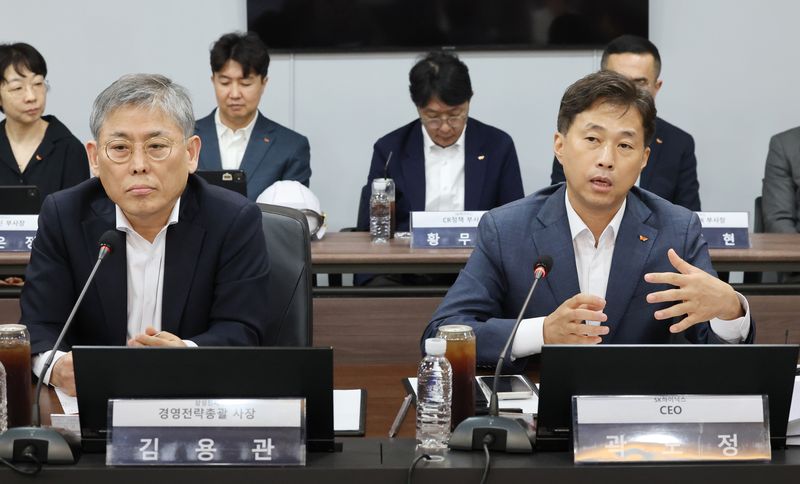
According to political sources on the 11th, the government and the ruling party are pushing to enact the Special Act on Mega Regulatory Free Zones to advance the Mega Project. They are reportedly considering including package support in the bill, such as tax, financial and fiscal measures, as well as exceptions to the 52-hour maximum workweek regulation. Although the Lee Jae Myung administration is promoting stronger support for companies in line with its stated "pragmatism," it has shifted into a wait-and-see mode amid fierce backlash from labor groups. That caution was also evident during the DPK's Special Committee on Support for the Three Major Mega Projects visit to the Yongin semiconductor cluster site, where it held an on-site meeting with Samsung Electronics and SK hynix. Jang Chul-min, the committee's executive secretary, said, "As various policies and projects related to the Special Act on Mega Regulatory Free Zones move forward, there is room for controversy and conflict. The committee will work to eliminate those concerns and bring them together into a major project."
The semiconductor industry appears to be hoping that the Mega Special Zone Act will pave the way for broader exemptions to the 52-hour maximum workweek regulation, including in the Capital Region. Kwak Noh-jung, President & CEO of SK hynix, said, "We have major tasks ahead, including expanding beyond the Yongin Semiconductor Cluster and also expanding existing campuses, while extending into the Honam region. This level of business expansion is too much for a single company to handle." He added, "We need full support in areas such as water, power and talent."
However, progressive parties within the broader ruling bloc and labor groups are reacting strongly. The Progressive Party held a news conference at the National Assembly on the day and said, "Do not turn the mega special zones into areas exempt from labor rights." It added, "The 52-hour maximum workweek regulation is a social standard that protects workers' health and rest rights. To exempt it would mean saying that while industry will be advanced, the labor market and employment will be pushed back into the past." RKP leader Shin Jang-jik also said on the 10th, "The 52-hour maximum workweek regulation is not a bargaining chip." He added, "It is a precious social agreement achieved through a public consensus that people should be able to live like human beings. Do not even think about undermining it."
■ Some also argue that the ruling party needs to make a bold decision
Meanwhile, some are saying that the government and the ruling party must make a decision if they want to move the Special Act on Mega Regulatory Free Zones forward quickly. One ruling party official said, "The exemption from the 52-hour maximum workweek regulation is only the beginning." The official added, "Not only the ruling party, which will lead the legislation, but also the relevant ministries need to push ahead through a decisive move on the exemption if they want to advance other issues as well."
The business community is also strongly demanding relaxed application of the 52-hour maximum workweek regulation in the mega special zones. In a recent survey by the Korea Enterprises Federation (KEF) of 468 companies in national advanced strategic technology sectors with 50 or more employees, 50.6% of respondents said the most urgent need was "greater flexibility in R&D workers' hours," including exemptions from the 52-hour maximum workweek regulation and longer flexible and selective working-hour systems.
[email protected] Lee Hae-ram Kim Hyeong-gu Kim Hak-jae Reporter