"More Than Four a Day Is Poison": The Unexpected Warning About the Food Once Touted as Good for Hair Loss [Smart Wellness]
- Input
- 2026-08-10 13:29:05
- Updated
- 2026-08-10 13:29:05
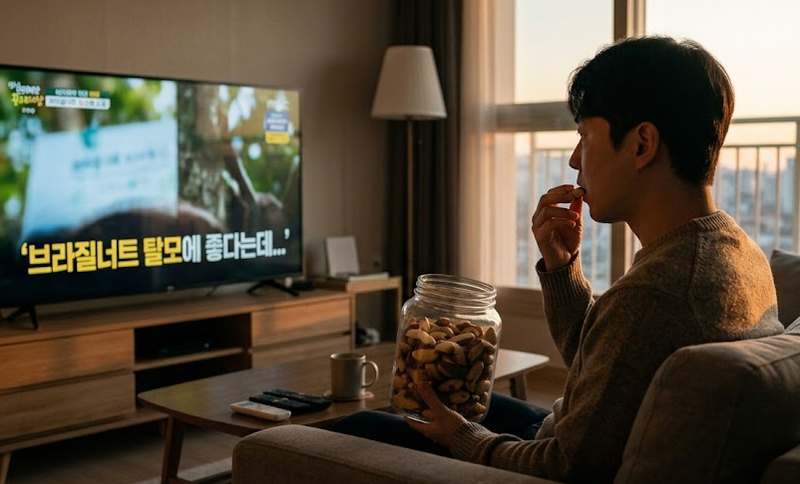
[Financial News] Interest in hair loss has surged recently, especially among the 2030 generation. The rise is driven by chronic stress, irregular eating habits, and environmental pollution, which have increased the share of acquired hair loss. It also reflects the growing popularity of slow aging and health digging trends, where people try to manage their health early, even at the pre-illness stage. As hair loss has become an issue that can affect quality of life, interest in scalp health and food has also intensified. Here, we take a fact-based look at the nutritional benefits and proper intake of foods widely believed to be good for hair.
Nuts are good for preventing hair loss... but Brazil nuts are a case of too much of a good thing
Nuts are rich in protein, vitamin E, and unsaturated fatty acids, all of which are key components of hair. For that reason, they are often considered one of the best snacks for keeping hair healthy from a scalp physiology perspective. The vitamin E and zinc found in nuts act as powerful antioxidants, helping prevent free radicals from attacking follicle cells at the roots of the hair and supporting the division of hair-producing cells. Omega-3 fatty acids, which are abundant in almonds and other nuts, promote microcirculation in the scalp and improve nutrient delivery to the follicles.
Among nuts, Brazil nuts are especially known as a food that may help prevent hair loss because they are rich in selenium, which has strong antioxidant effects. Selenium removes free radicals that attack scalp cells and accelerate follicle aging, while also suppressing inflammatory responses in the scalp to create a more stable environment for hair growth. It also helps prevent damage to tiny blood vessels in the body, improving blood flow to the follicles so that essential nutrients can reach hair cells more smoothly. Each Brazil nut contains about 68 to 91 mcg of selenium, one of the highest levels among foods.
However, even a good food can become harmful if consumed in excess. Brazil nuts can actually trigger hair loss when eaten too much, so caution is needed. Excess selenium intake can cause selenium toxicity, leading to diarrhea, vomiting, brittle nails, and hair loss. The recommended daily intake of selenium for adults is about 55 mcg, and the upper limit is 400 mcg. Since just one Brazil nut can already meet the daily recommended amount, it is best to limit intake to about one or two a day, much like taking a supplement.
Black beans are good for preventing hair loss, but they are not a cure
Black beans, a classic food often associated with hair loss prevention, are rich in isoflavones, a type of plant estrogen. Isoflavones suppress the activity of 5-alpha reductase and Dihydrotestosterone (DHT), the main drivers of male-pattern hair loss, while also supporting blood circulation in the scalp. In addition, their abundant antioxidant compounds, including Anthocyanin and vitamin E, help prevent aging of hair cells and support healthy hair maintenance.
The important point, however, is that the effects of black beans are limited to prevention and support. Hair loss that has already progressed due to hormonal imbalance or follicle damage cannot be treated by eating black beans alone. If follicles have already stopped functioning or have disappeared, it is urgent to seek professional medical treatment rather than relying on food.
The way to live a healthier, more energetic life is not far away. Smart Wellness shares practical wisdom for caring for both body and mind, based on scientific evidence and the latest trends. If you subscribe to the reporter page, you can receive Smart Wellness more conveniently.
[email protected] Kim Hyun-sun Reporter