[Editorial] Supply Measures Should Also Include Incentives for Reconstruction and Redevelopment
- Input
- 2026-08-09 19:07:19
- Updated
- 2026-08-09 19:07:19
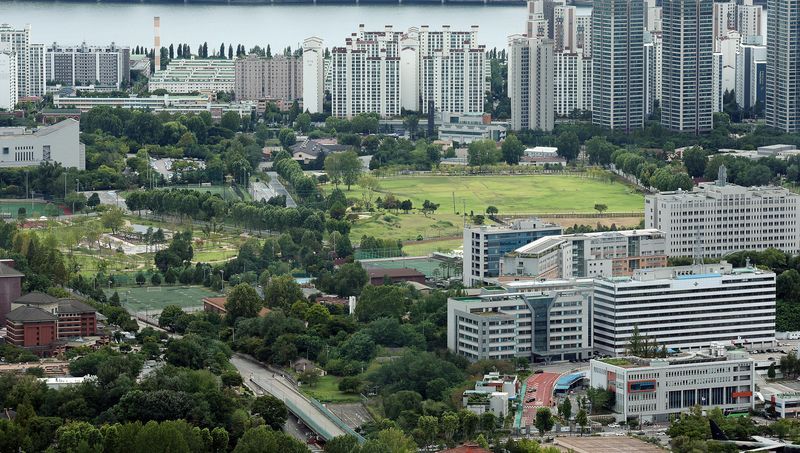
There is no better way to cool housing prices than by increasing supply. The phrase "just supply it" has become a guiding principle in real estate policy, and supply must remain at the center of any solution. The housing market is no exception to the law of supply and demand. When property prices surged in the 1990s, the market was stabilized by building large apartment complexes in Bundang, a new town district in Seongnam, South Korea, and Ilsan New Town. Gwacheon has also seen relatively stable housing prices, reportedly because the area had a large volume of supply.
The Moon Jae-in administration announced 26 real estate measures but failed to rein in home prices. That was because it focused on regulation while largely ignoring supply. In that sense, attention is now turning to how the government’s recent plan to raise holding taxes will affect housing prices. Before that, it should carefully examine possible side effects and loopholes, such as sharp increases in jeonse and monthly rent prices, and come up with complementary measures.
On Sept. 7 last year, the government announced a supply plan centered on a goal of starting construction on 1.35 million homes by 2030. It said it was confident that the equivalent of one new town’s worth of apartments would be supplied each year. As part of that plan, it pledged to build 268,000 homes in the Seoul metropolitan area this year, but it failed to achieve even 25 percent of that target in the first half. It is difficult to avoid doubts about whether the actual supply plan will be met.
With criticism mounting over measures focused on regulation, the government is once again said to be preparing to present a supply plan to the public. Expectations are high for whether it will include any truly groundbreaking measures. According to reports, the government is also reviewing a plan to supply 20,000-plus homes in central Seoul, including the three Gangnam districts, by designating new sites for redevelopment in semi-industrial zones and for public housing complex projects.
The most important principle in housing supply is to build the homes people want, in the places they want them. Locations with poor access or weak appeal are easily shunned and can only add to unsold inventory. The government is also considering increasing non-apartment housing, such as urban-type living housing, which can be built more quickly than apartments.
Even if non-apartment housing is supplied, it can only count as real supply if it is not inferior to apartments in size, location or quality. Otherwise, given consumers’ strong preference for apartments, such housing will likely be seen only as a temporary stopgap. To break the perception that a home is not a real home unless it is an apartment, non-apartment housing must still be built to a very high standard.
For the same reason, measures to encourage reconstruction and redevelopment should be included in the new supply plan. The excess profit recovery levy on reconstruction projects, which imposes charges of up to 50 percent when gains per association member exceed the threshold, is a major obstacle to reconstruction. Without easing this regulation, it will be difficult to revive reconstruction projects.
To encourage redevelopment in aging residential areas in Seoul and the wider metropolitan region, easing requirements is essential. The government should not only simplify approval procedures, but also examine why redevelopment projects are delayed and speed them up through financial support and other measures. It should also identify the causes of delays in the Third New Towns, where construction is falling behind schedule, and bring completion forward.