"This Would Be Enough to Live On"... Extreme Heat Above 104 F Eases After Relentless Spell
- Input
- 2026-08-09 18:40:15
- Updated
- 2026-08-09 18:40:15
According to the Korea Meteorological Administration (KMA) on the 9th, heat advisories were in effect across most of the country except for Gangwon Province, the East Coast of North Gyeongsang Province, and the northeastern mountain areas. Heat warnings were issued for 118 areas, including Seoul, western Gangwon, South Chungcheong Province, Jeolla Province, and South Gyeongsang Province, while heat advisories were in place for 82 areas, including Jeollanam-do and Jeju.
All severe heat emergency alerts have been lifted. Rain along the East Coast and in some other areas, along with lower temperatures, has taken some of the edge off the extreme heat. In some East Coast areas, daytime temperatures stayed in the 20s C as rain continued, while parts of the Seoul metropolitan area and Jeolla Province saw highs above 35 C. For the time being, most parts of the country are expected to remain hot, with temperatures around 35 C.
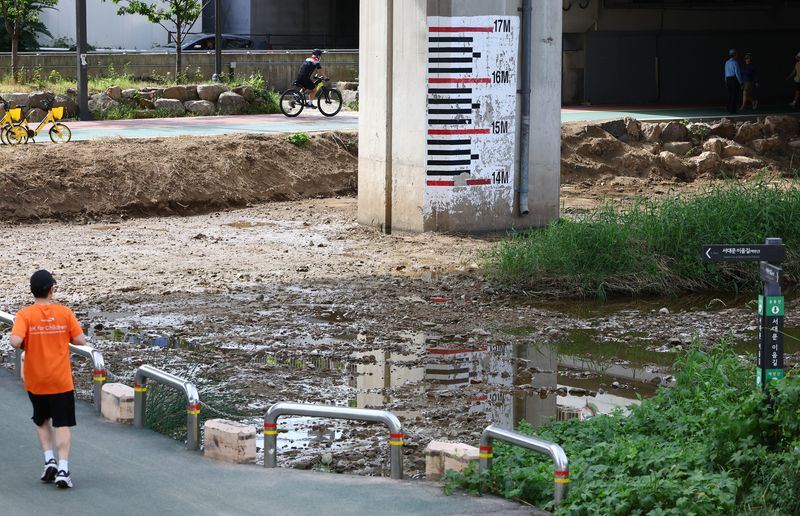
Along with the heat, the prolonged lack of rainfall is worsening water conditions in the southern regions. According to the Ministry of the Interior and Safety's August drought outlook released that day, cumulative nationwide rainfall over the past six months, from Feb. 2 to Aug. 1, totaled 603.0 mm, or 82.3% of the seasonal average of 736.5 mm. As of Aug. 1, meteorological drought was reported in 48 cities and counties nationwide. The rainfall shortage is especially severe in Busan, Ulsan, and South Gyeongsang Province. Over the past six months, cumulative rainfall in those areas was 555.7 mm, just 62.5% of the average 879.6 mm. Moderate drought, classified as a 'watch' stage, is affecting southern North Gyeongsang Province and South Gyeongsang Province, while severe drought, classified as a 'warning' stage, is being reported in Busan, Gimhae in South Gyeongsang Province, and Ulju-gun in Ulsan.
Agricultural water supplies are also tight. As of Aug. 3, the average reservoir level at agricultural reservoirs nationwide stood at 53.2%, or 76.1% of the seasonal average of 69.9%. South Gyeongsang Province had the lowest level at 39.6%, followed by North Jeolla Province at 44.6%, Jeju at 48.5%, Jeollanam-do at 48.6%, and North Gyeongsang Province at 52.4%. Some dams are also in poor condition. As of the 9th, the reservoir level at Bohyeonsan Dam in Yeongcheon, North Gyeongsang Province, was 15.9%, the lowest among the country's 19 multipurpose dams. Unmun Dam in Cheongdo County is the only one of the country's 12 water-supply dams to have entered the 'severe' drought stage. Reservoir levels in North Jeolla Province also stood at 38.5% that day, far below the seasonal average of 64.7%.
Rain has fallen in Daegu and North Gyeongsang Province since the previous day, but the precipitation has been concentrated in northern North Gyeongsang Province and along the East Coast, making it insufficient to ease the drought in the southern regions. Relief is also unlikely to come quickly. The KMA has forecast that rainfall in August and September will generally be below average.
The government is also stepping up its response with a whole-of-government system. At 11 a.m. that day, the Central Disaster and Safety Countermeasures Headquarters (CDSCHQ), chaired by Kim Kwang-yong, held a heat disaster response meeting with relevant ministries and local governments in attendance. The meeting reviewed response efforts by the accident response support headquarters set up at the Ministry of Agriculture, Food and Rural Affairs (MAFRA), the Ministry of Health and Welfare (MOHW), and the Ministry of Employment and Labor (MOEL), as well as measures to manage vulnerable groups during extreme heat. CDSCHQ decided to strengthen protection for vulnerable groups such as elderly farmers and outdoor workers, and to conduct intensive inspections of heat-prone workplaces such as construction sites and logistics centers. It will also expand monitoring in rural areas using drones and vehicles.
Kim Kwang-yong, deputy chief of CDSCHQ, said, "The success of the strengthened whole-of-government response system depends on how well we protect people's lives and safety on the ground." He added, "Please concentrate all available resources on safety management for vulnerable groups during extreme heat, especially elderly farmers and outdoor workers."
Lee Bo-mi, [email protected]