Seoul Parents Headed for Daechi-dong Hit by a Sudden Blow... Will School-District Jeonse Loans Be Blocked? [Aftermath of Real Estate Tax Reform]
- Input
- 2026-08-09 18:06:00
- Updated
- 2026-08-09 18:06:00
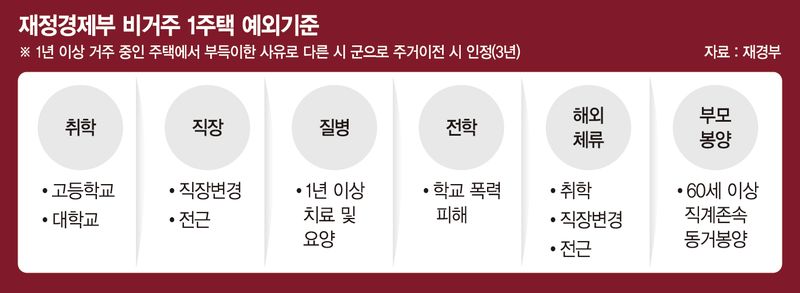
As financial authorities are expected to announce measures to stabilize housing supply and household debt as early as this week, the exemption standard for non-occupying one-home owners is drawing the most attention. Under the exemption standard for non-occupying one-home owners included in the Ministry of Economy and Finance's recent tax reform plan, residence is recognized for up to three years when a person moves to another city or county for unavoidable reasons such as school enrollment.
If the financial authorities' exemption standard for non-occupying one-home owners, which is under review for jeonse loan restrictions, is finalized in the same way as the Ministry of Economy and Finance's, real demand borrowers could be hurt because they would not be able to receive additional jeonse loans when moving to school districts such as Daechi-dong and Mokdong in Seoul for their children's education.
■ FSC Focuses on the 'Non-Occupying One-Home Owner Exemption'
According to financial authorities on the 9th, the Financial Services Commission (FSC) is in the final stages of reviewing exemption standards that distinguish speculative demand from genuine demand among non-occupying one-home owners. An FSC official responded cautiously, saying, "We are reviewing the matter carefully so that no innocent victims are created."
The exemption standard for non-occupying one-home owners recently proposed by the Ministry of Economy and Finance in its tax reform plan recognizes non-occupancy as residence for up to three years when a person moves to another area for unavoidable reasons such as school enrollment, job transfers, long-term medical care, overseas stays, or supporting parents, provided the home had been occupied for at least one year. In other words, moving within the same city or county is not recognized as an exception.
If financial authorities apply jeonse loan restrictions based on this standard proposed by the Ministry of Economy and Finance, moving to another home within the same city or county while owning a house in Seoul or the Capital Region would not be recognized as an unavoidable reason, and jeonse loans would be prohibited.
For example, if a one-home owner with a house in northern Seoul moves to Daechi-dong or Mokdong for their children's education and lives there under a jeonse contract, the current standard would not qualify as an exception. The same would apply to cases where parents rent out their home and move closer to their children's house to care for grandchildren while both children are working couples, as long as they remain in the same city or county.
This is the same as the banking sector's current internal rule on jeonse loans for homeowners in regulated areas. The banking sector currently grants exceptions only when a child enrolls in a school in another area. According to guidelines distributed by KHFC after last year's June 27 measures, jeonse demand is recognized when the location of the owned home is outside the basic local government unit, but not when the move is within Seoul Metropolitan Government or other metropolitan cities.
Even now, if a non-occupying one-home owner in Seoul moves to a school district to secure education for their child, they can only receive up to 200 million won, the additional jeonse loan limit. In fact, as the total lending cap currently applied by banks has cut credit loan limits in half, the financing hurdle for real demand borrowers has risen, and cases of jeonse contract cancellations in Seoul's school districts are proliferating.
■ What Can Be Done to Minimize Damage to Real Demand Borrowers?
In particular, the loan restrictions now being discussed could even lead to a complete ban on jeonse loans for non-occupying one-home owners. In addition, authorities are also reviewing a plan to, in principle, disallow the renewal of jeonse loans, which comes up every two years. This is being influenced by President Lee Jae-myung's negative remarks at a major real estate forum last month, when he said, "Do we really need to lend money to someone who already owns a home and is getting jeonse elsewhere?"
The scope of this jeonse loan crackdown is expected to be narrowed to non-occupying one-home owners living in regulated areas. As of the end of March, the outstanding balance of jeonse loans is estimated at about 4.9 trillion won, across roughly 30,000 cases. The regulated areas cover all 25 districts of Seoul and 12 cities and counties in Gyeonggi Province, including Gwacheon and Yongin, within the Capital Region. These were designated by the government when it announced its real estate measures on October 15 last year.
However, because many non-occupying one-home owners are genuine demand borrowers and ordinary households, and because many of them have moved for unavoidable reasons such as work, children's education, or supporting parents, financial authorities are taking a cautious approach to designing the exemption standards in order to reduce the number of innocent victims.
[email protected] Park So-hyun Reporter