U.S. Senate Passes Temporary Budget Bill; Shutdown Looms Unless It Reaches Deal With House
- Input
- 2026-08-09 02:04:51
- Updated
- 2026-08-09 02:04:51
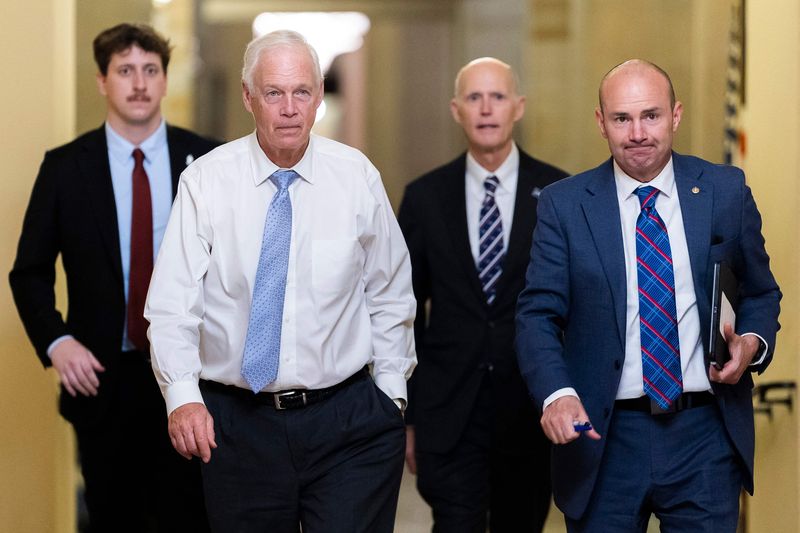
The United States Senate passed a continuing resolution (CR) early on the 8th local time by a landslide 90-6 vote to prevent a federal government shutdown.
However, a shutdown cannot be avoided unless the House of Representatives, which is currently in recess, passes the bill as is or the two chambers reach a compromise and approve a single version. Parts of the government could also be forced to stop functioning if President Trump refuses to sign the bill because he is dissatisfied with it.
Senate adjourns after passing temporary budget bill and other measures
According to foreign media outlets including The Hill, Sangwon approved the CR early that morning. The measure would allow the government to continue operating under the current budget until December 11, after the midterm elections, helping avert a shutdown.
In addition, despite two Republican defections and unanimous opposition from Democrats, Sangwon passed the nomination of Todd Blanche as attorney general by a 50-49 vote.
There was opposition even within the Republican Party, including from Senator Lisa Murkowski of Alaska, who warned that if Blanche, a Trump loyalist, became attorney general, the "politicization" and "weaponization" of the Ministry of Justice would accelerate further. Still, the nomination narrowly cleared the chamber.
By contrast, the "SAVE America Act" and the defense spending increase bill, both strongly pushed by President Trump, were blocked.
The SAVE America Act, which requires proof of citizenship and a photo ID when registering to vote, is one of Trump's priority bills. It will be taken up again when Sangwon reconvenes on September 14. Consideration of the defense spending increase bill was also postponed.
Sangwon went into a five-week recess starting that day.
House revises temporary budget bill
Because the budget bill must be approved separately by both the Senate and the House of Representatives in identical form before it can take effect, it is too early to say that the Senate's passage of the CR has definitively blocked a U.S. shutdown.
The House, which is currently in recess, had already passed its own temporary budget bill extending funding through December 4.
The Senate amended the House-passed bill and extended the federal government's funding deadline by one week, to December 11.
The Senate version also included a provision prohibiting changes to the "grant approval process," which would prevent the Office of Management and Budget (OMB) at The White House from blocking or arbitrarily altering the execution of federal subsidies.
That language was not included in the House bill, but Sangwon added it over concerns that The White House could use local government subsidies for political purposes.
The Senate bill also did not include funding for U.S. Immigration and Customs Enforcement (ICE) and U.S. Customs and Border Protection (CBP), the agencies responsible for enforcing the Trump administration's anti-immigration policies.
Potential clash between the two chambers
With Sangwon having passed the revised CR and adjourned, a federal government shutdown could move closer if the two chambers fail to reach a compromise when they end their summer recess in mid-next month.
That is because a clash could emerge between some Republican senators who have broken with Trump and House Republicans led by Speaker of the House of Representatives Mike Johnson, a Trump loyalist.
Trump's veto power is another variable.
President Trump may be displeased that the SAVE America Act, a bill to tighten voter ID checks, failed to clear Sangwon this time despite late-night calls with Republican leaders. The bill would strictly limit mail-in and online voter registration and require voters to present a voter ID and birth certificate when casting a ballot. It has drawn strong concern because it could make voting harder for low-income people, racial minorities, young voters and renters, groups that have traditionally leaned Democratic.
Meanwhile, the federal government has experienced two shutdowns since the start of Trump's second administration.
From late September last year to November 12, it entered the longest shutdown in history, lasting 43 days and causing major disruptions in air travel. This year as well, amid criticism of Trump's hard-line immigration policy, DHS went into a partial shutdown and ended it on April 30, after 76 days.
[email protected] Song Kyung-jae Reporter