"I Invested in Stocks to Buy a House, but I Even Lost My Deposit"... FOMO-Ridden Retail Investors Lament [World of Retail Investors]
- Input
- 2026-08-09 06:00:00
- Updated
- 2026-08-09 06:00:00
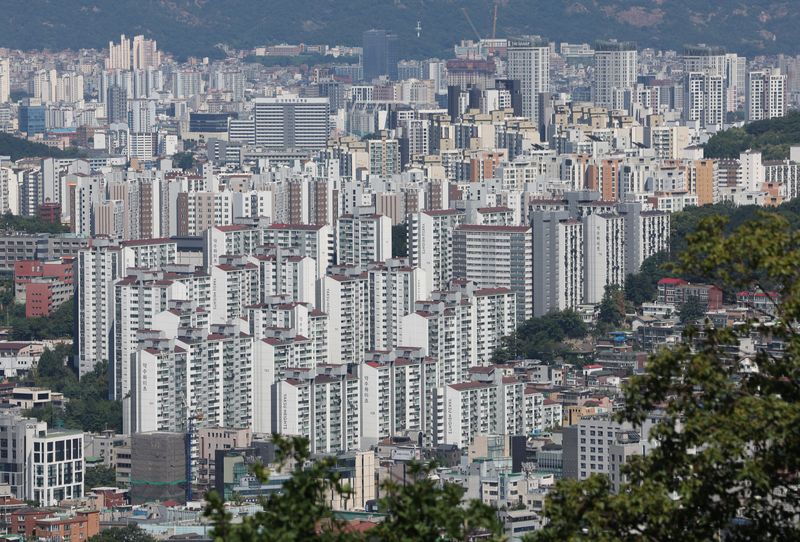
[Financial News] #. "My dream is to own a home in Mayongseong (Mapo, Yongsan and Seongdong), but I feel like I could save forever and still never afford one."A salaried worker in his 30s, identified as A and living in a jeonse rental in Seoul, has lately been sighing as he alternates between stock and real estate apps. At the start of this year, he jumped into stocks after concluding that the interest from bank savings accounts would never be enough to get him over the threshold of buying an apartment in Seoul. When the KOSPI (Korea Composite Stock Price Index) kept hitting record highs, he was tempted by the growing gains in his account and even bought a leveraged exchange-traded fund (ETF) tied to a single semiconductor stock.
But recent global headwinds and a flood of foreign selling sent the KOSPI on a roller coaster in just one day, and the returns on his leveraged account quickly evaporated. As the profits he had made during the bull run disappeared and his losses widened, a plan for single-stock leveraged ETFs was announced. A said he gave up on averaging down and decided to cut his losses before they got worse. "I thought savings accounts were hopeless, so I turned to stocks, but even that failed. Now I wonder when I’ll ever be able to buy a home," he said, voicing his frustration.
"Make money in stocks and buy a house"... 40 trillion won flowing into real estate during the bull market
On investment communities recently, self-reproach has been mounting among individual investors like A, who entered the stock market to ease their housing anxiety only to have their confidence shattered by brutal volatility. "I was swept up in an atmosphere where people called you foolish if you put money in savings, and I tried to buy a house through stocks only to lose my principal," and "The stock market crash means I may not only fail to add to a home purchase fund, but also lose the money I need to renew my jeonse contract," they lamented.
According to a report by The Korea Herald Business on the 27th of last month, analysis of the "housing purchase funding plans in Seoul's 25 districts" submitted to the Ministry of Land, Infrastructure and Transport by Rep. Lee Jong-wook's office of the People Power Party showed that 61,425 funding plans were filed from January to June this year. The market value of the homes purchased with those funds came to about 57.2486 trillion won.
What stands out is the source of the money used in real estate transactions. About 4.5 trillion won from stock and bond sales flowed into home purchases. In the first half of the year, as the KOSPI surged, led by Samsung Electronics and SK hynix, investors who made profits appear to have sold stocks and moved into real estate.
"Relative deprivation" that numbs the danger signal
According to the Korean Statistical Information Service (KOSIS) on the 26th of last month, the homeownership rate among people aged 39 and under last year was 27.7 percent, down 2.4 percentage points from a year earlier. The average net assets of households headed by people 39 and under also fell 0.9 percent year on year to 219.5 million won. While young people's net assets declined, middle-aged and older groups continued to accumulate wealth, widening the asset gap and pushing the dream of owning a home even farther away.
In this situation, people can easily be swept up in relative deprivation when exposed to online "proof posts" from communities or social networking services showing others who made big gains in stocks and built a down payment for a home. According to the "Financial Investment Trend Report 2026" released in March by research firm Open Survey, which surveyed 1,200 men and women aged 20 to 64 nationwide who had invested in financial products within the past year, people in their 30s mainly obtained information online, including YouTube (38.5 percent), Generative AI (12.3 percent) and social networking services (10.3 percent).
If investment information is limited to social networking services and investment communities, it becomes easy to fall into confirmation bias, seeing only the information one wants to believe. Add to that the desperation of knowing that saving gradually will never catch up with apartment prices in the Capital Region, and a person's crisis-management instincts can go numb. A single rumor that someone made hundreds of millions of won in stocks and bought an apartment can trigger extreme FOMO and lead to reckless investing, such as borrowing heavily on margin or using leverage.
Professor Joon Hee Lee of the psychiatry department at The Catholic University of Korea, Seoul St. Mary's Hospital said, "Most individual investors involved in stock trading need to correct distorted thoughts such as 'Everyone else made huge profits except me' or 'I’m the only one who doesn’t know the perfect timing to buy and sell.'" He added that anxiety related to FOMO can worsen rapidly when there is too much information, and advised that turning off stock app alerts or blocking related social media, video and open-chat accounts can also help.
I don’t want to become someone who keeps saying, "I should have bought, I should have sold, I should have held..." But even today, it feels like everyone else is doing fine with stocks, real estate and wealth-building strategies without me. The world of investing is hard no matter how much you study, so if you want to receive this column comfortably,[World of Retail Investors]please subscribe to the reporter page.We also welcome tips from retail investors who have investment stories they would like to share.
[email protected] Kim Hee-sun Reporter