"Sell or Hold On?"... Three Rules the Pros Follow to Stay the Course [In Chi-beom's Stock Investing Boot Camp]
- Input
- 2026-08-08 09:00:00
- Updated
- 2026-08-08 09:00:00
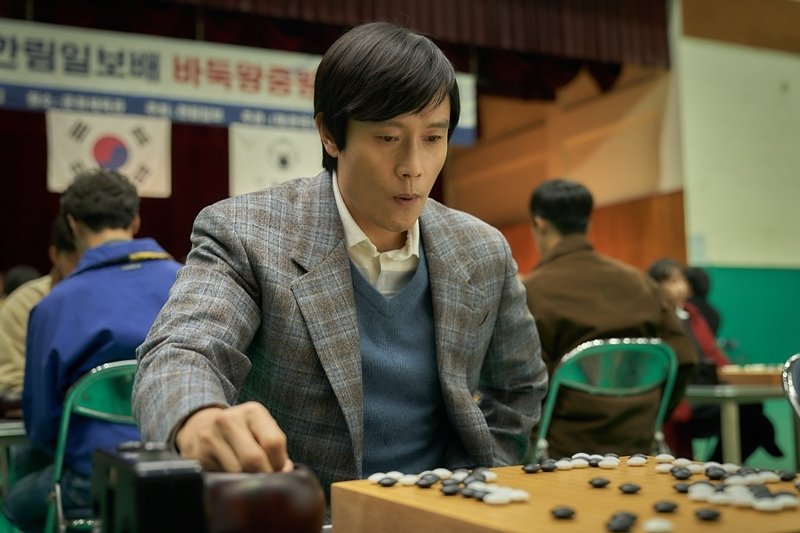
"Go is a game where there is no answer, but you keep trying to find one" "Go is a battle against yourself" July 1964, Cho Hun-hyun
These are the words written on the Go board in key scenes from the film
The film centers on Cho Hun-hyun (Lee Byung-hun), a legend of Korean Go. Based on a true story, the plot is more dramatic than most films. In 1989, he won the Ing Cup, often called the Go Olympics, and became world champion. That is where the film begins, with Cho being hailed in Korea as the 'Go Emperor.' He later loses to his own disciple, Lee Chang-ho (Yoo Ah-in), whom he had personally trained for nearly six years.
An 'inner disciple' refers to a distinctive apprenticeship system in Go. The student lives and eats in the teacher's home. In addition to Go skill, the student learns character and attitude toward life. At the time, the two were 38 and 16 years old, a 22-year age gap. To be honest, the shock for Cho Hun-hyun must have been enormous. Even after that, he meets his disciple in several final matches and loses repeatedly. After going through that difficult period, Cho draws on his natural competitive instinct, defeats his student, and returns to the top. (This column is based on the film. Some parts may differ from the facts for dramatic effect.)
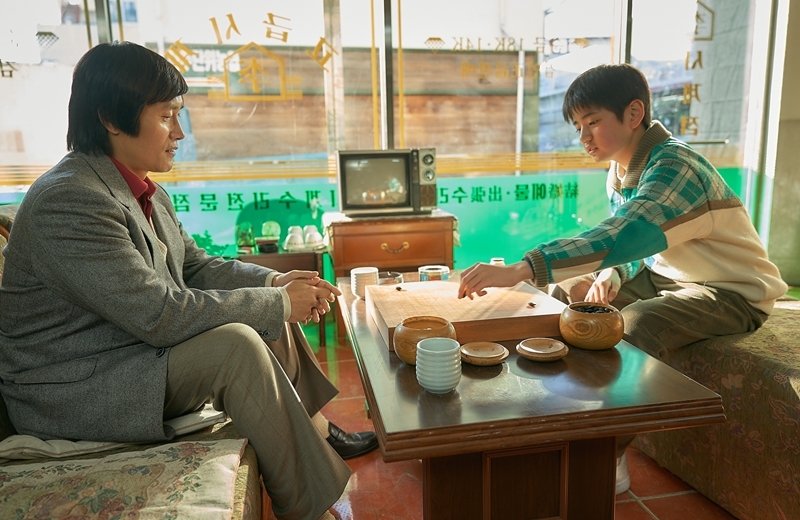
'Reviewing the game'
After a match, reviewing the game means mentally replaying every move from the first to the last and placing them back on the board in order. Investment professionals see this as a "post-mortem" of investing, used to improve the process. For example, during a review, you may find a case of a 'lucky trade' in which you broke your rules but still made money by chance. In fact, those trades are the most dangerous. Even if the result was good, if the process was wrong, it was not good investing. It was simply lucky investing. Reviewing the game helps remove this kind of outcome bias.In the review process for stock investing, it is useful to check four things. First, why did you buy this stock? Second, what was the market environment like at the time? Third, what was your emotional state? Fourth, did you follow your investment principles regardless of the result? If you keep doing this consistently, the review will produce practical benefits that go beyond a simple trade log.

Reviewing the game can be painful, because it is sometimes a process of being honest with yourself. The film also shows the teacher struggling the day after losing to his disciple, in the review scene following the final game of the 29th Chaegowi challenge. The pain of defeat is probably what he feels. Review is important. But you should not let regret and failure keep tormenting you over and over. That can break you psychologically.
This is connected to psychological rumination. Rumination originally refers to ruminants such as cows and sheep bringing swallowed food back into the mouth and chewing it again. In psychology, it means repeatedly dwelling on one's depressed feelings, stressful situations, and their causes and consequences. "No matter how volatile the market is, why am I the only one down 30%?" "Why did I do that back then? I can't believe it." When you keep replaying past failures and regrets like this, you become trapped in rumination and cannot escape. Many investors think they are reviewing their decisions. In reality, they are often only ruminating, repeatedly recalling the moments they failed. Review and rumination are clearly different. You need to understand that difference and take only the benefits of review.
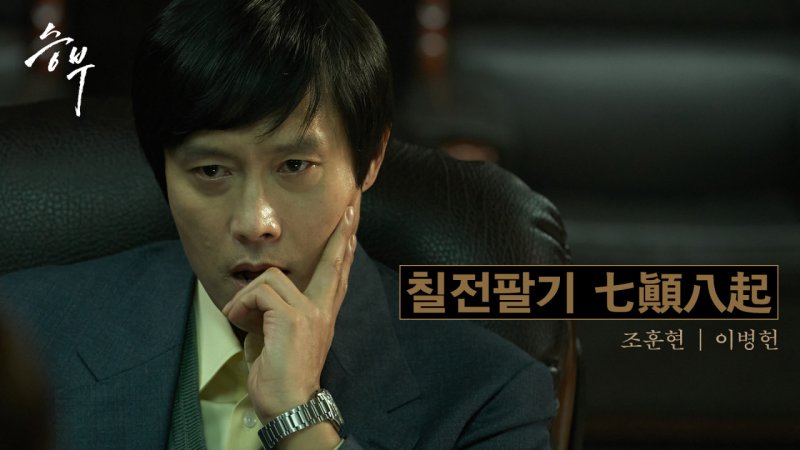
'Equanimity'
In the final match against his teacher, the final game of the 29th Chaegowi challenge, Lee Chang-ho feels considerable pressure. His composure begins to shake. Then, ironically, he recalls his teacher's past advice. 'If you lose your composure, the game is over right there.' 'Think of things that are familiar and comfortable.' 'Things that make your heart feel at ease just by thinking about them...'Following that guidance from his teacher, the student regains his composure and eventually defeats him. In stock investing, once your composure collapses, unintended negative results follow. There are biases that undermine an investor's calm. Beginner investors should understand these biases that affect investment decisions and work to minimize their negative impact.

'Patience' (*Style: a player's distinctive way of playing Go)
In the final match between teacher and student in February 1990, the final game of the 29th Chaegowi challenge, Lee Chang-ho shows patience. He does not get swept up in Cho Hun-hyun's flashy, fast-paced offense, which reflected a fighting style. Instead, he quietly endures and gradually builds a stronger board position. By withstanding his teacher's provocation with his whole body and mind, Lee Chang-ho completes a dramatic half-point comeback in the endgame. It was his first victory. It was not the fighting style that his teacher mainly pursued and taught. Over nearly six years, he developed his own style, a style focused on efficiency, and completed it through patience, eventually winning with it. After losing to his teacher in his first final in December 1988, he was repeatedly blocked by him in events such as the Paewang and Guksu tournaments. It was a moment when patience, forged through repeated defeats on the final stage, finally bore fruit.Cho Hun-hyun is a legend of Korean Go and holds the record for the most domestic titles. After losing to the disciple he had trained for years, he fell into a slump for a while, but soon revived with his own style. The lesson is significant. In 1998, he reclaimed the Guksu title, which had long symbolized him, from Lee Chang-ho after five years. Lee Chang-ho, who followed in his teacher's footsteps, ruled the world of Go for 15 years and is still regarded as one of the greatest players in the history of the game. Both teacher and student are said to remain active today. The same is true in stock investing. Rather than copying someone else's method, the long-term path to survival and success is to go through trial and error, build your own principles and style, and stick to them.
Although the film
Advice for beginner stock investors also sounds obvious and easy when you think about it. But sustained execution is not that easy. Success or failure in investing is not determined by how much new knowledge you have. It depends on how consistently you practice the principles you already know.
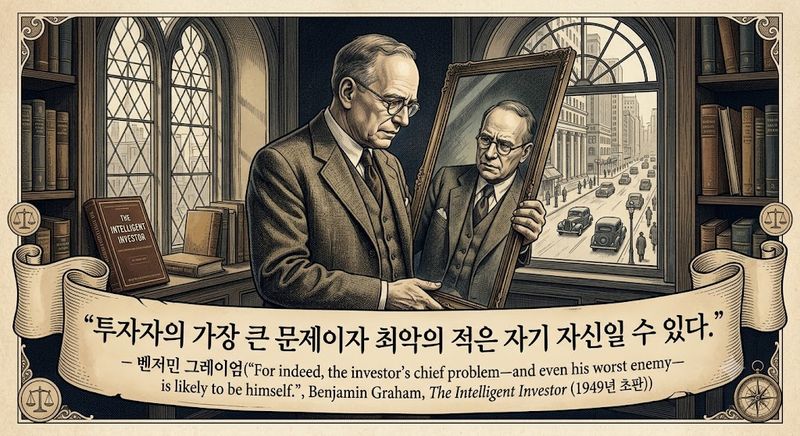
I would like to close by sharing this quote: "The investor's chief problem, and even his worst enemy, is likely to be himself." — Benjamin Graham ("For indeed, the investor's chief problem—and even his worst enemy—is likely to be himself.", Benjamin Graham, The Intelligent Investor, first edition in 1949)
[About the author]
Senior Managing Director In Chi-beom worked for 30 years in corporate communications, including PR, IR, ESG, and CSR, in sectors such as finance (Samsung Life Insurance), IT (AhnLab, Inc., Hancom, SK Communications), and retail (Samsung Tesco). He is now focused on writing books about investing and corporate communications at KPI Investment Advisory. He believes that stock investing success begins above all with automating the right habits for handling money.
[email protected] Kim Seong-hwan Reporter