"Both chips and equipment made in China"... AI sanctions accelerate self-reliance [AI Hegemony, China's Counterattack 3]
- Input
- 2026-08-09 06:00:00
- Updated
- 2026-08-09 06:00:00

The United States has restricted China's access to high-performance AI chips and advanced semiconductor equipment. In response, China has been accelerating efforts to build supply-chain self-reliance, led by Huawei Ascend, Semiconductor Manufacturing International Corporation (SMIC), ChangXin Memory Technologies (CXMT), and the development of domestic lithography equipment. This third installment of [AI Hegemony, China's Counterattack] examines the current state of China's semiconductor self-reliance and the technology gap that still remains.
[Financial News] U.S. semiconductor export controls were designed to slow China's artificial intelligence industry. But the restrictions also increased pressure for self-reliance inside China. As it became harder to import enough high-performance NVIDIA chips, Huawei Ascend chips emerged as an alternative, while semiconductor companies such as SMIC and CXMT moved to increase their use of domestic equipment and materials.
In October 2022, the Bureau of Industry and Security (BIS) under the U.S. Department of Commerce announced export controls aimed at limiting China's ability to buy and manufacture advanced semiconductors. Related rules were tightened again in October 2023, April 2024, and December 2024. The restrictions cover not only high-performance AI chips, but also advanced semiconductor manufacturing equipment and supercomputer-related technologies.
Huawei moves to fill the NVIDIA gap
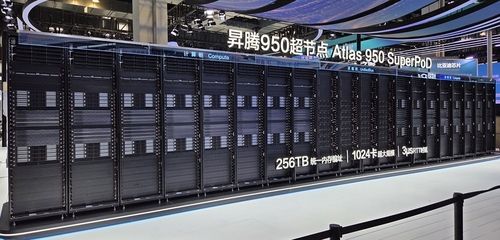
Huawei is a central player in discussions about China's AI chip self-reliance. The company's Ascend series is being used as a substitute in China's market, where access to NVIDIA's high-performance GPUs is limited. Cloud companies and AI developers in China are increasingly using Ascend chips for inference rather than large-scale training.
Huawei is also promoting a strategy that goes beyond individual chips and instead bundles the entire computing infrastructure. In September last year, at HUAWEI CONNECT 2025 in Shanghai, the company unveiled the Atlas 950 SuperPod and Atlas 960 SuperPod. According to the company, the Atlas 950 SuperPod is designed to connect 8,192 Ascend NPUs and make multiple physical systems operate like a single logical computer. Huawei said it plans to bring the Atlas 950 SuperPod to market in the fourth quarter of this year.
This approach differs from NVIDIA's. NVIDIA controls both high-performance GPUs and the CUDA software ecosystem. Huawei, by contrast, is trying to offset gaps in chip performance through large-scale interconnection and its own software ecosystem. AI model developers look at more than chip performance alone; they also consider development tools, libraries, and optimization experience. Even if Huawei offers large computing clusters, actual performance and operational stability still need to be proven through customer adoption.
In a report on China's AI industry policy last year, the U.S. nonprofit policy research group RAND Corporation said the Chinese government is supporting the development of domestic AI chips such as Huawei Ascend. The report said DeepSeek tested the Huawei Ascend 910C for inference, while ByteDance and Ant Group used the Ascend 910B. It added, however, that the use of Chinese-made AI chips for large-scale AI model training remains limited.
SMIC and CXMT take on a bigger role under self-reliance pressure

In China's semiconductor industry, SMIC, CXMT, and Huawei Ascend are often cited as examples of self-reliance. SMIC is China's largest foundry and handles semiconductor contract manufacturing. CXMT is the memory chip maker China is nurturing in the DRAM sector. Huawei is expanding its own supply chain by operating Ascend AI chips alongside its telecom equipment and smartphone businesses.
The three companies play different roles. SMIC is tied to the manufacturing base that actually produces chips. CXMT is a pillar in China's effort to raise its share of the memory supply chain. Huawei Ascend is used to meet AI computing demand in the Chinese market, where access to NVIDIA GPUs is restricted. That is why discussions of China's semiconductor self-reliance often mention design, manufacturing, memory, and applications together.
CXMT's rise is also linked to the global memory market. The Financial Times reported last month that CXMT is drawing interest from PC makers amid a global memory shortage. As AI server demand has shifted toward HBM and high-performance DRAM, supply of general-purpose memory has also been affected, leading some PC makers to consider CXMT products as an alternative.
If CXMT expands DRAM production capacity, it could become a bigger variable in the memory market long dominated by Samsung Electronics, SK hynix, and Micron. In particular, the general-purpose DRAM market is highly price-sensitive. If Chinese companies increase supply, pricing pressure could intensify during downturns. Some observers say the competitive landscape for mainstream products could change as Korean chipmakers focus more heavily on HBM and other high-value products.
Still, it would be difficult to say that CXMT could shake up the HBM market anytime soon. HBM is a product that stacks DRAM vertically to process data at high speed. It requires not only production capacity, but also advanced packaging, yield management, thermal control, and customer certification. Entering the supply chain of major AI chip makers such as NVIDIA also requires a long period of quality validation.
For now, CXMT's expansion is more likely to affect the general-purpose DRAM market first. Samsung Electronics, SK hynix, and Micron still maintain a technology lead in high-value memory for AI servers. Even if Chinese companies scale up production, many analysts say the HBM and advanced packaging segments will require more time and verification.
Reports of Chinese-made DUV equipment raise supply-chain tension
There have also been recent reports of progress in lithography equipment self-reliance. Lithography equipment, which etches semiconductor circuits onto wafers, is a core tool in chip manufacturing. The most advanced processes use extreme ultraviolet lithography systems from the Netherlands-based ASML. Because China has difficulty importing EUV equipment, it is trying to narrow the process gap through deep ultraviolet (DUV) equipment and multi-patterning technology.
The Information recently reported that a state-owned company in Shanghai has begun producing immersion DUV lithography equipment. Citing that report, Tom's Hardware and TrendForce said the first units could be supplied to SMIC, Hua Hong Grace Semiconductor Limited, and CXMT in 2026. Production targets are reportedly five units in 2026 and 20 units in 2027.
Those numbers are still far from mass production. They are nowhere near enough to replace the global lithography market dominated by ASML. Even so, the fact that China is attempting to localize an area long seen as a weakness in its semiconductor industry could affect the market. The next questions are whether the equipment can operate stably on production lines and whether yield and maintenance systems can be established.
China's expansion in general-purpose memory could intensify price competition

China's semiconductor self-reliance does not end with chips alone. It involves AI chip design, foundry manufacturing, HBM, lithography equipment, etching and deposition equipment, materials, EDA software, and packaging. Even if one area makes progress, the entire supply chain can still slow down if other equipment or software remains blocked.
U.S. controls are also evolving. BIS has adjusted export licensing policies for advanced computing semiconductors bound for China and Macau Special Administrative Region. In the U.S. Congress, debate has continued over whether access to semiconductor equipment for China should be restricted even further. Chinese companies are responding by combining short-term use of existing equipment and alternative procurement with long-term efforts to expand domestic production.
China's pace of self-reliance is also a variable for South Korea's semiconductor industry. If Chinese companies increase supply of general-purpose memory, price competition could intensify. On the other hand, South Korea, Taiwan, and U.S. and European equipment makers still retain a technology edge in HBM, advanced foundry manufacturing, and high-value equipment.
Assessments of Chinese-made AI chips remain cautious. In a report on Huawei Ascend chips, Georgetown University's Center for Security and Emerging Technology (CSET) said, "Huawei's Ascend chips are among the most advanced AI chips in China and are likely the most widely deployed."
[email protected] Han Seung-gon Reporter