Republican lawmakers who defended Coupang send pressure letter to South Korean government over network law
- Input
- 2026-08-07 09:04:41
- Updated
- 2026-08-07 09:04:41
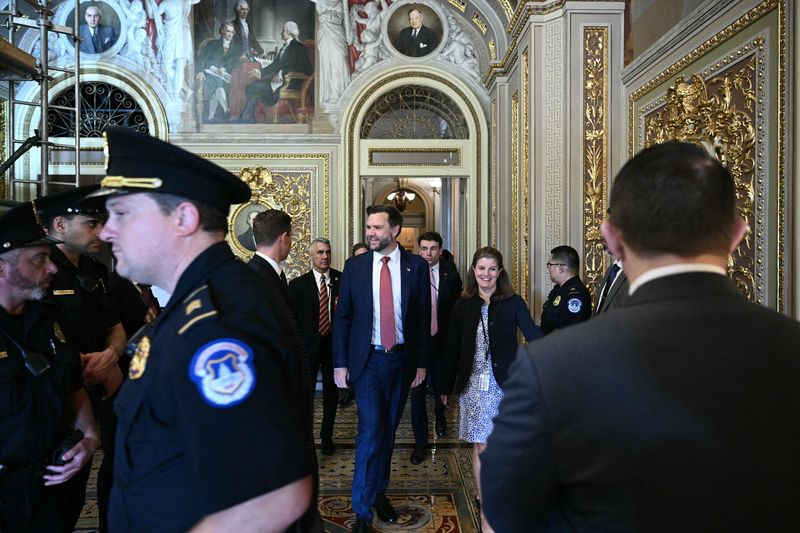
[Financial News] Republican members of the U.S. House of Representatives who have defended Coupang's position in Congress sent a pressure-filled protest letter to the Government of the Republic of Korea over the revised Act on Promotion of Information and Communications Network Utilization and Information Protection, which took effect in South Korea last month.
Rep. Jim Jordan of Ohio, chairman of the House Judiciary Committee, disclosed the letter on his X account on the 6th (local time). Republican lawmakers on the committee, including Scott Fitzgerald of Wisconsin, Darrell Issa of California and Michael Baumgartner of Washington State, also signed it.
In the letter to the Korea Media and Communications Commission (KMCC), they argued that the network law poses "a serious threat to speech and expression online" and would "allow KMCC to punish U.S. companies and users for exercising constitutionally protected rights."
The law was revised by a National Assembly vote on Dec. 24 last year and took effect on the 7th of last month.
It includes provisions requiring platform operators such as Naver, Kakao, Google, Meta Platforms and X to remove or block false and manipulated information, along with penalty clauses.
Since the law passed the National Assembly last year, the U.S. State Department has repeatedly voiced "serious concerns," calling it an "unnecessary barrier to digital services." This time, Republican lawmakers appear to be escalating pressure through a letter to the South Korean government.
The lawmakers said the law "does not define false information, nor does it provide specific details on how the law can be enforced or how it will actually be enforced."
They added that the law's "vague and unclear scope" raises concerns that it could be used to censor "politically disfavored opinions." They also argued that it could have a "chilling effect on free speech and online expression more broadly."
Pointing out that the law, which imposes legal obligations on major platform operators to remove illegal and false information, was modeled after the European Union's Digital Services Act (DSA), they said, "South Korea appears to be following the EU's path."
In a separate statement, Fitzgerald said, "No foreign government has the authority to pressure U.S. companies into censoring constitutionally protected speech," adding that "South Korea's so-called 'disinformation law' is vague, overly broad and ripe for abuse."
The House Judiciary Committee also released a report last month arguing that the South Korean government is treating Coupang and other U.S. companies unfairly, in violation of the U.S.-Korea trade agreement. The report was reportedly led by Jim Jordan and other Republican members of the committee.
[email protected] Lee Seok-woo, international affairs Reporter