U.S. Politicians Protest Coupang, Say South Korea Raises Concerns Over Political Censorship... Foreign Ministry Struggles as U.S.-South Korea Tensions Cross the Line
- Input
- 2026-08-07 08:45:27
- Updated
- 2026-08-07 08:45:27
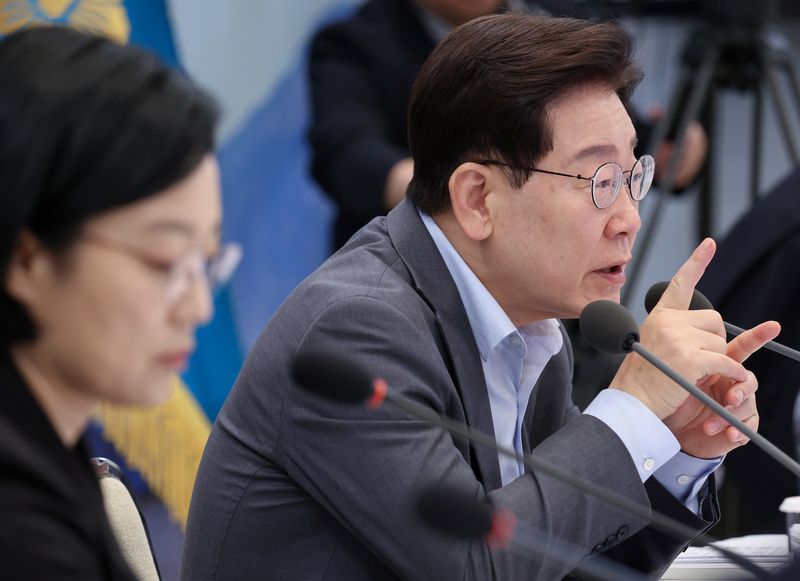
The situation has become more delicate as the protest letter from U.S. politicians arrived at the same time President Lee Jae Myung, during a briefing on foreign affairs and security at Cheong Wa Dae on the 5th, called for a strong response, including legal sanctions, against malicious distortions and false reports.
MOFA recently triggered a confrontational atmosphere between the two countries by sending a strong rebuttal to a U.S. congressional protest letter over Coupang. But as criticism from the U.S. Congress toward the South Korean government grows sharper, there are concerns that MOFA's hard-line approach could end up deepening tensions between the two allies.
According to political circles on the 7th, MOFA is struggling with a series of protest letters from the U.S. Congress aimed at the South Korean government. This time, U.S. lawmakers sent another letter to the government over South Korea's information and communications network law, separate from the Coupang issue, pushing the dispute toward a further escalation.
Republican lawmakers on the House Judiciary Committee, including Chairman Jim Jordan of Ohio, Scott Fitzgerald of Wisconsin, Darrell Issa of California, and Michael Baumgartner of Washington, signed the protest letter together.
In a letter sent to the Korea Media and Communications Commission (KMCC), they argued that the Act on Promotion of Information and Communications Network Utilization and Information Protection poses "a serious threat to speech and expression online" and would "allow the KMCC to punish U.S. companies and users for exercising constitutionally protected rights."
The lawmakers also said that the law "does not define false information, nor does it provide specific details on how the law can be enforced or how it will actually be enforced."
They added that the law's "vague and unclear scope" raises concerns that it could be used to censor "politically disfavored opinions" and could have a "chilling effect on freedom of expression and online speech more broadly."
In a separate statement, Representative Fitzgerald argued that "no foreign government has the authority to pressure U.S. companies into censoring constitutionally protected speech" and that South Korea's so-called 'disinformation law' is "vague, broad, and open to abuse."
The lawmakers pointed out that the Act on Promotion of Information and Communications Network Utilization and Information Protection, which imposes legal obligations on major platform operators to remove illegal and false information, was modeled after the European Union's Digital Services Act (DSA). They said, "South Korea appears to be following in the EU's footsteps."
The law was revised by a National Assembly vote on Dec. 24 last year and took effect on the 7th of last month. It includes provisions and penalties that require platform operators such as Naver, Kakao, Google, Meta Platforms, and X to remove or block false and manipulated information.
[email protected] Kim Kyung-soo Reporter