DRAM and foundry sectors both strengthen on HBM surge; a 3,000 trillion won market opens next year
- Input
- 2026-08-07 06:59:00
- Updated
- 2026-08-07 06:59:00
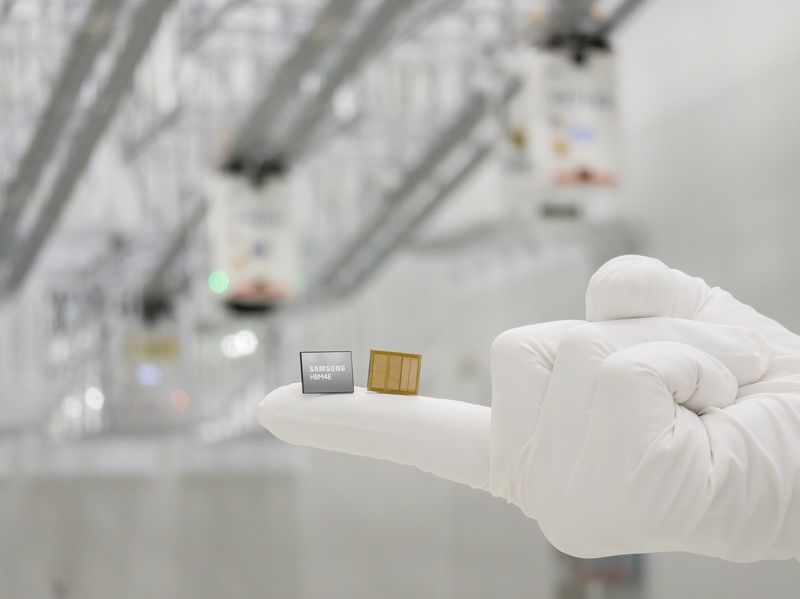
[Financial News] The global semiconductor market is expected to exceed 2,000 trillion won this year, and it is forecast to approach 3,000 trillion won for the first time next year. The memory market, led by high bandwidth memory (HBM), is maintaining a boom, while the foundry market is also expanding as both leading-edge and mature processes grow together and drive overall growth.
According to market researcher Sigmaintell on the 7th, the global semiconductor market is projected to reach about 2,251 trillion won, or roughly $1.587 trillion, this year, up about 107% from a year earlier. The analysis suggests that as global cloud providers and major artificial intelligence (AI) companies sharply expand data center investment, the main growth engine of the semiconductor market is shifting rapidly from consumer electronics to AI infrastructure.
Sigmaintell said the global semiconductor market will reach about 3,000 trillion won, or around $2 trillion, next year, marking growth of about 25% from this year. While the pace of memory price increases may slow compared with this year, the firm expects the semiconductor market to keep growing as investment in AI infrastructure continues to expand.
Memory is driving the market's growth. This year's memory market is expected to reach about 1,362 trillion won, or roughly $960 billion, accounting for about 60% of the overall semiconductor market. The HBM market is projected to exceed 140 trillion won this year, while the average selling price of DRAM is expected to rise four to five times from a year earlier. As a result, the DRAM market is forecast to grow by more than 300%, and the NAND flash memory market is expected to post growth of nearly 250% on the back of rising demand for enterprise solid state drives (SSD) used in AI servers.
The foundry market is also benefiting from the spread of AI. The global foundry market is expected to reach about 268 trillion won this year, up about 20% from a year earlier. As production of AI graphics processing units (GPU) and neural processing units (NPU) expands, demand for leading-edge 3-, 5- and 7-nanometer processes continues to rise. At the same time, demand for power management integrated circuits (PMIC), storage controller ICs and microcontroller units (MCU) for servers is increasing, and mature processes of 40 nanometers and above are seeing both utilization rates and prices recover together for the first time in three years.
Meanwhile, global market researchers also expect the strong memory cycle to continue for some time. TrendForce said DRAM shortages and price strength will persist due to investment in AI infrastructure and the launch of next-generation central processing units (CPU). It added that the effect of new capacity expansions will not fully materialize until after 2028.
Gartner, Inc. also projected that memory revenue this year will nearly triple from a year earlier, while the average selling prices of DRAM and NAND flash memory will rise 125% and 234%, respectively. It said price stability may not return until after the end of next year. The firm also forecast that AI semiconductors will account for about 30% of total semiconductor revenue this year, and that investment in AI infrastructure will increase by more than 50% from a year earlier.
An industry official said, "This year is the first year that the semiconductor industry has truly entered a supercycle." The official added, "Across memory, foundry and fabless sectors, polarization is emerging around demand for AI computing. How quickly companies reorganize their product portfolios and position themselves in the AI supply chain will determine their survival and growth going forward."
[email protected] Lee Dong-hyeok Reporter