China's pursuit of Samsung and SK is being followed by Taiwan's rapid expansion, making memory peak theories look increasingly outdated
- Input
- 2026-08-06 16:42:13
- Updated
- 2026-08-06 16:42:13
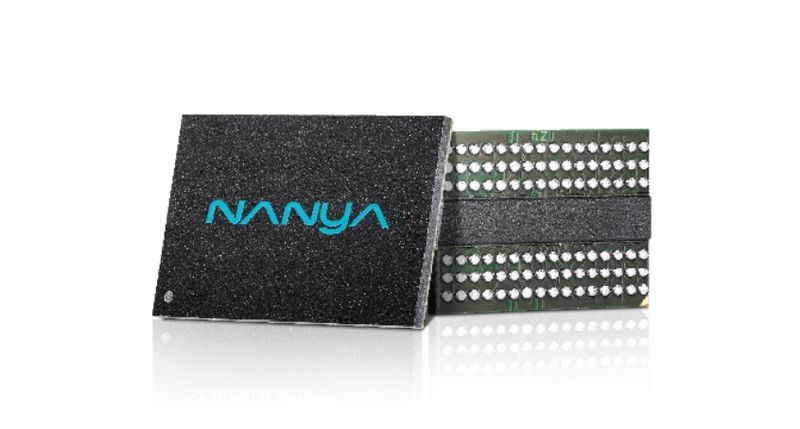
[Financial News] Latecomers in the global DRAM market are stepping up their efforts to catch up with the 'memory big three' — Samsung Electronics, SK hynix and Micron — through aggressive investment. After ChangXin Memory Technologies (CXMT), the world's No. 4 DRAM maker, said it would use funds raised through its Initial Public Offering (IPO) to expand memory production capacity, Taiwan's Nanya Technology Corp. has also approved a plan to invest 1.5 trillion won in a new plant. The pace of investment in the memory industry is intensifying, despite Wall Street's claims that the market has already peaked.
According to industry sources on the 6th, Nanya Technology Corp. approved a new plant investment plan at a board meeting the previous day that will involve up to 346.6 billion New Taiwan dollars, or about 1.52 trillion won, through 2029. Taiwanese media reported that this is the largest investment in the company's history. As preemptive investment and expansion continue in anticipation of rising memory demand in the era of Artificial Intelligence (AI), the global memory industry is expected to see an even faster investment cycle.
Nanya has also increased its capital expenditure for this year by about 34 percent, from 52 billion New Taiwan dollars, or about 230 billion won, to 69.7 billion New Taiwan dollars, or about 300 billion won. In particular, the additional spending will go toward equipment prepayments for the new plant, advanced processes and research and development (R&D). The latest plan was finalized by the board after the company outlined a large-scale investment strategy in its earnings release last month.
According to Nanya, the new plant aims to secure monthly wafer capacity of 35,900 units in its first phase. It will also introduce extreme ultraviolet (EUV) lithography equipment and apply a next-generation 10-nanometer-class DRAM production process. The company plans to begin wafer input in the second half of next year and eventually build a production system capable of 45,000 wafers per month.
Moves by latecomers, including Nanya, to catch up with the memory big three are accelerating. Earlier, CXMT raised up to 66.6 billion yuan, or about 14 trillion won, through a recent IPO. Of the funds secured, about 7.5 billion yuan, or about 1.6 trillion won, will be used to upgrade memory wafer production lines, while 13 billion yuan, or about 2.7 trillion won, will go toward a next-generation DRAM technology upgrade project. The company is pouring its efforts into expanding advanced DRAM production capacity.
Results at both companies are also improving rapidly. According to Counterpoint Research, DRAM sales at CXMT and Nanya in the second quarter of this year rose 716 percent and 690 percent, respectively, from a year earlier. CXMT strengthened its position as the global No. 4 player with a 7 percent market share by expanding production capacity centered on commodity DRAM, while Nanya also posted strong sales growth on the back of rising demand for DDR and LPDDR4 and LPDDR5. Analysts say the production capacity and technological competitiveness of latecomers are improving quickly, driven by growing demand for AI memory.
Samsung Electronics and SK hynix, the world's No. 1 and No. 2 DRAM makers, are working to strengthen their next-generation memory competitiveness and expand capacity, focusing on advanced HBM products such as HBM4 and HBM4E. With latecomers from China and Taiwan joining the race, competition over technology and market share in the global memory market is expected to become even fiercer.
An industry official said, "Chinese and Taiwanese companies still lag behind Korea in leading-edge processes and HBM technology, but they appear to be using the recent memory boom to secure production capacity and process transition capabilities in advance." The official added, "As demand for DRAM for AI servers continues, the expansion trend among global memory makers is likely to persist for some time."
[email protected] Lim Subin Reporter