San Francisco Fed President Daly Says the U.S. Fed Was Right to Hold Rates Steady
- Input
- 2026-08-06 14:19:09
- Updated
- 2026-08-06 14:19:09
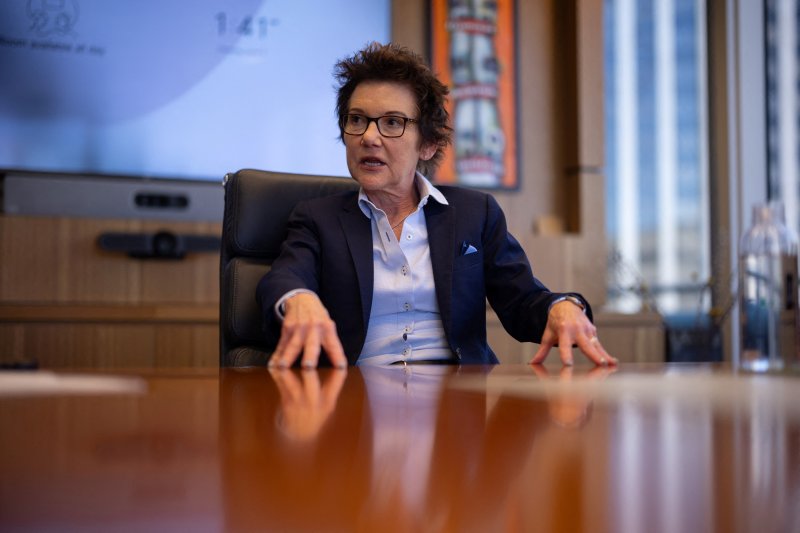
[Financial News] Mary Daly, president of the San Francisco Federal Reserve Bank, said she fully supports the Federal Reserve System (the Fed)'s decision last week to keep its benchmark interest rate unchanged.
On the 5th local time, Daly said she supports the decision made at last week's Federal Open Market Committee (FOMC) meeting. She added that the Fed should prepare to respond decisively to inflation above 2% if needed, while gathering price data ahead of its September rate decision.
Speaking at an economic conference in Tokyo, Daly said there is still a great deal of information to collect before the September policy meeting in order to determine whether current inflation is being driven by a supply shock that will ease over time or by a more persistent rise in prices. She added that the Federal Reserve should "watch incoming data with vigilance and be fully prepared to act immediately if necessary."
The U.S. Consumer Price Index (CPI) for June rose 3.5% from a year earlier, down 0.7 percentage point from the previous month.
Earlier, the FOMC voted to keep its benchmark rate target at 3.5% to 3.75% amid concerns over persistent price pressures. However, hawkish sentiment remained strong. Three members dissented, arguing for a rate hike because of high inflation, and several Fed officials have recently said they are keeping open the possibility of further rate increases or higher short-term borrowing costs to bring inflation back to 2%.
Daly, who does not have a vote on the FOMC this year, said she is concerned about how the public would react to a resurgence of inflation. She noted that if there are signs that price pressures are strengthening again, the Fed may need to respond aggressively to bring inflation back to target.
Still, Daly said there are "good reasons" to believe that the supply shock that hit the U.S. economy will not have a lasting effect on inflation.
She also explained that U.S. companies have limited pricing power, making it difficult to pass higher raw material costs on to consumers.
She said consumers are paying close attention to oil prices when looking at inflation, adding, "If the war in the Middle East comes to an end, the pressure driving prices higher will also ease."
[email protected] Yun Jae-jun Reporter