‘Raise Rates More’ vs. ‘Wait and See’... Fed Rate Battle to Continue Through September
- Input
- 2026-08-06 11:15:54
- Updated
- 2026-08-06 11:15:54
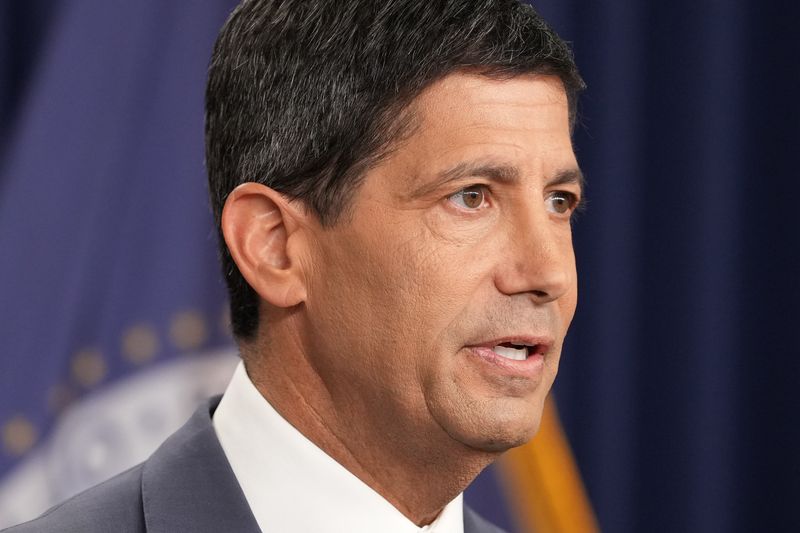
Neel Kashkari, president of the Federal Reserve Bank of Minneapolis, reaffirmed the need for another rate hike in a CNBC interview on the 5th local time. He said, "Corporate earnings, consumer spending and the labor market are all holding up well, and it is hard to say current monetary policy is slowing the economy enough." He added, "It is better to move gradually now than to raise rates sharply after inflation becomes entrenched," stressing a preemptive response. He did not rule out a September hike, however, and said he would decide after reviewing upcoming economic data.
At the July 29 FOMC meeting, Kashkari voted against holding rates steady and instead called for a 0.25 percentage point increase. Beth Hammack, president of the Federal Reserve Bank of Cleveland, and Lorie K. Logan, president of the Federal Reserve Bank of Dallas, also joined that view. It was the first time since September 2016 that three dissenting votes were cast in the same direction.
Jeffrey Schmid, president of the Federal Reserve Bank of Kansas City and a nonvoting member this year, also backed the hawkish camp. He said, "Given current demand and investment strength, it is hard to view current monetary policy as restrictive," and added, "To bring inflation back to the 2% target, tighter policy is needed."
By contrast, Anna Paulson, president of the Federal Reserve Bank of Philadelphia, maintained that current rates are enough to bring inflation down to target. She said supporting a rate hold at the last FOMC was "not a difficult decision" and noted that the effects of current policy should be observed a little longer. Still, she left open the possibility of adjusting policy again if disinflation stalls.
Federal Reserve Board Governor Lisa Cook also signaled hawkish caution. In a speech in Anchorage, Alaska, she said, "If inflation does not slow as expected, I am prepared to support a rate increase." She added, "With inflation having stayed above the 2% target for more than five years, I am concerned about the risk of high prices becoming entrenched." For now, however, she said it is appropriate to keep rates where they are and watch the inflation trend.
In the end, the same economic backdrop of a solid labor market and still-high inflation is producing sharply different prescriptions within the Fed.
As a result, the biggest variables for the September FOMC are expected to be the Consumer Price Index (CPI), the Personal Consumption Expenditures (PCE) Price Index and the employment report. Since Kevin Warsh, Chair of the Federal Reserve, did not lay out a specific rate path and instead emphasized data-dependent policy, future inflation and employment trends are likely to determine the balance of power inside the Fed.
Wall Street's outlook is also divided. JPMorgan Chase has made a December rate hike its base case, while leaving open the possibility of a September move if inflation strengthens again. Goldman Sachs and Barclays, meanwhile, expect rates to remain unchanged through year-end, while BofA is forecasting consecutive rate hikes starting in September.
[email protected] Lee Byung-chul, correspondent Reporter