"South Korean Stocks Are Swamping It, Investor Enthusiasm Is Tepid": Local Brokers Say Japan's Nikkei Has Been Caught in 'Bundle Trading'
- Input
- 2026-08-06 10:47:41
- Updated
- 2026-08-06 10:47:41
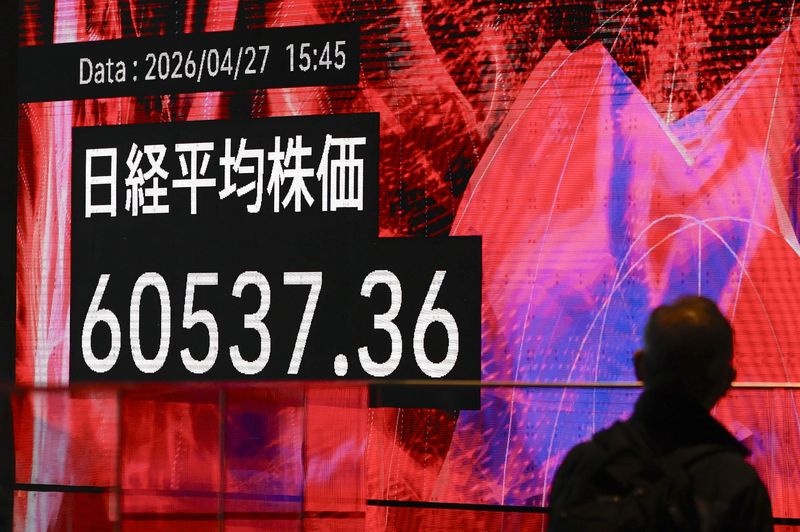
[Financial News] Concerns over the so-called 'Korea linkage' phenomenon are emerging in Japan's brokerage industry. The worry is that the Japanese stock market is being swayed by South Korean stocks, leaving investor enthusiasm lukewarm despite the recent revival of the artificial intelligence (AI) rally.
The Nikkei says the market is being held back by 'Korea linkage' despite the AI rally
According to The Nikkei on the 5th, the Nikkei average posted a sharp gain in Tokyo trading that day. Led by Ibiden, which reported strong earnings the previous day, AI and semiconductor-related stocks such as Advantest, Fujikura, and Kioxia Holdings surged across the board, signaling a revival of the AI rally that had run from April through June.
With AI-related stocks ranking among the biggest contributors to the Nikkei average's gains, the intraday average rose by more than 2,000 yen from the previous day. However, a trader at a major Japanese securities firm said, "Foreign long-only investors are instead channeling money into domestic demand stocks. It is almost puzzling who is buying AI-related stocks," pointing to a gap between market sentiment and client reactions, unlike in April and May when large-scale foreign buying poured in.
The Nikkei noted that "what investors are voicing concern about in unison is the 'Korea linkage' phenomenon in Japanese stocks." It said that since the United States and Iran reached a two-week ceasefire agreement in early April through mediation by Pakistan, the Nikkei average and the Korea Composite Stock Price Index (KOSPI) have increasingly been treated as a pair by investors amid a global buying frenzy for AI and semiconductor stocks.
The Nikkei pointed out that because both the Nikkei and KOSPI have a high weighting of AI-related stocks, they are often viewed as the same kind of market, and the volatile, supply-and-demand-driven swings in South Korean stocks have spilled over into Japan. On this day as well, when the KOSPI's gains narrowed, the Nikkei average also tended to lose momentum.
The shock from last month's sharp drop in AI-related stocks is also still lingering. Naohide Une, head of investment at Investment Lab, which manages Japanese stock hedge funds, said, "I think we have moved past the 'bottom' after July's plunge, but it is hard to immediately increase positions and launch a rebound offensive." He added, "Especially while market volatility remains high, we cannot increase risk exposure."
U.S.-Japan yen intervention also weighs on sentiment toward Japanese stocks
The stronger yen resulting from joint U.S.-Japan intervention is another factor dampening buying sentiment. Michiru Ibayashi, head of asset management at H Fund Investment, explained, "The stronger yen has made it difficult to buy stocks tied to external demand, such as automakers." He added, "I still do not have the confidence to buy AI-related stocks either. Japanese stocks lack a clear trading theme."
Brokerage firms in Japan believe it will be difficult for buying of Japanese stocks to resume in earnest before at least September. Une said September is the likely turning point, when major domestic and foreign brokerages typically host large-scale Japanese stock conferences for overseas investors. He explained that there is a seasonal pattern in which investors visit Japan, 'rediscover' Japanese stocks, and then return home to buy them.
The Nikkei forecast that "if buying by investors based on individual company analysis increases, the linkage with South Korean stocks, which is unrelated to reality, will naturally weaken. Once stock price volatility stabilizes, additional buying could flow in, raising expectations for an end-of-year rally."
[email protected] Kim Hee-sun Reporter