Iran and Oman Reach Agreement: "The Strait of Hormuz Route Will Pass Through Both Countries, and No Transit Fees Will Be Charged"
- Input
- 2026-08-06 03:17:40
- Updated
- 2026-08-06 03:17:40
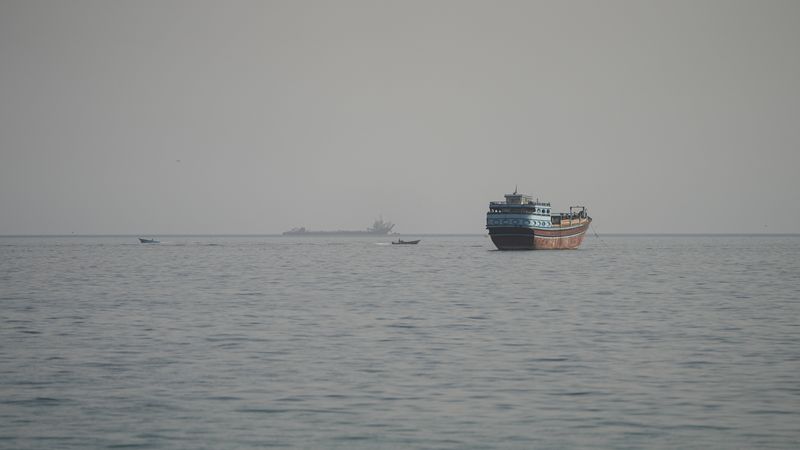
Iran said that a large portion of the Strait of Hormuz shipping route will now fall within Iranian territorial waters. It added that the statement followed an agreement with Oman on nearly all issues, including the coordinates of the strait.
According to Al Jazeera on the 5th local time, Kazem Gharibabadi, Iran's deputy foreign minister, said that Iran is currently creating a "new model" for managing transit routes in the Strait of Hormuz as part of an understanding with Oman.
Iran appears to have set aside the politically sensitive issue of transit fees in order to secure full control over the Strait of Hormuz, a strategic asset that has become even more important during the war. Instead, it seems to have arranged for virtually all shipping lanes to pass through Iran.
No transit fees, passage through Iranian waters
He said that under the new plan, most of the designated routes will pass through Iranian waters, while some will also extend into Omani waters.
The Financial Times, citing two sources, reported that under the agreement between the two sides, ships entering the Strait of Hormuz will first pass through Iranian waters and then exit mostly through Omani waters.
One source also said that before the strait is reopened, Iran will first send through tankers and other vessels to check whether the route is free from mine threats.
The temporary agreement also stipulates that no transit fees will be charged.
If the agreement holds and the strait is reopened, the United States will lift its maritime blockade on Iran and restore the suspension of sanctions on Iranian crude oil and petroleum product exports, the sources said.
According to Gharibabadi, the existing temporary routes, including the northern route near Larak Island in Iran and the southern route through Omani waters, will also be closed.
Gharibabadi added that the new Strait of Hormuz route will be used for two to four months, or possibly longer on an interim basis.
The United States remains a variable
Earlier, Esmail Baghaei, spokesman for Iran's Ministry of Foreign Affairs (MOFA), also said that Iran and Oman had agreed on the coordinates of the Strait of Hormuz route.
Baghaei then said the two countries were in the final stage of preparing a joint declaration on the agreement, and that a joint statement would be issued unless "a certain third party" interfered. The reference appeared to be to the United States.
Baghaei also said that although Iran and Oman had reached an agreement on the Strait of Hormuz route, that alone would not automatically guarantee safe passage. He argued that U.S. military actions in the region were still undermining the safety of the route.
He pointed out that many factors threatening the safety of the Strait of Hormuz route remain, including the United States' maritime blockade on Iran.
Reopening the Strait of Hormuz has become one of President Donald Trump's top goals since he started the war against Iran on February 28. With the strait blocked, oil prices have surged, shaking voter sentiment ahead of the November midterm elections.
Still, Trump said on the 4th that there had been "significant progress" and that a deal would be reached on the 5th or 6th.
Diplomatic circles expect the Iran-Oman agreement to help revive the previous memorandum of understanding (MOU) reached between the United States and Iran on the 17th of last month. The hope is to extend the earlier ceasefire and gradually restore traffic to prewar levels.
Outlook remains uncertain
However, negotiations are likely to remain difficult, as Iran has realized through this war that it can use the Strait of Hormuz as leverage in talks with the United States and may demand further concessions.
Another obstacle is the lack of trust between the United States and Iran.
Analysts are worried that Trump's unpredictability and the hard-line stance of Iran's leadership could become major stumbling blocks.
Before the war, the Strait of Hormuz was a key maritime route that handled 20% of global oil and natural gas shipments, but it has been unable to function properly since Iran moved to block it.
[email protected] Song Kyung-jae Reporter