Lee Jae Myung: "KMA Was at the Center of Three Coups" ... Calls for Faster Push on Integrated Military Academy
- Input
- 2026-08-05 16:36:32
- Updated
- 2026-08-05 16:36:32
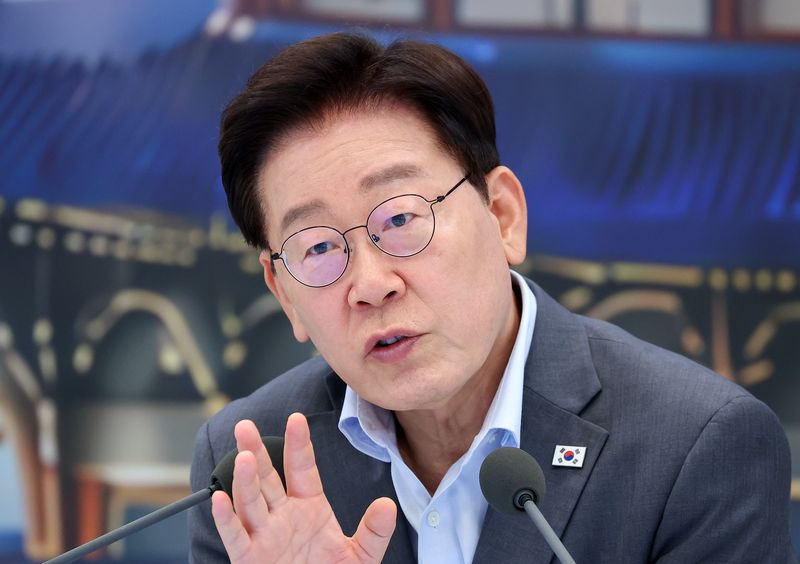
[Financial News] On the 5th, Lee Jae Myung called for a swift overhaul of the military education system, saying at a briefing on the integrated military academy that "the Korea Military Academy was at the center of three coups, yet no one was ever held accountable." He also sharply criticized the blank-firing guard incident and delays in returning USFK-provided land.
At the briefing on foreign affairs and security ministries held that day at Yeongbingwan State Guest House, Lee said, "How many military coups have there been in South Korea? Three?" He added, "All of them happened in the Army. They were carried out by KMA graduates."
He went on to ask, "Has anyone ever been held responsible for that?" and warned, "What if it happens again?" Referring to a recent attempt at a military-led coup, he stressed that such behavior must be blocked structurally, saying, "Who would have thought Army generals would go along with it?"
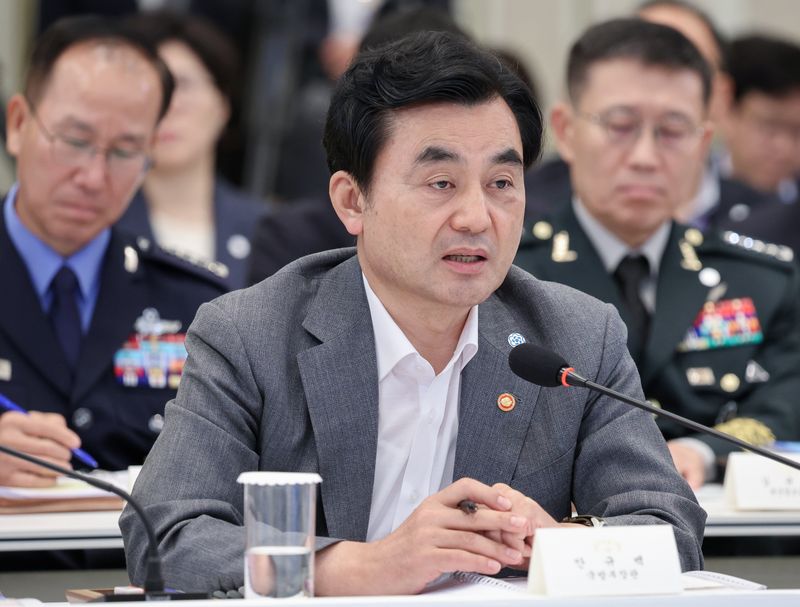
When Ahn Gyu-back said that more than half of the generals were KMA graduates, Lee replied, "As you go up the ranks, doesn't KMA almost monopolize everything?" He added, "We need a rational education system that can prevent damage to constitutional order." After the Defense Ministry explained its plan, Lee urged officials to "move quickly and forcefully." When Ahn mentioned the difficulties involved, Lee asked, "What reform in the world is easy?"
On the so-called blank-firing guard incident, in which soldiers stood watch without loaded rounds, Lee said, "They probably thought, 'Surely nothing will happen,' or 'We can just load the weapon and respond right away.'" He added, "That may not be wrong in everyday life. But this is defense."
He then pointed to the annual defense budget of 66 trillion won, saying, "People may think, 'Surely there won't be a war,' or 'Why spend money so wastefully?' That makes no sense. It is unacceptable." He warned that if military discipline keeps eroding one step at a time, "there may come a day when not a single arrow is left in the arsenal."
Lee said, "Self-reliant defense, in which we protect ourselves with our own strength and without any outside help, is our greatest task." He added, "We must also exercise command authority, which is part of sovereignty, on our own. That is only natural."
The Defense Ministry reported that it would enact a special law for nuclear-powered submarines and draw up a project plan within the year. At the ROK-US Security Consultative Meeting in October, the two sides will decide the target year for the final transfer of wartime operational control, known as the "X year," and confirm the timeline for the handover. The ministry also plans to speed up talks with the United States on securing low-enriched uranium, the fuel needed for nuclear-powered submarines.
Lee also criticized delays in negotiations over USFK-returned land, calling them "simply unreasonable." He noted that more than 10 trillion won had been spent on building Camp Humphreys, yet the return of existing sites has been delayed, and some areas cannot be used even after being returned. When Ahn explained that the US side was taking a passive stance, Lee said, "In my view, that is almost an excuse," and urged the Defense Ministry and the Foreign Ministry to speed up the talks.
In the afternoon briefing, Lee turned to college admissions and the management of sports organizations. He criticized the current education system, which focuses on solving five-choice multiple-choice questions, saying it is "like practicing to become a beginner computer." He stressed that in the AI era, students must develop the ability to ask questions and express new ideas.
On the Korea Football Association, he said, "The biggest root of the problem is its undemocratic structure," pointing to the election of its president and the issue of long-term rule. He also told Ryu Seung-min, president of the Korean Sport & Olympic Committee, that "democratic governance, transparent operations, and fair accounting seem important," adding, "Many people are watching, so please do a good job."
[email protected] Sung Seok-woo Reporter