Only High-End Phones Can Survive as DRAM Prices Soar... Average Selling Price Hits Record High in Q2 [IT Item of the Day]
- Input
- 2026-08-06 07:00:00
- Updated
- 2026-08-06 07:00:00
[Financial News] The global smartphone market is rapidly shifting toward ultra-premium, high-value products.
As component prices surged and the average selling price (ASP) for the second quarter hit an all-time high for that period, manufacturers are reducing production of lower- and mid-priced models, which carry a heavier cost burden.
The strategy is aimed at offsetting weaker demand caused by price increases by focusing on premium products with higher per-unit prices.
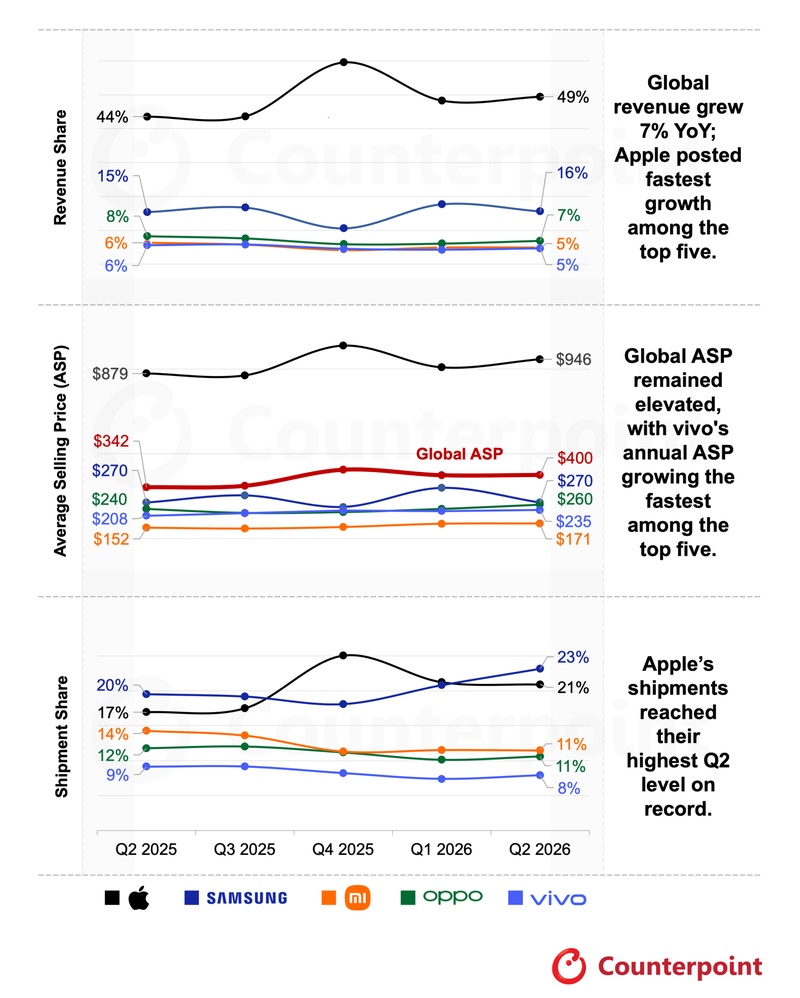
According to Counterpoint Research on the 6th, global smartphone market revenue in the second quarter of this year reached $109 billion, up 7% from a year earlier. That was the highest level ever for a second quarter.
Although shipments declined, higher ASPs offset the drop and drove revenue growth. Second-quarter ASP rose 17% year on year to $400, also a record for the quarter. The increase was attributed to sustained consumer preference for premium smartphones and a wave of price hikes by Android handset makers amid surging memory prices.
Silpi Jain, a senior analyst at Counterpoint Research, said, "The global smartphone market has now entered a phase in which value, not shipment volume, is becoming the key driver of growth." She added, "Rising component prices are accelerating this shift."
She noted, "As the entry-level market shrinks and cost pressures intensify, most smartphone makers are moving away from a volume-driven strategy and passing higher bill of materials (BoM) costs on to consumers." She added that they are "expanding sales of higher-storage and higher-spec models and strengthening their focus on the premium segment." She also explained that companies are broadening installment plans, equal monthly installment (EMI) programs, and trade-in programs to improve access to premium devices, especially in emerging markets where upfront purchase costs are high.
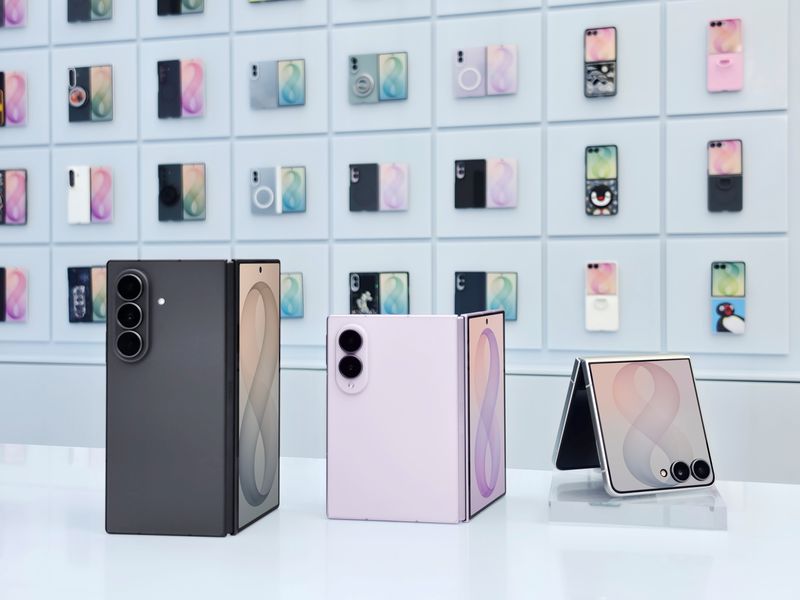
Samsung Electronics took second place with a 16% share.
During the same period, both revenue and shipments rose 9% from a year earlier, while ASP remained roughly unchanged.
Stable demand for the Samsung Galaxy A series supported shipment growth, while strong sales of the Samsung Galaxy S26 series drove performance in the premium lineup.
By region, shipments in the Middle East and Africa rose sharply, while North America also posted double-digit growth, supporting gains in both revenue and shipments.
Samsung Electronics also effectively managed cost pressures through its vertically integrated structure and component sourcing competitiveness, while selectively raising prices for some product lines and keeping ASP stable, according to the analysis.
Xiaomi's shipments in the second quarter fell 26% from a year earlier, and revenue dropped 17%. However, its average selling price rose 13% as the company expanded the share of higher-value products. Xiaomi raised product prices and streamlined its portfolio, while focusing more on profitability than on top-line growth and stepping up its push into the premium and upper-midrange markets.
Oppo and Vivo each saw revenue fall 10% and 11% year on year, respectively, even though their average selling prices rose 9% and 13%.
As memory shortages and higher costs are unlikely to ease in the near term, smartphone makers are expected to continue raising prices and prioritizing high-value products. With supply posing a greater constraint on the market than demand, shipment declines could widen further in the second half of 2026, and ASPs are expected to keep rising for the time being.
[email protected] Jang Min-kwon Reporter