"Cheaper Than Micron, SK hynix Could Rise to $320"... Why Wall Street Is Bullish on Its ADR
- Input
- 2026-08-06 06:35:57
- Updated
- 2026-08-06 06:35:57
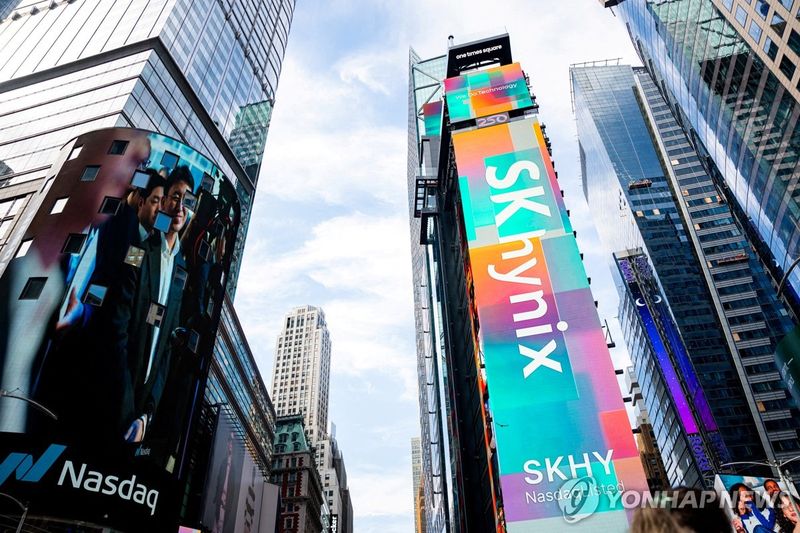
[Financial News] With its U.S. listing, SK hynix appears to be entering a new comparison set. As Wall Street begins to weigh SK hynix alongside Micron, expectations are growing that its long-standing undervaluation may finally narrow.
On the 4th local time, at least six Wall Street financial firms initiated coverage of SK hynix's American Depositary Receipt (ADR) in a single day and issued "buy" or "overweight" ratings.
Six firms turn bullish in one day... "Target price as high as $320"
According to TipRanks on the 5th, the brokerages that initiated coverage on SK hynix each set a target price and investment rating. They included Rosenblatt ($320, buy), Cantor Fitzgerald ($300, overweight), Bank of America (BofA, $250, buy), Stifel ($240, buy), UBS AG (UBS) ($204, buy), and Needham, Wolfe Research, and RBC Capital, each with a $200 target and an outperform or buy rating. William Blair also issued an outperform rating.
Based on TipRanks data, the average analyst target price for SK hynix's ADR is $237.71, and the consensus rating is Strong Buy. Rosenblatt's $320 target is more than double the ADR's previous closing price.
"Cheaper than Micron"... 6.1x vs. 11.3x
The reason Wall Street has rushed to highlight SK hynix ADR's undervaluation is the view that "SK hynix is cheaper than Micron."
Investment publication invezz said, "Experts say SK hynix ADR trades at 6.1 times expected fiscal 2026 earnings, while Micron is valued at 11.3 times," adding that "as long as AI memory demand continues to outpace supply, the stock still has room to rise by that gap."
RBC Capital estimated that SK hynix is trading at a discount of about 20% to 25% versus U.S. memory peers, while Stifel also noted that SK hynix has historically traded at a discount to Micron despite its technological leadership. Stifel analyst Brian Chin said, "SK hynix's improved operating performance is undervalued in a memory industry where demand far exceeds supply."
Trading at a cycle low, backed by the AI memory supercycle
Rosenblatt analyst Kevin Cassidy said, "With SK hynix's stock trading near the bottom of the business cycle, the market is pricing it as if the fundamentals of the memory market have not changed." Cassidy pointed to AI demand driving a shift toward higher-performance, higher-value-added memory, as well as the rising cost and complexity of new memory production facilities, which have extended wafer production timelines from the previous one to two years to three to five years.
Evidence for sustained demand was also cited. RBC Capital analyst Srini Pajjuri said generative AI is structurally driving strong demand and that the current memory upcycle could last through 2027. He also said HBM prices could rise by more than 50% as customers transition to HBM4.
Wolfe Research said, "SK hynix ADR's valuation is about 4.0 times expected 2028 earnings per share, similar to Micron Technology, Inc. and below the historical valuation multiples of Micron and SK hynix." It also estimated that "free cash flow in 2027 will exceed 40% of market capitalization."
Still, some warn of intensifying competition and slowing demand
Even as bullish views on SK hynix ADR's undervaluation dominate, there are also voices cautioning about risks.
William Blair, which issued an outperform rating, said SK hynix ADR deserves the grade on the back of strong growth driven by AI memory demand, but it also flagged a risk that competition could intensify as rivals Samsung Electronics and Micron secure HBM supply through new hybrid bonding technology.
It also pointed to potential risks such as Chinese companies catching up in the DRAM and NAND markets, downward price pressure from additional supply, and a slowdown in AI memory demand.
[email protected] Kim Hee-sun Reporter