"Was it real estate cleanup under Moon, and stock cleanup under Lee?"... The FOMO backlash behind the 2030 generation's self-mockery
- Input
- 2026-08-06 07:10:20
- Updated
- 2026-08-06 07:10:20
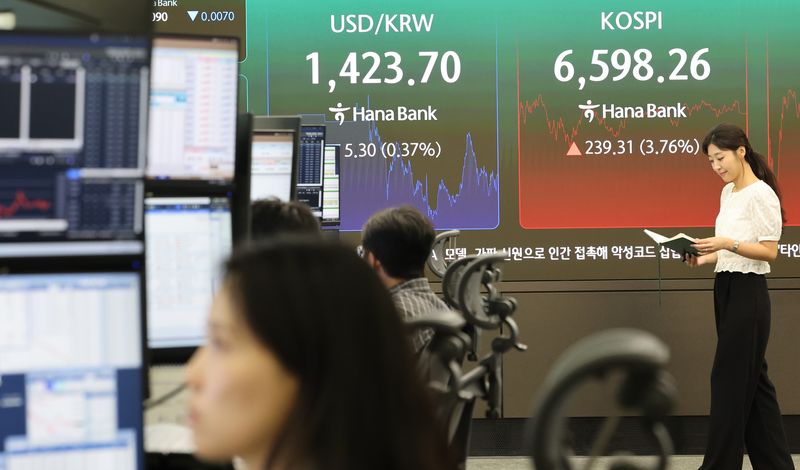
[Financial News] As the domestic stock market has recently seen sharp swings after a strong rally, online investment communities have been posting self-mocking comments such as, "They cleaned up real estate, and now they're cleaning up stocks." The term once used to describe young people who rushed into the housing market late during a period of soaring home prices has now shifted to the stock market.
Although the asset market has moved from real estate to stocks, analysts say individual investors' anxiety remains the same: "What if I end up being the last buyer?"
"The 2030 generation got hit by both real estate cleanup and stock cleanup."
On the 4th, a post titled "The 2030 generation got hit by both real estate cleanup and stock cleanup" appeared on a local online community. It included a news clip about young investors who suffered losses after borrowing money to invest in stocks.
"Cleanup" is not an official economic term. Among investors, it is slang for a situation in which early entrants cash out and exit, leaving latecomers to bear the burden of falling prices.
The expression compares the process of major players unloading their holdings to the last buyer taking the losses. It became widely used as "real estate cleanup" during the housing price surge in 2021, when existing homeowners sold at high prices and young people without homes were left as the final buyers, taking on expensive properties.The phrase has now resurfaced in the stock market in 2026.
This year, the South Korean stock market has risen sharply, led by semiconductor and Artificial Intelligence (AI) stocks. Individual investors rushed in, driven by FOMO, or the fear that they might miss out if they did not buy now.
But as sharp ups and downs have continued recently, online stock communities have been filled with posts saying things like, "The 2030 generation got hit by both real estate cleanup and stock cleanup," "Retail investors who jumped in because of FOMO ended up being cleaned out," "It's stock cleanup season this time," and "Only the people who got in at the end were left holding the bag."
Herd behavior studies also say FOMO drives chasing after rising prices
Experts explained the complaints about "stock cleanup" by linking the psychology of individual investors to herd behavior, a classic example of behavioral finance that reflects the broader investment mood across recent asset markets.
During the real estate boom of 2020 and 2021, "leveraging everything you have" became popular. At the start of this year, FOMO spread as investors feared being left out of the stock rally. In the recent correction, JOMO, or the joy of missing out, emerged as a way of saying it was fortunate not to have invested. Meanwhile, "cleanup" has once again become a common term for situations in which late entrants are left with losses.
The same point appeared in a paper titled "Individual Investors and Herding Behavior in the Korean Market," published in the Journal of Applied Economics in June last year by researchers from Sungkyunkwan University and the University of Virginia (UVA).
The study analyzed 30 years of data from the South Korean stock market and found that herding behavior became stronger as participation by individual investors increased. It also found that in market downturns, FOMO combined with risk aversion to further intensify long-term herd behavior. The researchers concluded that psychological biases among individual investors can increase market volatility.
The study also found that exposure to alerts about sharp gains or price increases raised FOMO levels and influenced actual investment behavior.
[email protected] Seo Yoon-kyung Reporter