Strait of Hormuz to Be Open for 60 Days Without Fees... Announcement Could Come as Early as the 5th
- Input
- 2026-08-05 14:45:12
- Updated
- 2026-08-05 14:45:12

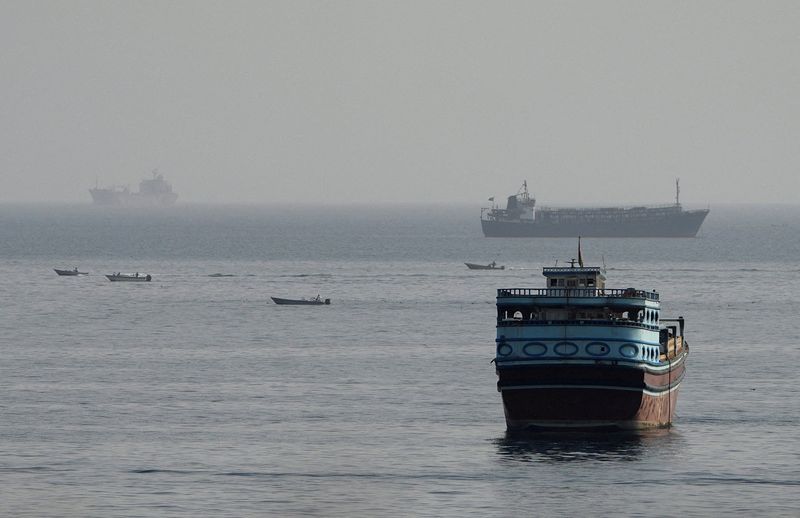
[Financial News] Iran, which clashed with the United States over the management of the Strait of Hormuz in June and July, is expected to announce an agreement to reopen the waterway as early as the 5th local time. Ships passing through the strait will not have to pay transit fees for the first 60 days.
Axios reported on the 4th, citing two regional officials, that the United States had nearly reached an agreement with Iran and Oman, which share the Strait of Hormuz, on how traffic through the strait would be handled. Under the deal, Iran and Oman would keep the strait open for 60 days without transit fees or other charges, and the opening period could be extended depending on future talks.
For the next 60 days, all ships entering the Persian Gulf from the Indian Ocean through the strait must travel along the northern Iranian coast. Vessels leaving the Persian Gulf for the Indian Ocean will use the southern route along the Omani coast, in coordination with Iran.
Until February 28, before the Iran war, ships passing through the strait moved through the center channel. But that route is now difficult to use because of Iran's indiscriminate laying of mines. Iran and Oman agreed in this deal to begin removing mines from the center channel within 30 days. If Iran and Oman reach a permanent agreement, ships will once again use the center route, as they did before the war.
Axios said the proposal partially accommodates Iran's demands. As a result, Iran would gain some recognition of control over the Strait of Hormuz, something it did not have before the war.
Article 5 of the armistice agreement signed by the United States and Iran on June 17 states that Iran will "take all possible measures to ensure the safe passage of commercial vessels" through the Strait of Hormuz. Iran interpreted that clause as recognition of its authority to manage routes within the strait. The United States, however, demanded complete freedom of navigation in the Strait of Hormuz. Iran then attacked ships that did not use the northern route it had set, and the two sides exchanged retaliatory airstrikes until the 29th of last month.
Officials who spoke with Axios said Qatar, Pakistan, and Saudi Arabia also took part in mediation efforts, and the United States was actively involved as well. Over the past few days, Steve Witkoff, the U.S. special envoy to the Middle East; Abbas Araghchi, Iran's minister of foreign affairs; and Badr Al Busaidi, Oman's foreign minister, held several phone calls. The officials said Iran claimed Araghchi had agreed to the deal but was waiting for approval from the supreme leader and the Supreme National Security Council (SNSC). Another U.S. official said Iran's leadership had already completed the approval process on the 4th.
Meanwhile, U.S. President Donald Trump, who began talks on restoring the armistice agreement with Iran on the 3rd, commented on the progress in an interview with Fox News on the 4th. He said, "The Strait of Hormuz will open soon, or Iran will face a very powerful attack." Trump said, "We are having very good discussions with Iran," and claimed that Iran desperately wants a deal to end months of conflict. He added, "What matters is action," and said, "We will see what happens. There is plenty of time."
[email protected] Park Jong-won Reporter