NYT: Trump Is the U.S. President Who Understands Iran the Least
- Input
- 2026-08-05 16:37:41
- Updated
- 2026-08-05 16:37:41
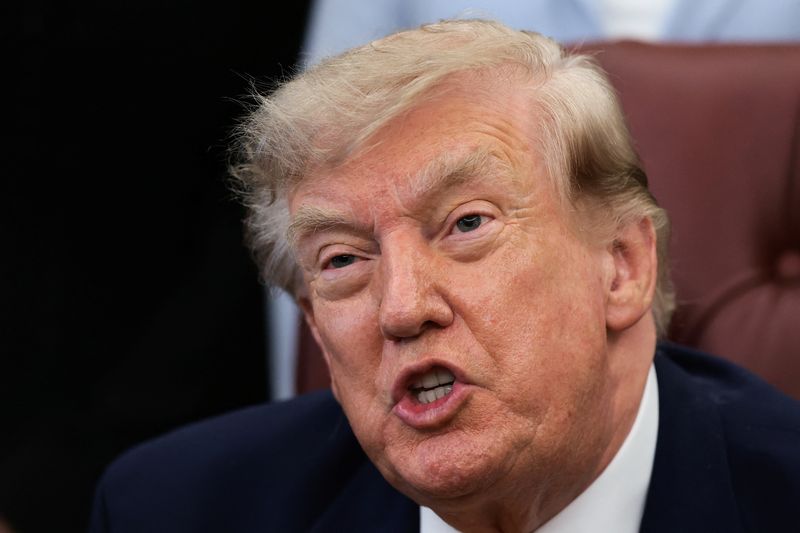
On the 4th local time, The New York Times (NYT) said that President Trump sees himself as someone who can read an opponent's nature and exploit weaknesses, but Iran's leadership has continued to confound him.
President Trump still hopes to reach an agreement with Iran, but much of the composure he showed at the start of the war has faded. On the 31st of last month, he complained that "they always want to talk, but they break promises too often. All they do is make me angry," expressing frustration with Iran as it failed to follow his lead.
In this regard, NYT said that during the war, President Trump repeatedly described Iran's leadership in different ways, calling them "crazy," "reasonable people," "lunatics," "very smart," and "completely insane," which shows that his understanding of Iran was shallow.
Kenneth Pollack, deputy director for policy at the Institute for Middle East Studies (IMES), also said that "President Trump may be the president who has understood Iran's leadership the least." He added that "in many ways, he symbolizes America's frustration with Iran." He noted that "he was the president who wanted a deal with Iran more than anyone else, while also being the one who used the strongest military force. But neither approach produced the outcome he wanted."
Dennis Ross, a Middle East diplomacy expert, also said, "It seems that Iran understands us better than we understand Iran," adding that President Trump's open impatience to end the war quickly actually worked in Iran's favor.
Of course, former President Barack Obama was also credited with a diplomatic achievement when he signed the Iran nuclear deal, the Joint Comprehensive Plan of Action (JCPOA), in 2015. But that too did not lead to improved bilateral relations. Since the Iranian Revolution in 1979, Iran has maintained an anti-Western, anti-U.S., and anti-Israel stance, keeping a certain distance from the United States even when a president friendly to Washington took office.
Experts believe the war has widened that distance even further. Susan Maloney, deputy director at the Brookings Institution in Washington, D.C., said, "For decades, U.S. policymakers have consistently underestimated the strong ideological convictions and institutionalized power structure of the Islamic Republic of Iran." She added, "This war has only strengthened the power of Iran's religious and military leadership, and there is no real alternative force inside Iran."
[email protected] Hong Chaewan Reporter