Even after blocking 90% of the cause, hair loss can still break through: The secret behind patients who do not respond to hair loss medication [Kim Jin-oh's Hair Loss Escape]
- Input
- 2026-08-05 16:04:45
- Updated
- 2026-08-05 16:04:45
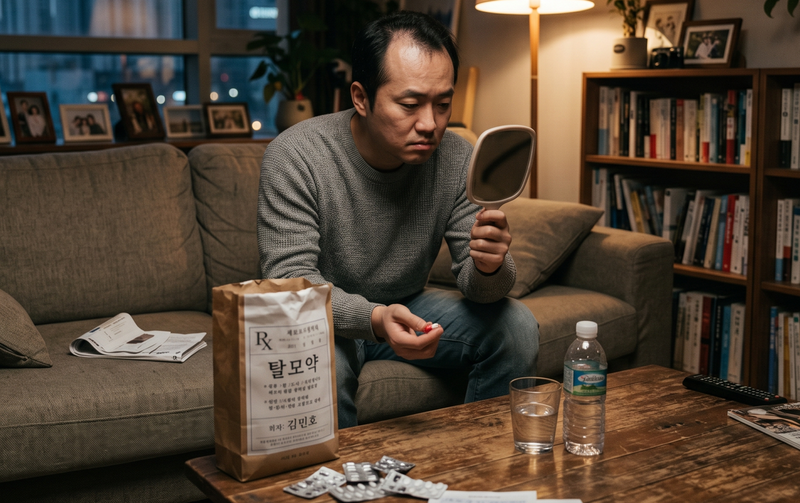
[Financial News] Occasionally, there are patients whose hair loss continues to progress even after taking hair loss medication faithfully for more than a year. Such patients not only grow distrustful of the medicine, but also conclude that hair loss is an incurable disease. From a medical standpoint, however, what is needed is not despair. What is needed is a calm analysis of the biological mechanisms at work in the body.
If hair loss medication does not work, check genetics and metabolism first
Finasteride and dutasteride, two of the most commonly prescribed hair loss drugs, inhibit 5-alpha reductase and lower levels of dihydrotestosterone (DHT), the main driver of hair loss. 5-alpha reductase is divided into type 1 and type 2. Finasteride blocks the type 2 enzyme and suppresses blood DHT by about 70%, while dutasteride blocks both type 1 and type 2, raising the suppression rate to about 90%. On paper, that is close to perfect. Even so, clinical data show that 15% to 25% of all patients do not experience meaningful improvement. This is classified in pharmacology as a reduced treatment response, or nonresponse.
Patients may suspect that they are taking the drug incorrectly or that the medicine has no effect, but the academic explanation lies in far more detailed genetic and metabolic differences. The first variable is the sensitivity of the androgen receptor. In simple terms, the hair root, or follicle, has an antenna that receives the hair loss hormone, DHT. What determines the antenna's performance is the length of a specific segment of the gene, known as the CAG repeat sequence. People with a genetically shorter segment are essentially born with a more sensitive antenna. Even if medication suppresses the hair loss hormone by 90%, they can still detect the remaining 10% signal and transmit it to the follicle. If a finasteride user has high type 1 enzyme activity in the scalp's sebaceous glands, switching to dutasteride may be an option. But if the antenna itself is highly sensitive, changing medication alone has limits.
The second case is when the root factory that produces hair has effectively shut down. After prolonged exposure to the hair loss hormone, if 70% to 80% or more of the stem cells inside the follicle disappear, the pore becomes completely blocked and turns into smooth scar tissue. In other words, the field's ability to regenerate hair is gone, as in severe cases where the forehead or crown becomes widely exposed. This is not a problem with the drug. Biologically, the window of opportunity has already passed.
The third case is when the drug is doing its job, but a metabolic problem in the body causes the raw materials for hormones to surge. If blood sugar control is poor or insulin resistance is high, the body's safety mechanism that binds hormones shuts down. As a result, the amount of free male hormones flowing into the scalp rises dramatically. Even if medication reduces the operating rate of the hormone-conversion factory by 90%, the amount of raw material supplied from upstream increases dozens of times over, and the body keeps producing hair loss hormones. If chronic stress or thyroid problems are added on top of that, there is little time for the medicine to show an effect.
The treatment approach should change before stopping the medication
Therefore, if hair loss medication has shown no effect despite faithful use for more than 12 months, the medication should not be stopped. Instead, the treatment paradigm should be changed. If 5-alpha reductase inhibitors play a defensive role by blocking the causative substance, minoxidil plays a growth-promoting role by expanding the microvasculature around the follicle and supplying nutrients. Because their mechanisms are completely different, combination therapy with the two drugs, along with follicular injections or low-level laser therapy (LLLT), can be a meaningful alternative for patients who do not respond to a single drug.
In hair loss treatment, stopping treatment arbitrarily is absolutely unacceptable. Rushing to judge the effect after only about six months, or thinking that surgery alone can replace drug therapy, can cause even the remaining hair to be lost. If the medication meant to stop the drought does not fully work, the proper medical approach is to examine the condition of the soil and the water supply from multiple angles. Only when the cause is diagnosed precisely and a combined strategy is established can the once-daunting territory of nonresponse move onto a path toward resolution.

/Chief Director Kim Jin-oh, New Hair Hair Transplant Clinic
Kim Jin-oh, chief director of New Hair Hair Transplant Clinic, who has led hair loss research through hair loss content production, new drug clinical trials, academic society activities, and textbook authorship, helps readers with their'escape from hair loss'through this Financial News column.
[email protected] Kim Hyun-sun Reporter