U.S. Government Formally Urges Congress to Allow Overseas Warship Construction... A Boon for South Korea's Shipbuilding Industry?
- Input
- 2026-08-05 11:05:38
- Updated
- 2026-08-05 11:05:38
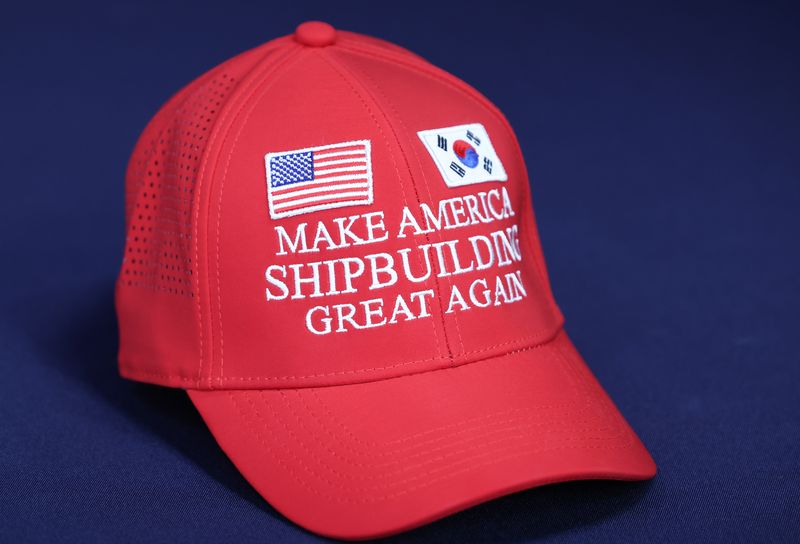
[Financial News] The Trump administration, which is racing to build warships as part of its effort to rebuild the U.S. Navy, has formally sent a document to the US Congress proposing that four naval vessels be built overseas. If the proposal passes, South Korean shipbuilders could end up building U.S. military combat ships.
USNI News, a naval and maritime security outlet run by the United States Naval Research Laboratory (NRL), reported on the 24th of last month, citing a document from the White House Office of Management and Budget (OMB). In a "Statement of Administration Policy (SAP)" delivered to the U.S. House of Representatives on the 21st of last month, the OMB said it opposed Section 1025 of the 2027 National Defense Authorization Act (NDAA) introduced in the House.
The NDAA is the annual law that sets the U.S. defense budget ceiling and policy direction. Section 1025 of the 2027 NDAA states that funds allocated to the Navy may not be used for contracts to build U.S. Navy combat ships at foreign shipyards. Separately, the United States currently prohibits foreign construction of naval vessels under the Byrnes-Tollefson Act.
In its statement, the OMB said the House bill "runs counter to the Trump administration's top legislative proposal to authorize the U.S. Navy to procure two surface combatants and two noncombat support ships from overseas shipyards, thereby attracting massive foreign direct investment to U.S. shipyards."
The OMB also criticized Section 1025, saying it would "prohibit the use of funds to procure the initial combat ships to be built at overseas shipyards, even as long-term investment is being made in existing U.S. shipyards and new shipyards under the 'Finnish model,' first introduced in the U.S. Coast Guard's medium icebreaker program."
Under the Finnish model, the initial batch of ships is built overseas, and once U.S. companies are ready, the rest of production is shifted to the United States to help develop the domestic shipbuilding industry.
The OMB also stressed that Section 1025 "fails to seriously address the problems caused by the shipbuilding backlog across six major programs at six of the U.S.'s 'major' shipyards."
The 2027 NDAA already passed the House on the 22nd of last month. The bill reportedly includes language calling for expanded shipbuilding cooperation with South Korea to strengthen U.S. shipbuilding capacity and workforce training, but it also contains a provision banning overseas construction of combat ships.
The Senate Armed Services Committee separately approved the NDAA with language allowing up to two noncombat vessels, including bulk fuel ships and strategic transport ships, to be procured from overseas shipyards.
If the 2027 NDAA is ultimately passed in line with the Senate amendment, or revised to match the Trump administration's intent, it could be a positive development for South Korea's shipbuilding industry.
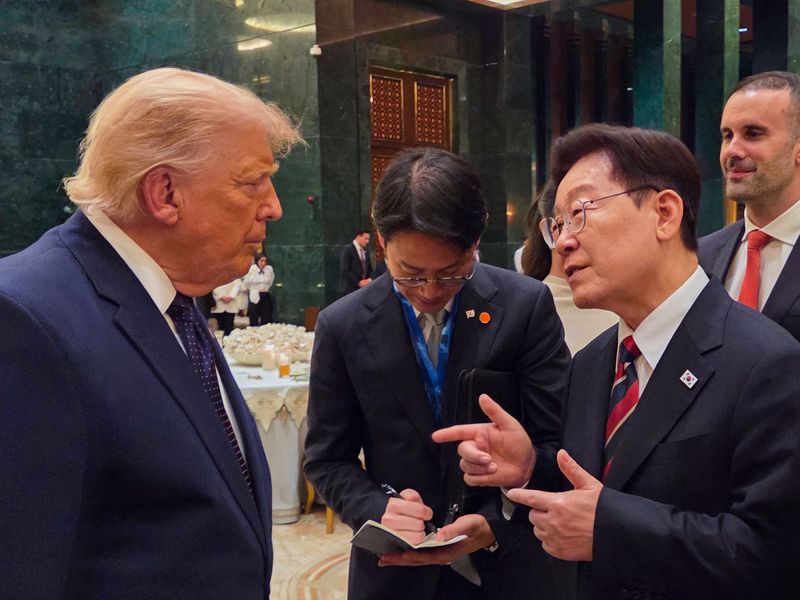
U.S. President Donald Trump emphasized the rebuilding of the U.S. Navy on the 15th of last month and said, "So we are working with companies coming in from Korea or other regions to cooperate in the shipbuilding sector." At the Group of Seven summit in France in June, he asked President Lee Jae Myung, "Can you quickly build 10 U.S. warships?"
[email protected] Park Jong-won Reporter