K-memory to Remain the Strongest Even in the AI Inference Era, with No. 1 Outlook Through 2031
- Input
- 2026-08-05 08:54:36
- Updated
- 2026-08-05 08:54:36
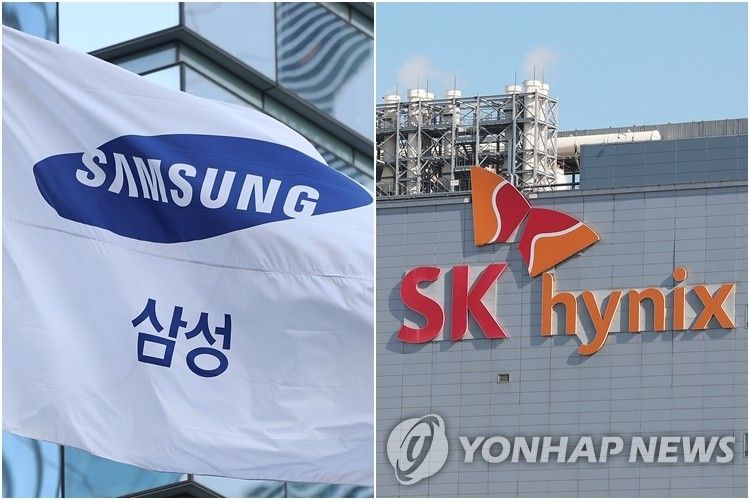
[Financial News] As the artificial intelligence (AI) industry shifts from training to inference, South Korea is expected to retain its position as the world's strongest memory semiconductor power through 2031. The outlook is supported by aggressive investment from Samsung Electronics and SK hynix, as well as government policies to expand production capacity.
Josephine Lau, an analyst at French market research firm Yole Group, said at the memory industry event "FMS 2026" in Santa Clara, California, on the 4th (local time) that "South Korea will maintain its lead in the memory industry at least through 2031."
She pointed to the government's plan to double wafer production capacity over the next five years, along with continued investment by Samsung Electronics and SK hynix in HBM and next-generation DRAM.
The competitive landscape, however, is changing quickly. Lau said the memory market is moving from "AI 1.0," which focuses on training AI models, to the "AI 2.0" era, in which real-time inference takes place.
In the AI inference era, the development cycle for new memory products is expected to shorten from the current 18 months to around 12 months. That means agility in quickly developing and mass-producing products tailored to customer needs, as well as process technology, will become a key competitive advantage.
The center of memory demand is also shifting to the United States. The U.S. share of global memory consumption rose 15 percentage points from 37% in 2021 to 52% last year. By contrast, China's share fell from 35% to 29% over the same period. The shift is attributed to U.S. restrictions on semiconductors to China and the resulting concentration of AI data center investment in the United States.
Changes are also expected in the High Bandwidth Memory market. Avril Wu, senior vice president of research at Taiwan-based market researcher TrendForce, said NVIDIA's share of HBM demand is expected to fall from 66% last year to 58% this year.
This does not mean HBM demand is declining. Rather, customer demand is becoming more diversified as major cloud providers expand their use of custom-designed Application-Specific Integrated Circuits (ASICs), including Google's Tensor Processing Unit (TPU).
China's catch-up efforts are another variable. Yole Group said ChangXin Memory Technologies (CXMT) has reached the 1z process, a 10-nanometer-class third-generation technology. That is the same level Samsung Electronics and SK hynix secured in 2019.
[email protected] Kim Kyung-min Reporter