U.S. Revokes Visa of Brazilian Ambassador to Washington, Escalating Diplomatic Tensions
- Input
- 2026-08-05 07:39:54
- Updated
- 2026-08-05 07:39:54
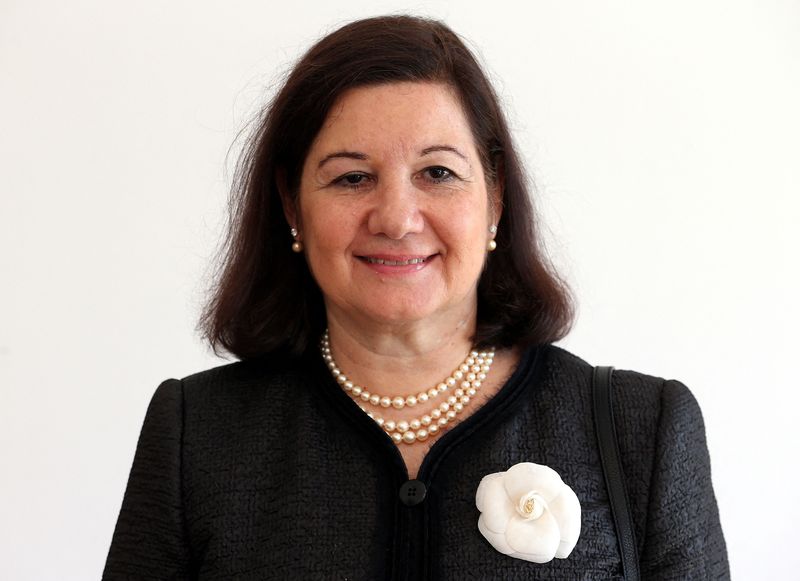
[Financial News] Diplomatic tensions between the United States and Brazil are intensifying ahead of Brazil's presidential election in October.
On the 4th local time, the BBC reported that the U.S. government had confirmed the revocation of the visa of Maria Luiza Ribeiro Viotti, Brazil's ambassador to the United States.
The move is seen as retaliation after the Brazilian government last month denied visas to two senior State Department officials who had planned to visit the country. At the time, Brazilian President Luiz Inácio Lula da Silva criticized the U.S. officials, saying they were trying to "interfere" in Brazil's election, while the U.S. side dismissed the claim as "nothing more than an unfounded allegation."
A State Department official added that the visa cancellation does not mean the ambassador will be forced to leave the country.
The State Department officials at the center of the dispute were identified as Assistant Secretary for Democracy, Human Rights, and Labor Riley M. Barnes and Deputy Assistant Secretary Samuel Sampson. They had sought to visit Brazil under the pretext of discussing freedom of expression, religious freedom, and election integrity, and had also planned to meet with Senator Flavio Bolsonaro, a right-wing presidential candidate. Flavio Bolsonaro is the son of former President Jair Bolsonaro, who is currently serving a 27-year prison sentence for plotting a coup after refusing to accept the last presidential election result.
U.S. President Donald Trump nominated Florida state representative Daniel Perez, a close aide to Secretary of State Marco Rubio, as ambassador to Brazil on June 1, but skipped the usual diplomatic step of seeking prior approval, known as agrément. The Brazilian government has taken the move as a breach of protocol and is delaying approval of the appointment.
President Lula has continued to criticize the Rubio-led State Department publicly, saying it is expanding its interference in Latin American politics by openly backing conservative candidates.
Flavio Bolsonaro, who has received support from Argentine President Javier Milei and Israeli Prime Minister Benjamin Netanyahu, recently told diplomats that "Brazil's electronic voting machines have the same roots as Venezuela's," raising suspicions of election fraud. After the remarks sparked controversy, he clarified that he had "not questioned the voting system itself, but only wanted as many international observers as possible to come." Even so, the Brazilian government abruptly blocked the visa issuance, saying the U.S. delegation could fuel unnecessary doubts about the election.
Meanwhile, Brazil's Superior Electoral Court, or TSE, completely rejected Flavio Bolsonaro's claims about the electronic voting system.
[email protected] Yoon Jae-joon Reporter