U.S. diesel prices rise above Biden-era levels, clouding the midterm election
- Input
- 2026-08-05 03:59:00
- Updated
- 2026-08-05 03:59:00
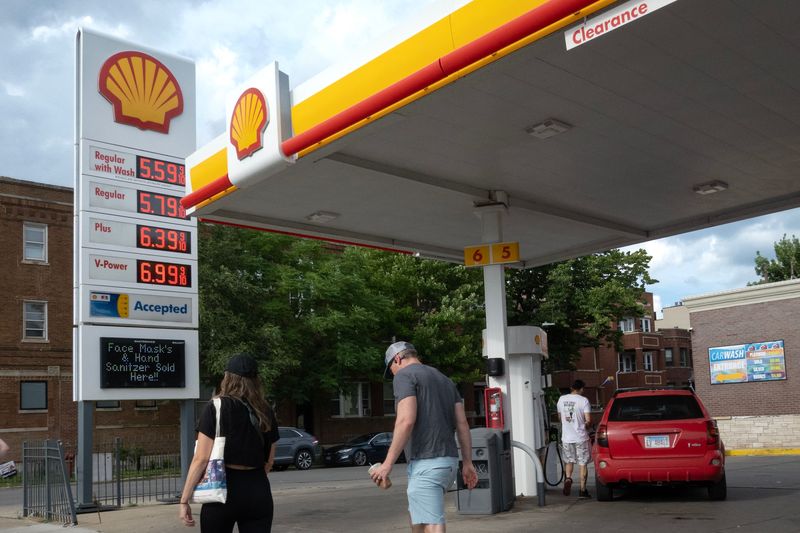
Under the second Trump administration, diesel prices, a basic logistics cost, have risen above the average seen during the Biden administration. The increase stems from the Iran war that began on Feb. 28, local time. In the United States, where large freight trucks are central to logistics, higher diesel prices are expected to drive up transportation costs and inflation, posing a major headache for The White House with the midterm election just three months away in November.
Diesel prices surge on Iran war
The Financial Times reported on the 4th, citing data from the Energy Information Administration under the United States Department of Energy (DOE), that average U.S. diesel prices have stood at $4.09 per gallon since the launch of the second Trump administration in January last year.
That is above the $4.08 average price recorded during former President Joe Biden's four-year term. Diesel prices also soared during the Biden years. In February 2022, Russia launched a full-scale invasion of Ukraine, causing severe disruptions to oil supplies.
Diesel plays a vital role in the U.S. economy, much like blood in the body. It is an essential fuel for logistics and agriculture.
A major burden for the midterm election
Jeff Colgan, a political science professor at Brown University, said, "When energy prices rise, complaints spread everywhere," adding, "People blame the party in power."
He emphasized, "Diesel, in particular, is an invisible fuel that all of us consume," and noted, "The reality is that most goods produced in the United States are transported by vehicles that run on diesel."
Concerns about inflation tied to the Iran war are deepening.
As markets expect the Federal Reserve System (Fed) to raise interest rates to curb inflation, Treasury yields have climbed and mortgage rates have also risen sharply. The most common 30-year fixed mortgage rate surged to 6.6% last week, the highest level in a year.
Diesel prices are unlikely to fall easily
U.S. fuel prices jumped after the Iran war broke out and the Strait of Hormuz was blocked.
According to the American Automobile Association (AAA), diesel prices rose more sharply than gasoline prices. Since the start of the war, gasoline has climbed 37% to $4.09 per gallon, while diesel has surged 43% to $5.37 per gallon.
Although international oil prices fell below $80 per barrel after Scott Bessent, the United States Secretary of the Treasury, said the Strait of Hormuz would reopen "today or tomorrow," analysts remain pessimistic that diesel prices will decline quickly.
They say the war has reduced crude supply, leaving diesel inventories tight. U.S. refining capacity is limited, and Russia has banned exports of refined products until next year. In particular, the Russian ban on refined product exports has removed hundreds of thousands of barrels of diesel a day from the oil market.
Meanwhile, U.S. refineries are already running at full capacity, leaving no room to expand output. U.S. oil companies are focused mainly on widening margins amid the supply shortage.
Warnings are also emerging that the shortage of jet fuel, which was a headache early in the war, has eased, but the market now faces an even more serious diesel shortage.
Independent oil analyst Tom Kloza said, "Diesel is the headache fuel," adding, "The era of jet fuel shortages is over... and the gasoline problem is likely to be resolved, but diesel is not."
Kloza warned that "there is a very high chance of diesel shortages in the United States, Europe and coastal areas of Asia."
Meanwhile, Brown University analysis found that after the Iran war, U.S. households spent more than $600 extra each on gasoline and diesel.
[email protected] Song Kyung-jae Reporter