"Won 1.85 million to Won 1.48 million": Semiconductor stock slump triggers a wave of target-price cuts for Samsung Electronics and SK hynix
- Input
- 2026-08-05 03:50:00
- Updated
- 2026-08-05 03:50:00
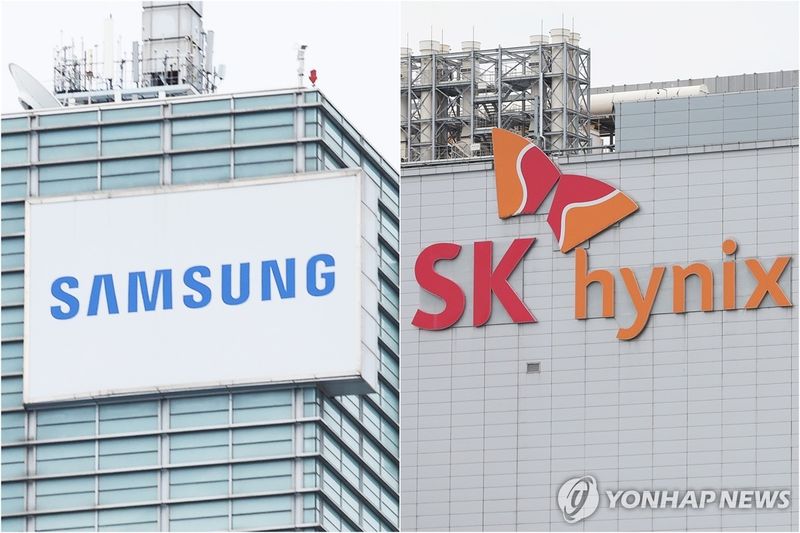
[Financial News] Securities firms are issuing a series of reports lowering target prices for Samsung Electronics and SK hynix.
Last month, Mirae Asset Securities cut its target price for SK hynix by 33.3%, from Won 4.2 million to Won 2.8 million. BNK Investment & Securities also lowered its target from Won 1.85 million to Won 1.48 million, citing concerns over a semiconductor supply glut.
Samsung Electronics' target price was also revised. Mirae Asset Securities cut it by 32.7%, from Won 550,000 to Won 370,000, while Kiwoom Securities lowered it from Won 430,000 to Won 390,000. The move appears to reflect an effort by brokerages to narrow the gap between share prices and target prices after the sharp selloff.
Samsung Electronics and SK hynix posted record-high results in the second quarter, but their share prices have fallen more than 30% from their peaks since July. In trading on the 3rd, Samsung Electronics closed down 8.76% at Won 239,500, while SK hynix ended the session down 8.79% at Won 1,567,000.
The downward revisions were not limited to semiconductor stocks. According to data compiled by FnGuide, domestic brokerages issued 580 target-price downgrade reports last month, surpassing the 351 upgrade reports. It was the first time this year that monthly downgrade reports outnumbered upgrades. In January, there were 940 upgrade reports and 228 downgrade reports. In February, when the KOSPI (Korea Composite Stock Price Index) first moved above the 5,000 level, there were 1,122 upgrade reports and 116 downgrade reports, showing a clear bias toward bullish views. Even in June, when the KOSPI rose above 9,000, upgrade reports outnumbered downgrades by 2.2 times.
Meanwhile, the industry expects the August stock market to be a key variable in shaping the direction of the market in the second half. Analysts say volatility could ease depending on changes in consensus forecasts for global big tech earnings, major U.S. economic indicators, developments in the Middle East conflict, interest-rate policy, and the stabilization of the leveraged exchange-traded fund (leveraged ETF) market.
[email protected] Han Seung-gon Reporter