[Editorial] As demands for performance bonuses spread across industry, the issue should be settled through legislation
- Input
- 2026-08-04 18:47:06
- Updated
- 2026-08-04 18:47:06
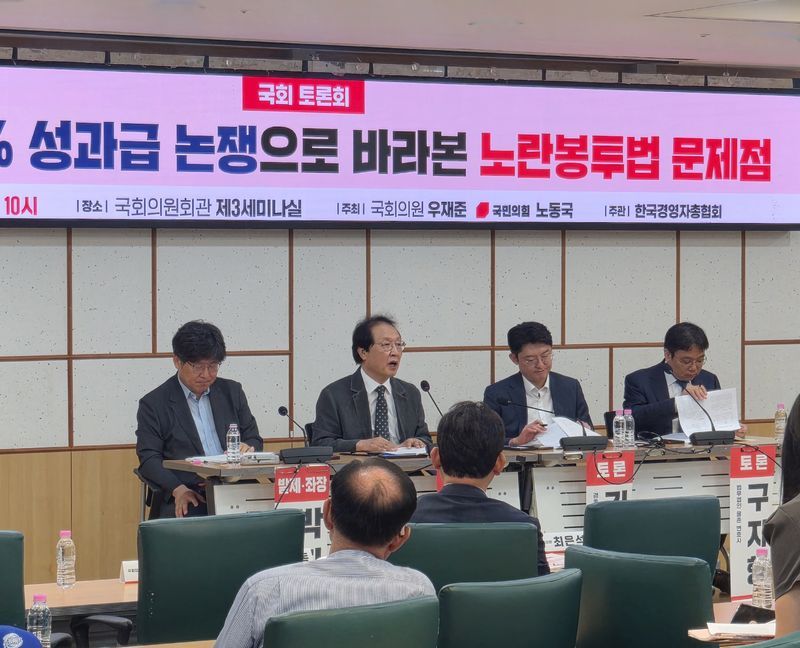
For that reason, they said decisions on how operating profit should be used fall within management judgment, which must also take into account investment, research and development, financial structure, and shareholder rights. They added that if a company is pressured to set aside a fixed share of its earnings for bonuses and is forced to accept that demand through a strike, the request goes beyond the legitimate scope of wage bargaining.
The demand for 'N% performance bonuses' is no longer confined to a handful of large companies. What began as a bonus race in the semiconductor sector has spread to autos, shipbuilding, and information technology. The Hyundai Motor Union has repeatedly escalated strike action, demanding bonuses equal to 30% of net profit. Tensions are also rising at SK hynix, where bonus negotiations are under way again after last year. Similar cases are emerging overseas as well. Recently, the Taiwan union at Micron cited bonus systems at Korean semiconductor firms as a comparison and demanded the removal of bonus caps and a larger share of profits, even raising the possibility of a strike.
If the compensation levels of a few top-tier companies become the benchmark for entire industries at home and abroad, the result could be an unsustainable bonus inflation. Korea's unprecedented compensation race among large companies would hardly be welcome if it became the new wage and strike standard for the global semiconductor industry.
As the forum pointed out, operating profit is not cash or surplus funds that can be distributed immediately. Because interest expenses, foreign exchange losses, and corporate taxes are not reflected in operating profit, a company can post operating profit and still end up with a net loss. Above all, corporate earnings are not created by workers' efforts alone. They are the product of capital supplied by shareholders, tens of trillions of won in facility investment, research and development, management decisions, and overall market conditions. Once a system of preemptively taking a share of operating profit becomes entrenched, there is no choice but for future investment, financial soundness, and shareholder returns to shrink.
The current confusion stems from unions demanding the forced distribution of N% of profits as bonuses and from attempts to make management's response to that demand a subject of labor dispute. At the root of the problem is the legal ambiguity created by the Yellow Envelope Act, which expanded the scope of labor disputes to include 'management decisions that affect working conditions.' Since even the President has expressed concern that the scope of disputes could be expanded too far, the turmoil on the ground can no longer be left unchecked.
This is not something that can be solved with government guidelines. The law should clearly state that demands to distribute a fixed percentage of operating profit, as well as essential management decisions such as investment and production, are excluded from mandatory bargaining and labor disputes. If this is allowed to continue, the damage will not be limited to a few large companies.
If bonuses worth hundreds of millions of won at large companies in boom industries become the standard for the entire labor market, the wage gap with small and medium-sized firms will only widen further. The dual structure of the labor market, in which young people look only at jobs at a few major companies, could also deepen. Before even greater labor unrest and polarization set in, the government and the political establishment should take action.