[Editorial] The Fundamental Solution to Stabilizing the Real Estate Market Is Expanding Supply
- Input
- 2026-08-04 18:47:04
- Updated
- 2026-08-04 18:47:04
Perhaps aware of this, Deputy Prime Minister and Minister of Economy and Finance Koo Yun-cheol said on a broadcast after the real estate tax announcement on the 3rd that the government was preparing supply measures, including partial easing of the green belt and the use of military sites. His remarks suggest that the government is pursuing not only tax reform but also ways to expand supply.
The government also knows that tax measures alone are not enough. That is why it always adds supply measures to its proposals. The most representative examples are easing the green belt and using military sites. The problem, however, is that such measures have always come too late. There is no housing policy more important than supply, but these measures are usually introduced reluctantly, only after the market has already overheated and a supplement to tax policy is needed. Rather than leading the market, the policy follows behind it. Such stopgap measures have clear limits in themselves.
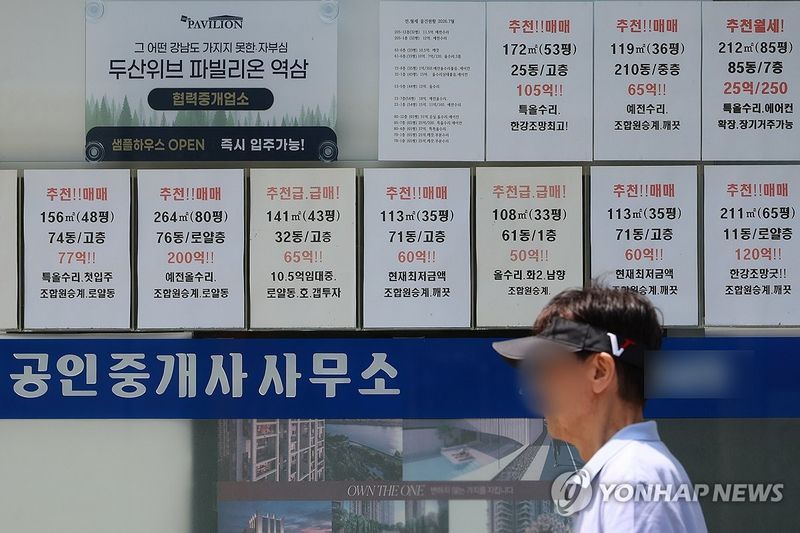
It is also difficult to predict how many homes multi-homeowners and rental business operators will put on the market as holding taxes are raised. In fact, real estate agencies in some high-end apartment complexes that will see a sharp tax increase are reportedly receiving more inquiries from sellers. But owners may also choose to hold on to their homes by passing the tax burden on to tenants through higher jeonse or monthly rent. In other words, they can shift the burden through rent increases or a transition to semi-jeonse contracts. As a result, this tax reform could end up worsening housing costs for tenants.
We must not forget that the success or failure of real estate policy ultimately depends on supply. There have been very few cases in which prices were stabilized simply by suppressing demand through taxes. The government should watch the effects of the tax reform while seriously considering supply measures as the fundamental solution.
However, there is almost no land left in the Capital Region near Seoul. That is why the green belt and military land are often mentioned, and Koo made the same point. Even so, it is not possible to recklessly lift the green belt, which exists to protect the environment. He did not offer any specific details about what kind of supply measures could be realistically implemented.
The key points of a supply policy are first to judge the volume and location of housing. But just as important are feasibility and timing. In the case of easing the green belt or using military sites, there are many procedures to clear, including consultations among ministries, environmental impact assessments, coordination with local residents' opposition, and changes in land use.
First, the government should bring forward the completion schedule for the Third New Towns now under construction and prepare additional supply measures. Along with efforts to identify even small, underused parcels of land, it must present a long-term roadmap for housing supply. Only then can policy gain credibility and exert real influence on the market.