"Trying to Cover an Apartment Balance, He Lost Even His Principal" — Retail Investors Left Reeling by Extreme Volatility [World of Retail Investors]
- Input
- 2026-08-05 06:58:58
- Updated
- 2026-08-05 06:58:58
[Financial News] #. In May, a father in his 30s, identified as A, decided to move to an older apartment in Eunpyeong District, Seoul. He then took bold action. With his move-in scheduled for September, he invested 50 million won from a lump sum set aside for the apartment balance into the domestic stock market. His goal was modest. He simply wanted to reduce his loan burden, even a little. The market was in full boom mode, so he expected that putting the money into large-cap stocks for just two or three months would earn him at least a few million won.
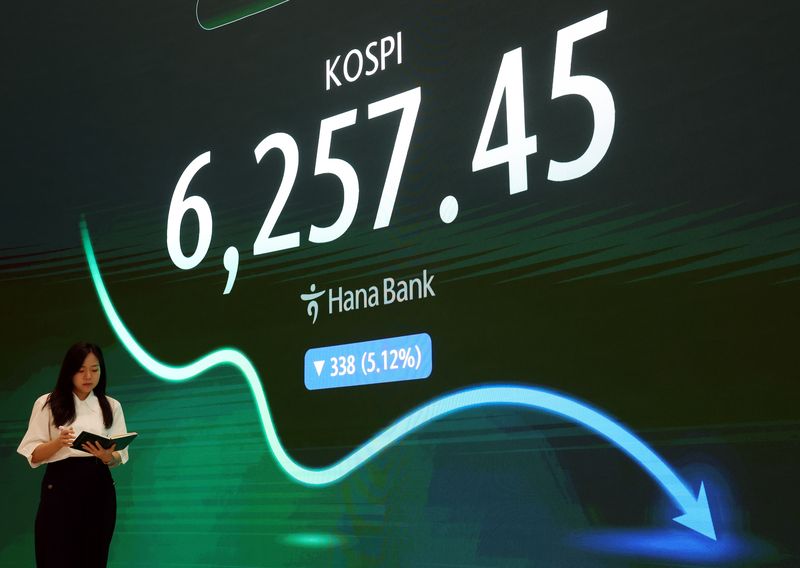
The result was painful. What awaited A was a merciless "roller-KOSPI." In July, extreme volatility took over the market, with sell-side and buy-side sidecars being triggered back and forth almost every day. More recently, fears of a semiconductor peak and a flood of profit-taking by foreign investors hit the market hard. Before long, the account that had already lost its gains began to eat into the principal needed for the final apartment payment, and A was increasingly overwhelmed by severe stress.
Even a friend's advice that he should be able to recover his losses if he just held on a little longer could not ease A's fear. In the end, he sold all of his stocks at market price last week. The loss was locked in, but A said he actually felt relieved. "I was terrified that if I lost any more from here, I would be in serious trouble on the payment date," he said. "I jumped in hoping to make a little more, but I ended up losing even my principal. I can't even face my wife."
Retail investors left in tears... even 'debt-investing' balances have plunged by trillions of won
As the market swings wildly day after day, the cries of individual investors facing a crash continue. Among them are many like A, who were swept up by the boom-time atmosphere and FOMO, or fear of missing out (FOMO), and rushed in with "purpose-specific funds" that should never be lost, such as apartment down payments and final payments, jeonse deposits, and loan repayment money.
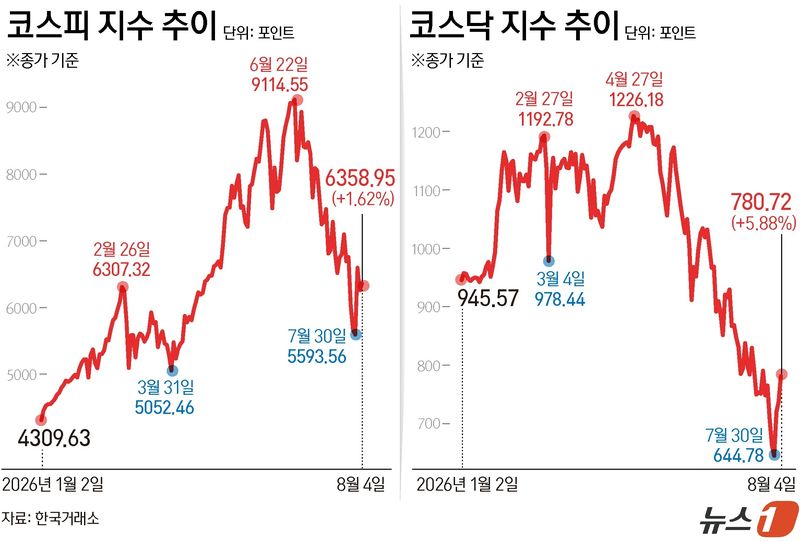
As losses kept mounting amid unprecedented volatility, with the KOSPI falling as much as 40% from its peak in just one month, more investors have been leaving the market altogether. Margin Loan balances, a key gauge of debt-financed investing, have fallen sharply to below 30 trillion won for the first time in about six months. Securities-backed loans also stood at about 25.4493 trillion won as of the 31st of last month, down by nearly 3 trillion won from March.
A decline in margin loan balances means demand for leveraged stock investing has weakened. At the same time, securities-backed loans, which allow investors to borrow cash using existing stocks as collateral, also fell. Analysts say this shows that overall demand for stock-based leverage has shrunk sharply amid the market plunge and forced selling.
The price of throwing money that needs to be fixed into volatility
According to "mental accounting" in behavioral economics, the human brain does not treat all money the same way. In other words, it psychologically separates "money for an apartment balance" from "money for investing." But once someone like A puts money with a fixed deadline into the stock market, saying he will "just let it ride for a few months and then pull it out," that asset can suddenly change from a safe asset into one of the riskiest risk assets.
The problem comes when the market keeps falling, as it has recently with the KOSPI. As the fixed payment date approaches, the fear caused by falling stock prices grows exponentially. In the end, investors lose their composure at the lowest point and dump their shares in a desperate panic sell. That is why experts stress that purpose-specific funds with a set deadline should never be put into the stock market under any circumstances.
Experts advise investors to watch the situation rather than sell in fear. In a report on the 3rd, Lee Kyung-min of Daishin Securities pointed out that this was the first time in history that stock prices had fallen more than 30% from a peak despite strong earnings and a healthy economy. He added that the decline was not caused by deteriorating fundamentals, but by fear and deleveraging from debt-financed investing, and said the current KOSPI is in a historically undervalued range, raising expectations for a strong rebound.
I don't want to become someone who keeps saying, "I should have bought, I should have sold, I should have held..." But today, once again, it feels like everyone else is doing well in stocks, real estate, and wealth management without me. The world of investing is hard no matter how much you study, so if you want to join in and share a clap of empathy[World of Retail Investors]please subscribe to the reporter page.We also welcome tips from retail investors who have investment stories they would like to share.
[email protected] Kim Hee-sun Reporter