Won-dollar exchange rate tests the 1,400 won level as the outlook for a sustained decline remains uncertain
- Input
- 2026-08-04 17:15:28
- Updated
- 2026-08-04 17:15:28
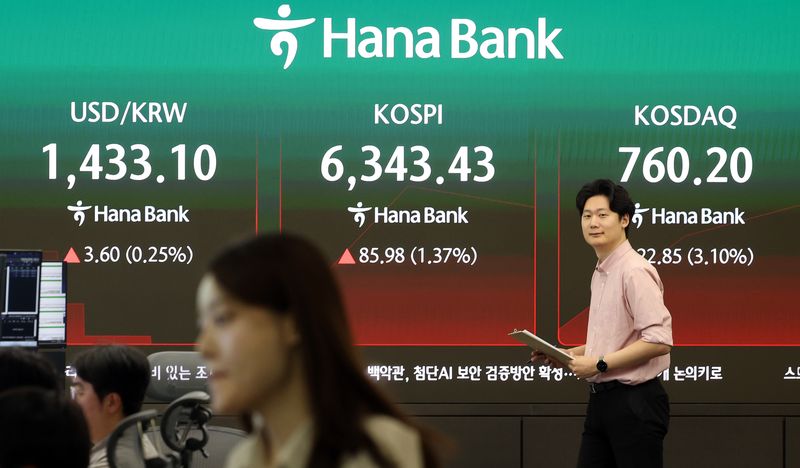
[Financial News] The won-dollar exchange rate is hovering below the 1,400 won level. It has fallen by more than 100 won in the past month, raising expectations of further declines, but the market remains cautious about whether the won's strength will continue as a trend. Analysts say supply-and-demand factors, such as the inflow of funds from SK hynix's American Depositary Receipt (ADR) issuance, have driven the currency lower, while changes in expectations for a rate cut by the Federal Reserve System (the Fed), the direction of the dollar, and uncertainty in global financial markets will determine where the exchange rate moves after mid-August.
In Seoul Foreign Exchange Market trading on the 4th, the won-dollar exchange rate closed the day session at 1,432.5 won, up 2.7 won from the previous trading day at 3:30 p.m. It edged higher from the day before, but it has stayed in the 1,400 won range for 15 consecutive trading days since July 14.
As concerns about a break above the 1,500 won level have eased, the market is now focused on whether the exchange rate will fall below 1,400 won and whether the decline can continue. The won-dollar rate fell 125.4 won in July, marking the largest monthly drop since March 2009.
A key factor behind the recent decline is seen as the impact of funds raised through SK hynix's ADR issuance flowing into the market. As expectations grew that the proceeds would be used for domestic investment, the prospect of greater dollar supply and stronger demand for won gained attention. In addition, dollar selling by exporters and a slowdown in foreign investors' selling in the South Korean stock market also supported the won's strength.
The market is leaving room for the won-dollar exchange rate to move below 1,400 won in the short term. However, analysts say whether it can settle in the 1,300 won range will depend on whether the won's strength can continue even after the supply-and-demand effects that drove the recent decline fade.
Park Hyung-jung, an economist at Woori Bank, said, "Additional inflows related to SK hynix could continue until mid-August," adding, "Given that the United States and Japan are also showing signs of coordination to curb yen weakness, there is room for further downside in the short term."
Still, observers say it remains to be seen whether the won's strength will lead to a trend-like decline in the exchange rate. After mid-August, the supply-and-demand effect from SK hynix may weaken, reducing one of the factors that had been pushing the exchange rate lower.
Park Sang-hyun, a researcher at iM Securities, said, "The dollar's weakness, changes in fund flows in the domestic stock market, and foreign investor demand are all interacting in complex ways," adding, "The easing of dollar strength pressure as expectations for U.S. rate cuts continue is also a factor behind the won-dollar exchange rate's decline."
However, analysts say the exchange rate's direction in the second half of the year could change depending on external variables such as the Fed's monetary policy and global dollar trends. Park Hyung-jung said, "In August and September, changes in expectations for a benchmark rate cut by the Fed could emerge again as a major factor," and added, "If the Fed's tightening stance strengthens again while U.S. Treasury yields remain high, the dollar could gain strength and the won-dollar exchange rate could come under renewed upward pressure."
[email protected] Hong Ye-ji Reporter