A Major Overhaul of the 70-Year Criminal Justice System... Acting Police Chief Says, "We Will Prepare with the Fate of the Organization at Stake" [Full]
- Input
- 2026-08-04 15:50:52
- Updated
- 2026-08-04 15:50:52
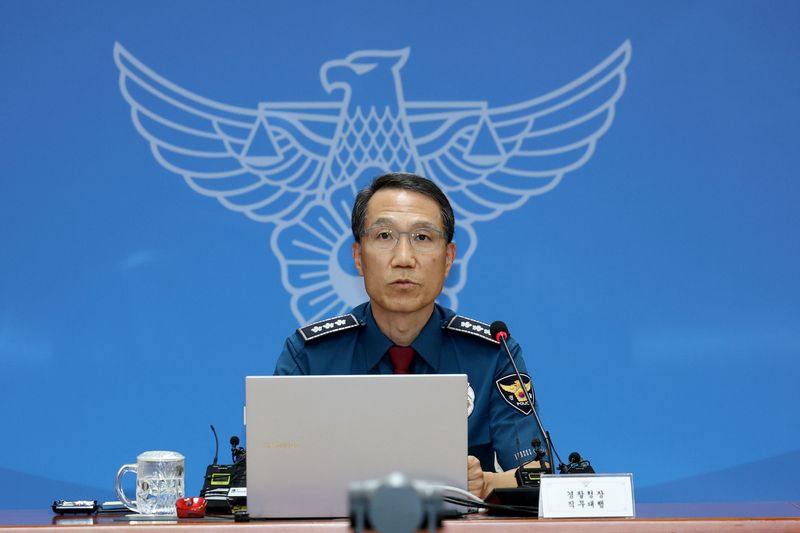
[Financial News] As the State Council of South Korea approved a revision to the Criminal Procedure Act of the Republic of Korea that abolishes prosecutors' supplementary investigative authority, the police said they would prepare thoroughly, with the fate of the organization at stake, to ensure the new criminal justice system takes root successfully.
Acting Chief of the National Police Agency Jaesung Yoo held a video conference with the national police leadership on the afternoon of the 4th at the National Police Agency in Seodaemun-gu, Seoul. He said, "I know that many people are concerned about the fairness and speed of police investigations, the practical protection of crime victims, and the possible overexpansion of police power."
Earlier in the day, the government held a State Council meeting chaired by President Lee Jae Myung and deliberated on and approved the revision bill. The bill removes the legal basis for prosecutors' direct investigative authority and supplementary investigative authority. As a result, the criminal justice system that has operated for about 70 years based on the Prosecutors' Office Act enacted in 1948, which defines prosecutors' duties, and the Criminal Procedure Act of the Republic of Korea enacted in 1954, which covers criminal trials and investigative procedures, is now facing a sweeping turning point.
To prepare for these changes, the National Police Agency organized the meeting to share changes in the investigative system resulting from the revision of the Criminal Procedure Act of the Republic of Korea with police leadership nationwide and to provide sufficient training for frontline investigators and middle managers before the law takes effect.
Yoo also said he would improve the completeness and professionalism of police investigations. He said, "We will strengthen cooperation with the Serious Crime Investigation Agency in multiple ways and create an environment in which capable investigators are treated well and can work for long periods." He added, "We will record every stage of the investigation and make the notification process for each step more substantive so that it can be disclosed transparently."
Cooperation with prosecutors at the Public Prosecution Office will also be strengthened. The police plan to promptly and responsibly carry out requests for supplementary investigations to prevent poor or delayed investigations, and they will require mandatory consultation with the Public Prosecution Office for cases nearing the statute of limitations, starting three months before expiration.
The police also decided to further strengthen internal and external oversight of investigations. Yoo said, "Beyond procedural controls under criminal law, we will establish a detailed oversight system that includes the Police Investigation Reform Committee's recommendations, the ban on police officers investigating cases involving their spouses, direct ascendants, or descendants, and the human rights and inspection body for police investigations." He added, "We will strictly monitor any corrupt conduct during investigations and make sure responsibility is clearly imposed."
The police will also respond firmly to any conduct that could undermine fairness in investigations. They plan to ban inquiries about ongoing cases and take strict action, in principle referring such solicitation cases for job-related complaints, to block concerns over preferential treatment for former prosecutors. Through this, the police aim to prevent case concealment, distortion, and abuse of investigative authority from taking root in the organization.
They also plan to focus investigative capabilities on protecting the rights and interests of crime victims. Yoo said, "We will institutionalize a system so that crime victims, as holders of rights, can receive sufficient information about police investigations and directly express their views."
With the revised Criminal Procedure Act of the Republic of Korea set to take effect, the police will review the additional personnel and budget needed for investigations and consult with relevant ministries. They also plan to institutionalize measures to prevent major offenders from working in investigative units. Follow-up steps, including further legal revisions and institutional improvements, will be pushed forward as quickly as possible, and the results will be made public.
Yoo emphasized, "The sole direction of police investigations is the public, and the only standard will be the law and principle." He added, "The police must remember that they now bear a heavy responsibility and duty, and we will do our utmost with a determination to give our all so that the criminal justice system can take root properly in the trust of the people."
Meanwhile, under the revised Criminal Procedure Act of the Republic of Korea, the Prosecutors' Office will be abolished on Oct. 2 and replaced by the Public Prosecution Office. Prosecutors' direct investigations, including supplementary investigations, will be completely banned, and they may only request supplementary investigations from the police. The police must complete the supplementary investigation within one month of receiving the request and notify the prosecutor of the results. If necessary, the investigation period may be extended by up to one additional month.
However, there are concerns on the front lines that the burden of handling cases will increase and that it may become harder to ensure the completeness of investigations. That is because if the police, which already handle more than 1 million cases a year, also take on the supplementary investigations previously handled by prosecutors, the workload will inevitably grow further.
In response, National Office of Investigation Chief Hong Seok-gi said at a press briefing the previous day, "We will investigate with greater responsibility at the initial stage and send cases forward." He added, "The revised bill also allows the police to request prosecutors' professional advice on cases, and through such a process, we will improve the completeness of investigations from the very first stage of case referral."
[email protected] Jang Yoo-ha Reporter