DPK Says Tax Reform Plan Is Part of Tax Normalization, Not a Move to Curb Home Prices
- Input
- 2026-08-04 10:32:36
- Updated
- 2026-08-04 10:32:36
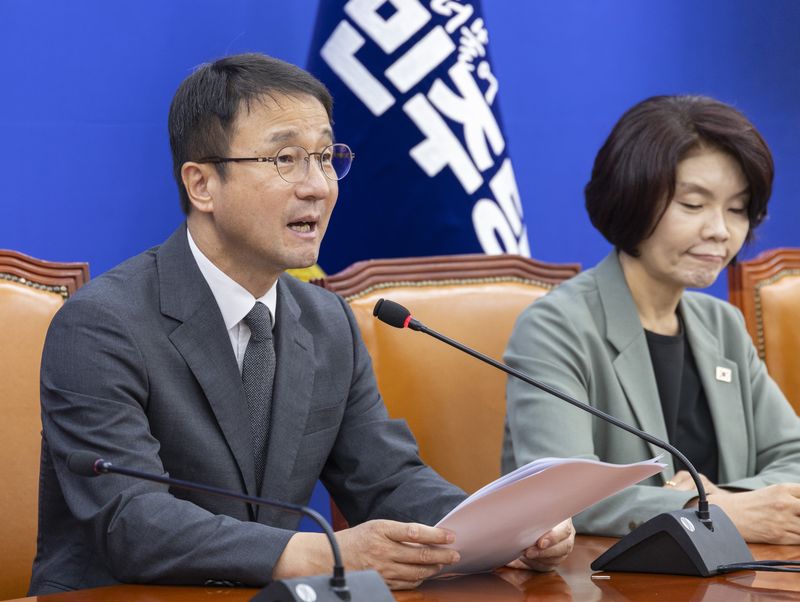
At a floor strategy meeting at the National Assembly on the 4th, Han Byung-do, acting leader and floor leader of the DPK, said, "The goal of this tax reform plan is tax normalization for growth and people’s livelihoods." He added, "In the case of real estate tax reform, we should protect one-home owners who live in their homes while reasonably adjusting excessive benefits concentrated on ultra-high-priced homes and non-owner-occupied homes according to property value and actual residence."
He went on to say, "The government proposal is the starting point for parliamentary discussion. During the review process, we will carefully examine policy effectiveness, public acceptance and the predictability of the system." He added, "We will complete a reasonable tax reform plan that eases the burden on ordinary people, the middle class, young people and local communities, while achieving growth, livelihoods and fair taxation together."
Han Jeoung-ae, chair of the DPK’s Policy Committee, said the government’s 2026 tax reform plan is a milestone that will help achieve national priorities such as expanding future growth engines, stabilizing livelihoods and promoting balanced regional development. She added that it also reflects careful consideration to boldly normalize distorted tax systems and improve fairness, including rationalizing real estate taxes, revising inheritance deductions for companies and reorganizing tax exemptions and reductions.
In particular, she said, "Real estate tax reform is a process of fair and reasonable tax normalization that protects end users and corrects distorted structures." She also stressed that the latest real estate tax reform is focused not on simply "curbing home prices," but on rationalizing taxes and improving fairness.
She continued, "This reform plan was designed under the principle of protecting owner-occupiers of one home as much as possible, while normalizing the tax burden on homes above a certain value and on non-occupants or multi-home owners." She added, "It is also worth noting that the plan improves public acceptance by introducing a phased normalization over two to three years."
She also said, "The ruling party and the government will continue to consult closely, carefully review the plan so that no one suffers unintended harm from changes to the system, and work to supplement it during the parliamentary review process to minimize any problems or effects caused by sudden changes in the tax burden."
[email protected] Kim Hyeong-gu Reporter