Banpo Xi 84m2 property tax rises from 18.09 million won to 27.63 million won... 33.18 million won if not occupied
- Input
- 2026-08-04 07:07:50
- Updated
- 2026-08-04 07:07:50
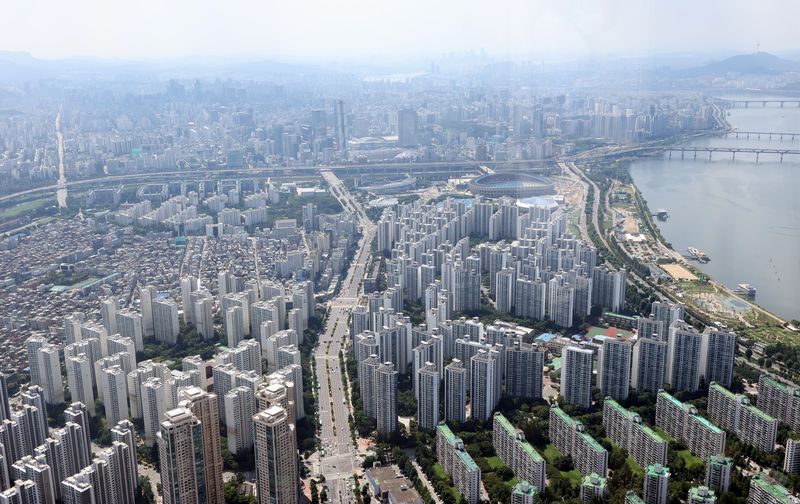
[Financial News] The government’s revised Comprehensive Real Estate Holding Tax plan is expected to sharply increase the tax burden on one-home owners living in ultra-high-end apartments in Seoul’s Gangnam area and other prime districts, according to an analysis.
For single-home owners, the tax base ratio for the Comprehensive Real Estate Holding Tax will rise from 60% to 70%.
According to Newsis and other outlets on the 3rd, the tax base ratio for one-household, one-home owners will increase from the current 60% to 70% next year. The basic deduction for owner-occupiers will rise from 1.2 billion won to 1.4 billion won, while the deduction for non-occupying one-home owners will be cut to 900 million won. This follows the Ministry of Economy and Finance’s announcement of the 2026 tax reform plan on the day.
Based on the revised plan, Woo Byung-tak, a senior researcher at Shinhan Premier Pathfinder, ran a simulation and estimated that the property tax burden for a one-home owner living in an 84m2 unit at Banpo Xi in Banpo-dong, Seocho District, Seoul, will rise from 18.09 million won this year to 27.63 million won next year, an increase of 9.54 million won, or 52.7%. For a one-home owner who owns the same home but does not live in it, the burden will jump from 18.09 million won this year to 33.18 million won next year, up 15.08 million won, or 83.4%. That is 5.54 million won, or 20.1%, more than for an owner-occupier.
The simulation applied the 1.4 billion won basic deduction for owner-occupiers, the 900 million won deduction for non-occupiers, a 70% tax base ratio, and the revised tax rates. It did not include tax credits for senior citizens or for long-term ownership and residence.
The reason the tax burden rises so much is that, even though the basic deduction for owner-occupiers is expanded, the tax base ratio for one-home owners in Areas Subject to Adjustment increases from 60% to 70%, and the tax rate for the 600 million won to 1.2 billion won bracket also rises from 1.0% to 1.3%.
Even if they live in Hannam The Hill in Yongsan, the property tax reaches 130 million won.
Other high-end complexes in the Gangnam area will also see notable increases in property tax next year.
The property tax for an owner-occupier in an 84m2 unit at Raemian Firstige will rise from 19,046,835 won this year to 29,860,526 won next year, up 10,813,691 won, or 56.8%. For an 84m2 unit at Acro River Park, it will increase from 22,268,466 won to 33,332,209 won, up 11,063,743 won, or 49.7%. The property tax for non-occupying one-home owners at the two complexes is projected to reach 35,404,526 won and 38,876,209 won, respectively, next year.
At the reconstruction complex Eunma Town Apartments in Daechi-dong, Gangnam District, the property tax for an owner-occupier in an 84m2 unit will rise from 10,035,738 won this year to 16,308,631 won next year, up 6,272,893 won, or 62.5%. For a non-occupying one-home owner, it will climb to 20,452,758 won, an increase of 10,417,020 won, or 103.8% from this year.
For an 82m2 unit at Jamsil Jugong 5 Complex in Songpa District’s Jamsil-dong, the property tax for an owner-occupier will rise from 12,576,528 won this year to 20,789,447 won next year, up 8,212,919 won, or 65.3%. For a non-occupying one-home owner, it is expected to increase to 25,203,638 won, up 12,627,110 won, or 100.4% from this year.
Among the properties analyzed, the highest property tax burden was at Hannam The Hill in Hannam-dong, Yongsan District. For a 235m2 unit, the property tax for an owner-occupier will rise from 76,328,650 won this year to 130,278,043 won next year, up 53,949,393 won, or 70.7%. For a non-occupying one-home owner, it will increase from 76,328,650 won this year to 140,862,043 won next year, up 64,533,393 won, or 84.5%.
Targeting ultra-high-end and non-occupied homes... likely to pressure owners to put properties on the market
Experts said the tax reform will generally increase the burden on owners of expensive homes, while non-occupying one-home owners will face a double burden as their basic deduction is also reduced.
Nam Hyuk-woo, a real estate researcher at Woori Bank, said, "This tax reform is effectively a precision regulation aimed at high-priced and non-occupied homes in the Gangnam area and elsewhere." He added, "Regardless of whether the home is occupied, the higher tax base ratio and tax burden cap are expected to raise the overall property tax burden across the board." He also noted, "In particular, non-occupiers will face higher holding costs because the basic deduction is being reduced as well, and this will likely pressure owners in key Gangnam-area districts to put homes on the market."
[email protected] Kim Soo-yeon Reporter