The U.S.'s Real Purpose in Saving the Yen Was Treasury Yields
- Input
- 2026-08-04 06:18:41
- Updated
- 2026-08-04 06:18:41
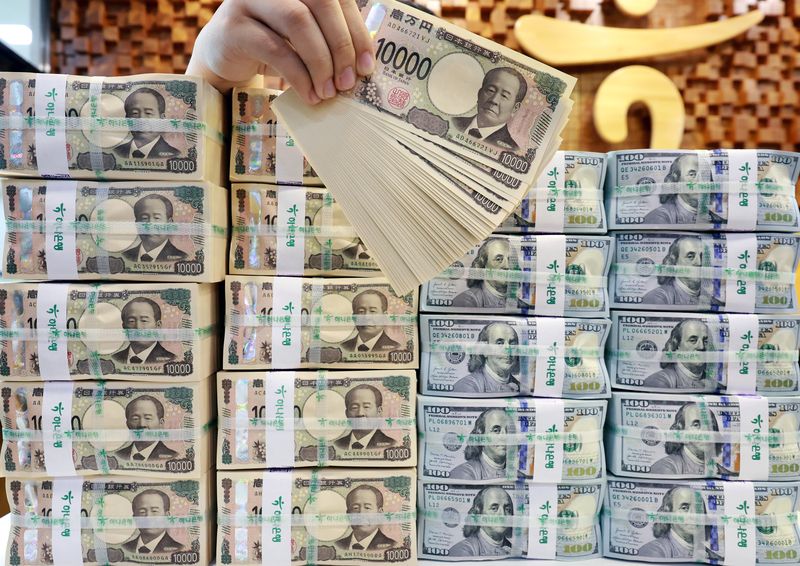
S. Treasuries could occur simultaneously, potentially shocking the U. S. financial market. On the 3rd (local time), the Wall Street Journal (WSJ) analyzed the reason for the U.
S. ’s unusual joint intervention with Japan in this manner, stating, "The weak yen was a problem not only for Tokyo but also for Washington. " It is observed that the U. S. and Japan intervened in the market on the 3rd, following their joint intervention from the 31st of last month to the 1st of this month through the method of buying yen and selling dollars.
Japanese Finance Minister Satsuki Katayama and U. S. Treasury Secretary Scott Besant also officially confirmed the joint intervention. It is the first time in 28 years, since the Asian financial crisis in 1998, that the U. S.
S. Treasury yields underlies the U. S. jointly intervening in the foreign exchange market with Japan for the first time in 28 years to boost the value of the yen. The concern is that if the yen's weakness persists, the unwinding of the yen carry trade originating from Japan and Japan's selling of U.
and Japan have jointly purchased yen to prevent its depreciation. What the U. S. was targeting was not the yen, but U. S.
S. Treasury yields underlies the U. S. jointly intervening in the foreign exchange market with Japan for the first time in 28 years to boost the value of the yen. The concern is that if the yen's weakness persists, the unwinding of the yen carry trade originating from Japan and Japan's selling of U.Treasury yields. The Wall Street Journal assessed that this measure went beyond simply helping Japan and had a significant purpose of stabilizing the U. S. financial market. The key is the yen carry trade.
For decades, investors have borrowed yen in Japan, where interest rates are ultra-low, converted it into dollars, and invested in high-yield assets such as U. S. Treasury bonds and stocks. However, if the Bank of Japan raises interest rates or the yen rapidly strengthens, investors will liquidate U. S.
assets en masse to repay the yen. This is known as the liquidation of the yen carry trade. In this case, U. S. Treasury bond prices fall, and bond yields skyrocket.
As U. S. mortgage rates also rise, it could send a shock through the entire financial market. Paul Kavey, CEO of consulting firm East Asia Icon, told the Wall Street Journal, "The U. S.
likely worried that a sharp sell-off of the yen could undermine global financial stability. " In fact, in 2024, global financial markets were significantly shaken as the unwinding of yen carry trades occurred following the Bank of Japan's interest rate hike. At that time, Japan's Nikkei 225 index plummeted 12% in a single day, marking the largest drop since Black Monday in 1987, while the U. S. Standard & Poor's (S&P) 500 index also plunged 3%.
The yield on 10-year U. S. Treasuries also surged 20 basis points over three days, fueling market anxiety. The Wall Street Journal assessed that this joint intervention also aims to preemptively block a shock similar to that of two years ago. Blocking Japan's Sale of U.
S. Treasury Bonds Another reason the U. S. stepped in for joint intervention is to prevent a situation where Japan sells off a large amount of its holdings of U. S.
S. Treasury yields underlies the U. S. jointly intervening in the foreign exchange market with Japan for the first time in 28 years to boost the value of the yen. The concern is that if the yen's weakness persists, the unwinding of the yen carry trade originating from Japan and Japan's selling of U.
Treasury bonds to defend its exchange rate. Japan could sell U. S. Treasury bonds to raise the dollars needed to intervene in the foreign exchange market.
S. Treasury yields underlies the U. S. jointly intervening in the foreign exchange market with Japan for the first time in 28 years to boost the value of the yen. The concern is that if the yen's weakness persists, the unwinding of the yen carry trade originating from Japan and Japan's selling of U.However, this becomes a factor that further pushes up U. S. Treasury yields. The Wall Street Journal analyzed that "if Japan sells off a portion of its vast holdings of U.
S. Treasuries to defend the yen, it could put additional upward pressure on U. S. Treasury yields that are already rising.
" Finance Minister Katayama also stated that future intervention funds will be raised by utilizing the U. S. Federal Reserve's lending facility rather than by selling U. S.
Treasuries. From the Trump administration's perspective, this effectively creates a structure that prevents U. S. Treasury yields from rising, while allowing Japan to defend its exchange rate without selling U.
S. Treasuries. The fact that a weak yen makes it difficult to fulfill the $550 billion (approximately 762 trillion won) investment in the U. S.
promised by Japan during last year's U. S. -Japan trade negotiations was also cited as a reason for the joint intervention. As President Trump has also favored a weak dollar to revive U.
S. manufacturing and reduce the trade deficit, analysts suggest that a strong yen aligns with the direction of U. S. policy.
The yen-dollar exchange rate neared 164 yen at the end of last month, [approximately] Although the yen recorded its weakest level in 40 years, its value quickly recovered after joint intervention, falling to the 156 yen range.
S. Treasury yields underlies the U. S. jointly intervening in the foreign exchange market with Japan for the first time in 28 years to boost the value of the yen. The concern is that if the yen's weakness persists, the unwinding of the yen carry trade originating from Japan and Japan's selling of U.
[email protected] Kim Kyung-min Reporter