[Editorial] Real Estate Tax Policy Should Focus on Residency; Reviving Transactions Is the Key
- Input
- 2026-08-03 18:54:58
- Updated
- 2026-08-03 18:54:58
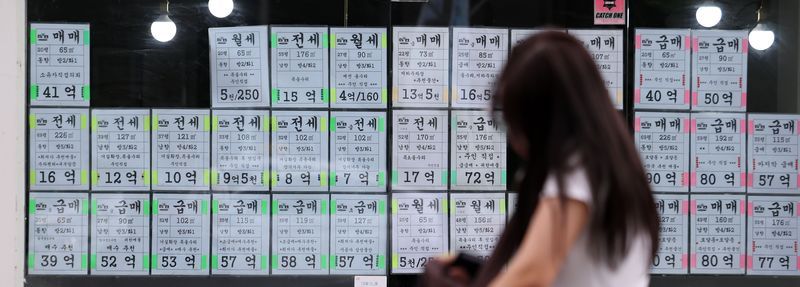
The message is also clear: tax benefits for high-priced homes that are not owner-occupied will be reduced. In effect, the broad direction of the tax system is changing, as actual residency, rather than the number of homes owned, will become the basis for taxation. Still, many say it remains uncertain whether the reform will lead to market stability and more transactions.
According to the tax reform plan announced on the 3rd, the basic deduction for the Comprehensive Real Estate Holding Tax on one-home owners who live in their homes will rise from 1.2 billion won to 1.4 billion won in officially assessed value terms, while the deduction for one-home owners who do not live in the property will be lowered to 900 million won.
In particular, the tax burden on ultra-high-end homes worth more than 4 billion won will rise sharply. For homes in the 2 billion won to 4 billion won range, the tax burden is not expected to change much, but once the value exceeds 4 billion won, the tax rate could nearly double at most. Some analysts say that if the ownership deduction is also abolished in 2028, the Comprehensive Real Estate Holding Tax on ultra-high-end homes that are not owner-occupied could rise more than tenfold. The plan also aims to simplify the tax system by taxing based on home value rather than the number of homes, in an effort to curb the concentration on a single prized property.
At the same time, it leaves some room for multi-home owners to exit. The government will temporarily ease the heavier capital gains tax on multiple-home owners in Areas Subject to Adjustment, and it will reduce capital gains tax for older people who move to provincial areas. The special rule that treats a household as a one-home owner if it buys a second home in a depopulating region will also be expanded to all provincial areas except metropolitan cities. The goal is to ease some of the transaction tax burden and encourage homes to come onto the market.
The problem is whether it will actually boost transactions. There are concerns that abolishing the ownership deduction for capital gains tax and reducing the long-term holding special deduction could instead make it harder for homes to come onto the market. Critics say that if the government was going to adjust holding taxes, it should also have lowered transaction taxes such as acquisition tax and capital gains tax to improve residential mobility.
Those measures were not included in this reform plan. The Organisation for Economic Co-operation and Development (OECD) also recommended last month that countries lower the share of transaction taxes and raise the share of holding taxes to improve housing mobility. That is why some say the direction of the tax reform and the policy tools do not fully align.
As the tax burden on owners of expensive homes and non-residents rises sharply, tax resistance is also expected. The number of households owning homes worth more than 4 billion won is estimated at about 46,000. There are also concerns about a threshold effect, where the tax burden changes abruptly at the 4 billion won mark. The non-residency standard is another point of contention. Because there are many unavoidable cases in which people cannot live in a home full time due to work, education, or caregiving, it will not be easy to apply a uniform rule. No matter how good the policy intent may be, vague standards could create yet another fairness dispute.
This reform is an effort to reshape the overall framework of real estate taxation. That means it must be followed by detailed measures to minimize market shocks and side effects. Since there is still a grace period before implementation, the government needs to review market reactions step by step and consider additional measures to complement transaction taxes and help revive market activity.
The policy goal of encouraging actual residence is understandable. But the market does not move on taxes alone. The success of this policy will not be measured by collecting more taxes. It will be judged by whether it stabilizes the market, protects end users, and avoids creating unfair victims.