"Blocked, It Came Back as a Rival": The 'Paradox of Regulation' Shown by ChangXin Memory Technologies
- Input
- 2026-08-04 07:42:51
- Updated
- 2026-08-04 07:42:51
[Financial News] Tensions are rising in the global semiconductor market as ChangXin Memory Technologies (CXMT), China’s largest DRAM maker, surges ahead. Chinese companies are now making a serious entry into the DRAM market, long led by Samsung Electronics, SK hynix, and U.S. chipmaker Micron.
While global memory chipmakers have focused their investments on high-bandwidth memory for artificial intelligence, CXMT has rapidly expanded its production capacity for general-purpose DRAM. It is now emerging as a potential rival to Korean semiconductor companies, as it also prepares to enter the advanced DRAM and High Bandwidth Memory markets.
As CXMT has grown, the recent 'paradox of regulation' has drawn attention. The argument is that while the United States tightened export controls to block China’s access to advanced semiconductor technology, those measures may have ultimately encouraged China’s technological self-reliance and the building of a domestic supply chain. Similar cases, including the development of Korea’s Materials, Parts, and Equipment Industry and Japan’s expansion of rare earth supply chains, were also cited.
Semiconductors blocked by the U.S. spurred China’s drive for self-reliance
The United States has steadily tightened restrictions since sanctioning Huawei in 2019, aiming to prevent China from securing advanced semiconductors and manufacturing equipment. From 2022, it also restricted exports of advanced AI chips and related equipment to China, and the Netherlands and Japan joined in by controlling some of their own equipment exports.
Export controls increased the cost and time required for China to develop advanced semiconductors. At the same time, they deepened the sense of crisis that China could no longer rely on foreign technology.
Chinese chipmakers first expanded in the market for standard semiconductors that could be produced with existing equipment, rather than chasing the most advanced processes. CXMT also built up experience and technical know-how by expanding production of mainstream DRAM such as DDR4, and is now broadening its lineup to include DDR5, mobile DRAM, and High Bandwidth Memory.
Massive subsidies from the Chinese government, support from local governments, and a huge domestic market formed the foundation for growth. U.S. export controls, meanwhile, acted as a catalyst that accelerated self-sufficiency. In March, CSIS also released a report saying that semiconductor export controls by the U.S. and its allies had given momentum to China’s push for semiconductor localization.
The report said export controls imposed by the U.S. and its allies on advanced semiconductor technologies since 2022 were intended to curb China’s development of artificial intelligence and high-performance chips. It said the measures achieved that goal only partially, while also speeding up China’s semiconductor self-reliance efforts. CSIS issued a similar report a year earlier.
In fact, China’s integrated circuit production fell 9.8% in 2022 after the export controls took effect, and its ability to produce chips using 7-nanometer or smaller processes was effectively limited. The report said this also produced an unexpected effect.
Although the Chinese government launched the 'Made in China 2025' project in 2014, progress had been sluggish because Chinese companies relied on U.S. equipment and materials. But U.S. semiconductor restrictions accelerated development by pushing firms to replace equipment and materials with Chinese alternatives.
Japan’s export restrictions became a turning point for Korea’s localization of materials, parts, and equipment
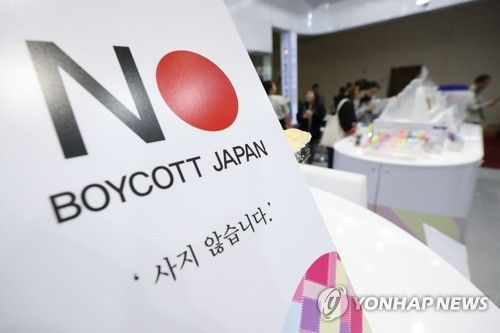
This is not the first time regulation has strengthened domestic competitiveness. Korea also has experience showing that supply chain restrictions can spur industrial self-reliance.
In July 2019, the Japanese government tightened export controls on three key semiconductor and display materials shipped to Korea: high-purity hydrogen fluoride, photoresist, and fluorinated polyimide. It also removed Korea from its whitelist of preferred export destinations.
At the time, Korea’s semiconductor industry depended heavily on Japanese companies for some key materials. There were growing concerns that longer export reviews could disrupt production at Samsung Electronics and SK hynix. That year, the U.S. International Trade Commission also assessed that Japan’s tighter export controls could create risks for Korean chipmakers.
Afterward, the Boycott Japan movement gained momentum in Korea, and companies began reexamining their supply chains. They increased inventories of materials, diversified imports to countries such as China and Europe, and started using products from domestic suppliers.
The government also introduced measures to strengthen competitiveness in materials, parts, and equipment, while supporting R&D and investment in production facilities. As a result, domestic production of some high-purity hydrogen fluoride and semiconductor materials expanded, and dependence on specific countries declined.
Japan later reverted the export controls on the three items in 2023, but Korea did not return to its previous dependence on Japan.
Japan, too, has experience reshaping its supply chains in response to China’s resource controls.
In 2010, relations between China and Japan worsened after a collision near the Senkaku Islands, known in China as Diaoyu Dao, between a Chinese fishing boat and a Japan Coast Guard patrol vessel. China then effectively halted rare earth exports to Japan.
Rare earths are critical minerals used in electric vehicle motors, semiconductors, precision machinery, and defense products, and Japan had relied on China for most of its rare earth imports.
Once manufacturing as a whole was exposed to the risk of supply disruptions, the Japanese government and companies began looking for suppliers outside China. They invested in rare earth firms in Australia, expanded cooperation with Vietnam and India, and also funded technologies to reduce rare earth use and recycle discarded products.
Japan also pursued its own resource development. After discovering rare earth-containing mud in the deep sea within the exclusive economic zone around Minamitorishima, it has been developing extraction technology. More recently, it began a test to lift rare earth-bearing mud from the seabed at a depth of about 6,000 meters.
It still needs to verify economic viability and environmental impact, so it is not yet at the stage of commercial mass production. Even so, analysts say China’s pressure in 2010 became the starting point that pushed Japan toward overseas mine investment, recycling, and deep-sea resource development.
Regulation buys time, but it does not eliminate competitors
The reasons for the regulations differed, but the outcome was the same.
Experts said, "In all three cases, regulation did not immediately lead to complete technological self-reliance or import substitution." They added, "The countries facing supply restrictions suffered short-term supply instability and production disruptions, but in the long run they were able to expand alternative technologies and suppliers."
[email protected] Seo Yoon-kyung Reporter